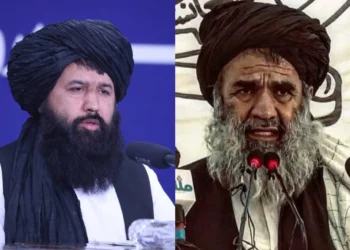

The International Criminal Court (ICC) issued arrest warrants yesterday for Hibatullah Akhundzada, the Taliban Supreme Leader, and Abdul Hakim Haqqani, the head of the group’s Supreme Court, on charges of “crimes against humanity.” The court stated in a press release that these two senior Taliban officials are being prosecuted for their roles in the systematic persecution based on gender against women, girls, and other individuals in Afghanistan. Human rights activists have widely welcomed the decision, and international human rights organizations and forces opposing the Taliban have.
On Tuesday, July 8, 2025, the ICC issued arrest warrants for Hibatullah Akhundzada, the Taliban Supreme Leader, and Abdul Hakim Haqqani, head of the Taliban’s Supreme Court, following a request by the ICC prosecutor.
The ICC emphasized that there are reasonable grounds to believe that Akhundzada and Haqqani have committed crimes against humanity, specifically persecution based on gender, under Article 7 of the Rome Statute. These crimes were directed against girls, women, individuals whose gender identity or expression conflicts with Taliban policies, and those perceived as “supporters of girls and women.”
According to the statement, the warrants were issued following a request by ICC Prosecutor Karim Khan. Khan stated that women and girls, particularly members of the LGBTQ community, face “unprecedented, unacceptable, and persistent persecution” by the Taliban. He added that this court action demonstrates that the current situation for women and girls in Afghanistan is unacceptable.
The statement noted that these warrants mark the first time the ICC has condemned gender-based persecution as a crime against humanity, representing a significant step toward justice and accountability for victims of such oppression. The ICC’s Pre-Trial Chamber II determined that the Taliban have implemented a state policy resulting in severe violations of the fundamental rights and freedoms of Afghanistan’s civilian population. These violations include murder, imprisonment, torture, rape, and forced disappearances.
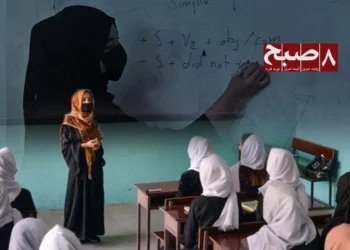
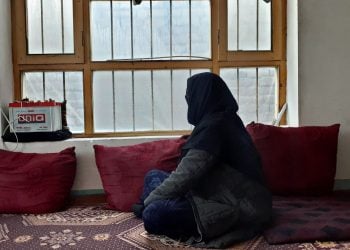
The ICC further stated that while the Taliban have imposed general laws affecting the entire population, women and girls have been specifically targeted due to their gender, depriving them of fundamental rights and freedoms. Through decrees and directives, the Taliban have severely restricted rights such as education, privacy, and family life, as well as freedoms of movement, expression, thought, conscience, and religion for women and girls. The statement also highlighted that “other individuals” whose gender identity or expression does not align with Taliban gender policies have been targeted.
The ICC’s Pre-Trial Chamber II noted that individuals perceived as opposing Taliban policies, even indirectly or through negligence, have also been targeted. This group includes “supporters of girls and women” who also played roles as political opponents. The chamber decided that the arrest warrants should remain under seal at this stage to protect victims and witnesses and ensure the integrity of the judicial process. However, it believes that the ongoing nature of these crimes justifies publicizing the warrants to prevent further violations.
Reactions from International Organizations and Activists
Amnesty International described the issuance of arrest warrants for Taliban leaders as a significant step toward achieving justice in Afghanistan. The organization called on the international community to recognize the Taliban’s system as “gender apartheid.”
Liz Evenson, Director of International Justice at Human Rights Watch, stated that the ICC’s action provides a critical pathway for victims and their families to achieve justice. She emphasized that senior Taliban leaders are now being pursued for the persecution of women, girls, and individuals with non-conforming gender identities, urging the international community to support the ICC’s vital work in Afghanistan and globally.
Richard Bennett, the UN Special Rapporteur on the situation of human rights in Afghanistan, welcomed the arrest warrants, stressing that the Taliban regime should not be normalized. In a post on X, he described the decision as a significant step toward justice, particularly for women and girls. Bennett added, “This action sends an important message: impunity will not last.” He also called on states to refrain from recognizing the Taliban.
Malala Yousafzai, Nobel Peace Prize laureate, described the ICC’s arrest warrant for the Taliban Supere Leader as a powerful message to women and girls in Afghanistan and worldwide. She stated that the decision shows that perpetrators of violations against women and girls must be held accountable for their crimes.
Reactions from Politicians of Afghanistan
Rangin Dadfar Spanta, former National Security Advisor and Foreign Minister of Afghanistan reacted to the ICC’s arrest warrants for the Taliban leader and chief justice on X, writing: “The struggles of Afghan women and human rights activists have borne fruit.” He added, “Whether they are arrested or not, the significance lies in the legal recognition of their crimes.”
The Afghanistan Freedom Front (AFF) welcomed the arrest warrants for Taliban leaders, stating that all key figures of the group should be held accountable. In a statement, the anti-Taliban front argued that the warrants for Hibatullah Akhundzada and Abdul Hakim Haqqani are insufficient, and all Taliban leaders and commanders involved in suppression, killings, discrimination, and crimes against humanity should face punishment. The front also described the international community’s actions toward the Taliban as contradictory.
Abdullah Khenjani, head of the political office of the National Resistance Front of Afghanistan (NRF), called the arrest warrants for the two key Taliban leaders a significant step toward justice. He emphasized that the entire Taliban regime must be held accountable.
Reactions from Afghanistan’s Human Rights Activists and Organizations
The Human Rights Activists Union described the ICC’s issuance of arrest warrants for Hibatullah Akhundzada and Abdul Hakim Haqqani as a historic decision. In a statement, the activists emphasized that the warrants, based on credible evidence, mark the beginning of breaking the cycle of impunity for war criminals and human rights violators.
The activists added that this action by the international justice system, following the request of ICC Prosecutor Karim Khan, is not only a result of the courageous resistance of women and justice advocates but also a clear testament to the international community’s resolve to end impunity for terrorism and structural discrimination.
The statement noted: “The Taliban’s crimes are not limited to gender discrimination. Over the past twenty years, and especially since their reoccupation of the country, the group has committed a wide range of systematic and widespread crimes, including mass killings, forced displacement, disappearances, torture, suppression of freedom of expression, extrajudicial executions, ethnic and religious discrimination, and the destruction of civilian structures.”
The activists called for the ICC to pursue other Taliban figures, including Sirajuddin Haqqani, the Taliban’s Interior Minister, Yaqoob Mujahid, the Defense Minister, Mullah Baradar, the Deputy Prime Minister for Economic Affairs, and other military, political, and financial decision-makers of the group.
Parwana Ibrahimkhail Nijrabi, a woman who experienced detention by the Taliban, reacted to the ICC’s decision, writing: “This achievement is the result of the tireless efforts of Afghan women, especially those who have been detained and tortured by the Taliban.”
Artemis Akbary a prominent human rights activist and director of the Afghanistan Sexual Minorities Organization, described the ICC’s issuance of arrest warrants for Hibatullah Akhundzada and Abdul Hakim Haqqani as a “historic moment.” She emphasized that, for the first time in history, the ICC has recognized crimes against LGBTQ individuals as crimes against humanity.
Taliban’s Reaction
The Taliban, in response to the arrest warrants for their leader and chief justice, stated that they do not recognize the ICC and that its orders will have no impact on their positions or behavior. In a statement, the Taliban described the ICC’s orders as “nonsense.”
Zabihullah Mujahid, the Taliban spokesperson, reacting to the international arrest warrants for the group’s leader and chief justice, said that such “announcements and nonsense” cannot affect the Taliban’s resolve or stance. He further emphasized that the Taliban do not recognize the ICC and will not abide by its rulings.
You can read the Persian version of this report here:
حکم تاریخی جنایت علیه بشریت؛ دادگاه کیفری دستور بازداشت هبتالله را صادر کرد