• 8AM.MEDIA
  • ویب‌سایت فارسی
  • پښتو ویب‌پاڼه
  • اۉزبېکچه ویب‌سایت
  • Podcast
Thursday, October 15, 2026
Hasht-e Subh
  • Home
  • News
    • Afghanistan News
    • World News
  • Opinion
    • Editorial
    • Analysis
  • Reports
    • Daily Reports
    • Investigative Reports
  • Society
    • The story of people
  • Women’s Word
  • Columns
    • Three Years After Afghanistan’s Fall: The Taliban’s Resurgence
    • Towards Equality
    • The Resurgence of the Taliban: Two Years Since Afghanistan’s Fall
    • Hebatullah Report Special Edition
    • Resistance for Education Special Edition
    • Special Column on Taliban’s Education Curriculum
    • Nawroz
  • Interviews
  • Contact Us
    • About Us
    • 8AM MEDIA Annual Awards
    • Submit an Article to Hasht-e-Subh
  • 8am.mediaBack
Subscribe
No Result
View All Result
  • Home
  • News
    • Afghanistan News
    • World News
  • Opinion
    • Editorial
    • Analysis
  • Reports
    • Daily Reports
    • Investigative Reports
  • Society
    • The story of people
  • Women’s Word
  • Columns
    • Three Years After Afghanistan’s Fall: The Taliban’s Resurgence
    • Towards Equality
    • The Resurgence of the Taliban: Two Years Since Afghanistan’s Fall
    • Hebatullah Report Special Edition
    • Resistance for Education Special Edition
    • Special Column on Taliban’s Education Curriculum
    • Nawroz
  • Interviews
  • Contact Us
    • About Us
    • 8AM MEDIA Annual Awards
    • Submit an Article to Hasht-e-Subh
  • 8am.mediaBack
No Result
View All Result
Hasht-e Subh
No Result
View All Result

Increased Restrictions and Inclination to Suicide; Women Find Life Under Taliban Rule Unbearable

Behnia Behnia
3 November 2024 - Solar Hijri Date: 1403/08/13 [t_time:1730655600]
Two Afghan women converse in a lobby, symbolizing resilience amid escalating restrictions and despair under Taliban rule. New bans on their voices reflect the profound impact on their mental health and sense of freedom. (Photo Credit: SHAH MARAI / AFP)

SHAH MARAI / AFP

With the Taliban intensifying restrictions on women in Afghanistan, women are more constrained than ever by the group’s ignorance and backwardness, finding life in these conditions intolerable. In a recent move, Khalid Hanafi, the Taliban’s Minister for the Propagation of Virtue and Prevention of Vice, has prohibited adult women from hearing the voices of other adult women. He declared that women are not allowed to recite or chant loudly in the presence of other women. Many women and girls have condemned this restriction as shameful and contrary to human dignity, saying that the Taliban are mocking both themselves and the women of Afghanistan. These women and girls, worried about their future under the Taliban’s flag, fear that the restrictions may lead to permanent confinement within their homes.

Psychologists, too, are concerned about the mental and emotional state of girls under such harsh conditions, noting that increased restrictions have heightened the inclination towards suicide among girls deprived of education.

Maryam, one of the girls denied access to education, views the ban on women hearing each other’s voices as a new restriction on women’s activities. She expresses her fear of even stricter limitations on women and girls imposed by the Taliban: “I fear we may end up permanently confined to our homes, with this group even forbidding us from taking a few steps outside. Although free movement is already prohibited, I worry they might even prevent us from going anywhere, even with a male guardian.”

Three years of educational deprivation and the Taliban’s growing restrictions on women have led Maryam to suffer from severe depression, which has worsened with the latest ban. She adds that she no longer has any hope for freedom or the reopening of educational doors to girls: “When I hear bad news about further restrictions on women’s activities, my mental state deteriorates, and I get severe headaches and stomach pains. It’s been a few days since the latest bad news, but I still can’t come to terms with it. Our lives have become unbearably painful and sad.”

Asma (pseudonym), a journalist working for a Taliban-controlled media outlet, described Khalid Hanafi’s recent comments on banning women from hearing other women’s voices as disgraceful. She says these restrictions are yet another order stripping women of their rights.

This journalist adds that the Taliban seek to completely erase women from society and may even exclude them from fields such as journalism and healthcare. According to her, the ban on women’s voices and images on visual media indicates the complete removal of women from public life: “Every restriction imposed by the Taliban on women is a step toward their total erasure. Currently, journalism, teaching, and healthcare are the only fields where a few women still work, but such shameful restrictions might even strip women of these professions. The severe restrictions on visual media also hamper women’s presence in the media.”

Over the past three years, hundreds of women in Afghanistan have suffered from the Taliban’s escalating restrictions, which have led to widespread severe depression among women and girls. Psychologists, who are concerned about the mental and emotional state of girls under Taliban rule, report that suicidal tendencies have increased among girls.

Husna (pseudonym), a psychologist who has been involved in research and treatment due to the rising mental health issues among girls deprived of education, notes that most of her clients suffer from severe depression and have suicidal tendencies. She attributes the current mental state of women and girls to the Taliban’s ongoing restrictions and the closure of schools and universities. She states, “The continuation of restrictions and the closure of schools and universities have led to a rise in mental illnesses among women and girls. Most of our clients suffer from severe depression and have suicidal tendencies, and in our group therapy sessions, we try to help them overcome these thoughts. Nonetheless, one of our patients took her own life.”

Women activists in exile have also condemned the increasing restrictions and Khalid Hanafi’s recent statements as inhumane and called for the prosecution of the Taliban.

Hakima Mahdawi, a protesting woman, labeled the recent comments by the Taliban’s Minister for the propagation of Virtue and Prevention of Vice as an insult to women, saying that prohibiting women from hearing each other’s voices is essentially mocking them. She considers the Taliban’s prohibition to be a sign of the group’s extreme ignorance and extremism: “The ignorance of this group is appalling. They are treating women as mere playthings and imposing restrictions that have no religious justification. These prohibitions have caused many of the women I know to suffer from psychological disorders.”

She adds that the international community and human rights organizations have remained silent about the Taliban’s crimes and restrictions against women, doing nothing to support Afghan women and girls: “I was shocked when I heard this news, but the world doesn’t care. The issue of women has been forgotten. All they do is talk, but no concrete action is taken against the Taliban.”

The Taliban’s latest ban on women has sparked widespread domestic and global reactions. Some social media users have expressed that they may now have to learn sign language, as sound itself is deemed offensive to the Taliban. Others have commented on the absurdity of the Taliban’s concerns over women’s voices in a world that has moved far beyond such issues.

Canadian Prime Minister Justin Trudeau called the ban on women hearing other women’s voices horrifying, condemning it and stating that the Taliban seek to eliminate Afghan women from society.

Amnesty International also reacted to Khalid Hanafi’s recent statements, releasing a statement saying that the Taliban’s restrictions have significantly impacted women’s lives in Afghanistan. Amnesty International has called on the group to lift all restrictions on women.

It is worth noting that previously, the Taliban had also labeled women’s voices as “awrah” (something to be concealed) and declared the public broadcast of women’s voices to be sinful, thereby prohibiting it. 

You can read the Persian version of this Afghan woman’s story here:
افزایش محدودیت‌ها و تمایل به خودکشی؛ زنان زنده‌گی زیر پرچم طالبان را غیرقابل تحمل می‌دانند | روزنامه ۸صبح 

ShareTweetSendSendShare

Related Posts

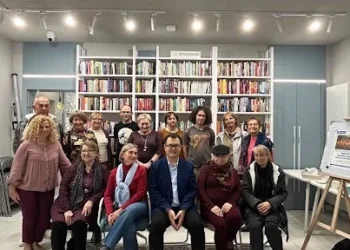
Researchers, students and Polish citizens attend a conference in Kraków, Poland, on the human rights situation in Afghanistan under Taliban rule. (Photo credit: Exclusive)
Afghanistan News

Conference on Afghanistan’s Human Rights Situation Held in Poland

15 October 2026 [t_time:1792074771]
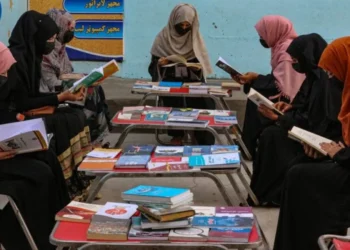
Afghan girls sitting and reading books as part of a book club (Photo: AFP)
No category

Book Clubs: A Refuge for Girls Amid Educational Restrictions

15 October 2026 [t_time:1792068202]
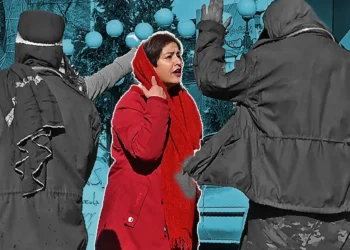
An Afghan woman standing in front of Taliban fighter as a sign of protest (Photo: AFP)
Afghanistan News

UNAMA: Taliban Morality Inspectors Detained or Threatened More Than 50 Women Over Hijab

15 October 2026 [t_time:1792058898]

Latest

Loading latest news...

Popular stories

  • An aerial view shows collapsed buildings and widespread damage following an earthquake in Panama (Photo: Reuters)

    More Than 200 Aftershocks Recorded in Panama Since Friday’s Earthquake

    Share
    Share Tweet
  • Axios: Trump Expects Ukraine Not to Attack Russian Oil Refineries

    Share
    Share Tweet
  • UN Report Reveals Shifts in Family Attitudes and Rise in Domestic Violence in Afghanistan

    Share
    Share Tweet
  • The Politics We Inherited: Rethinking Afghanistan’s Political Culture

    Share
    Share Tweet
  • Trump Again Says War with Iran Will End “Very Soon”

    Share
    Share Tweet

Podcast

Insights
Insights

Join Lynne O’Donnell for 8AM’s podcast series, Insights.
Lynne talks with generals, diplomats, soldiers, journalists, politicians, activists, people who have front row seats for conflicts around the world, and citizens with a story to tell, happy or sad. For this first series, Afghanistan is the focus. Lynne and her guests talk about the collapse of the republic in August, 2021, and the impact since — for the people of Afghanistan, for the security of the region, for the safety of the world. It’s important, interesting and insightful.

Insights/22: Controlling the Narrative with Mina Sharif
byinsights8am

Controlling the Narrative

Lynne O’Donnell talks with Mina Sharif, author, activist, women’s rights campaigner, educator and mentor. They discuss who controls the narrative and who speaks for Afghanistan’s people when the Taliban appear to have seized control not only of the country but of the message, too.

Have a listen

Insights/22: Controlling the Narrative with Mina Sharif
Episode play icon
Insights/22: Controlling the Narrative with Mina Sharif
Episode Description
Episode play icon
Insights/21: Media Meltdown with Zahra Joya
Episode Description
Episode play icon
Insights/20: Terror Inc with Scott Richards
Episode Description
Episode play icon
Insights/19: Busting Stereotypes with Bushra Gohar
Episode Description
Episode play icon
Insights/18: Media Matters with Waliullah Rahmani
Episode Description
Episode play icon
Insights/17: What Goes Around Comes Around with Sima Samar
Episode Description
Search Results placeholder
Hasht-e Subh

8AM Media, also known as Hasht-e-Subh Daily, stands as Afghanistan's premier independent and non-profit newspaper, resonating as a beacon of journalistic integrity since its establishment in June 2007 by esteemed Afghan journalists and human rights advocates. With a steadfast commitment to citizen journalism and civic education, Hasht-e-Subh Daily has earned its place as the most esteemed publication in the nation.

Publisher: Sanjar Sohail
Email: [email protected]
Executive Director: Parwiz Kawa
Email: [email protected]

Read More

UNICEF: Access to Safe Water in Afghanistan’s Schools Helps Protect Children’s Health

OCHA: Sweden Contributes Over $1 Million to Afghanistan Humanitarian Fund

New South Wales Parliament Recognises Hazara Genocide

UN: 38% of Afghanistan’s Population to Face Food Insecurity This Winter

Conference on Afghanistan’s Human Rights Situation Held in Poland

Editor’s Choice

Every Saturday morning, 8AM MEDIA English Services Department will guide you through the week’s biggest stories from Afghanistan and the international community.

Subscribe

© 2026 - ©Hasht-e Subh Daily

No Result
View All Result
8am.Media
پښتو ویب‌پاڼه
ویب‌سایت فارسی
اۉزبېکچه ویب‌سایت
  • Home
  • News
    • Afghanistan News
    • World News
  • Opinion
    • Editorial
    • Analysis
  • Reports
    • Daily Reports
    • Investigative Reports
  • Society
    • The story of people
  • Women’s Word
  • Columns
    • Three Years After Afghanistan’s Fall: The Taliban’s Resurgence
    • Towards Equality
    • The Resurgence of the Taliban: Two Years Since Afghanistan’s Fall
    • Hebatullah Report Special Edition
    • Resistance for Education Special Edition
    • Special Column on Taliban’s Education Curriculum
    • Nawroz
  • Interviews
  • Contact Us
    • About Us
    • 8AM MEDIA Annual Awards
    • Submit an Article to Hasht-e-Subh
  • 8am.media

© 2026 - ©Hasht-e Subh Daily