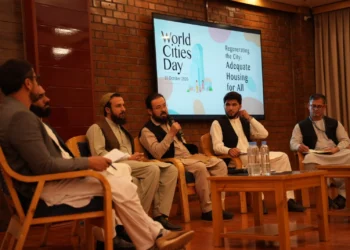
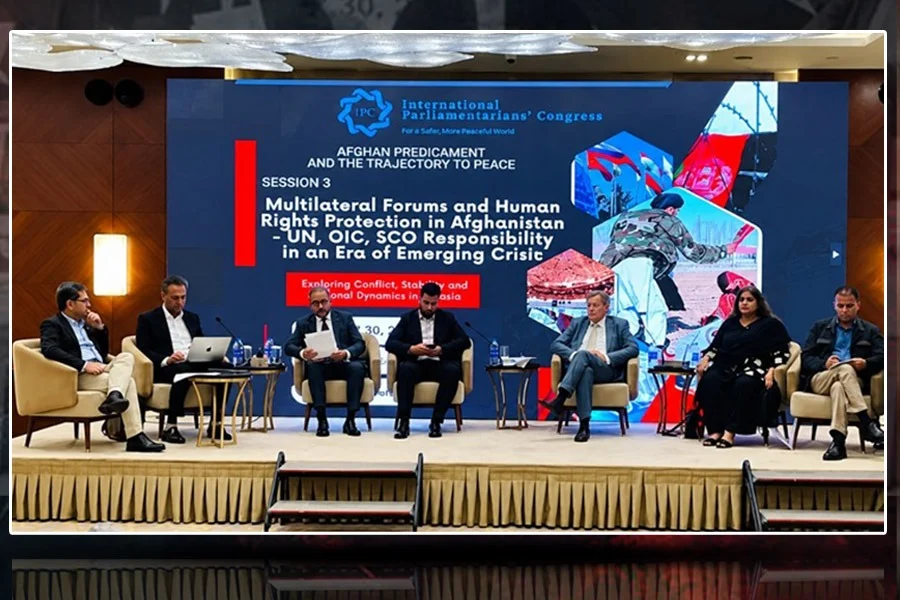
Those who drafted the Islamabad Declaration should be asked: what exactly was the achievement of this gathering? Was it to once again fix 42 percent of Afghanistan’s population as belonging to a single ethnic group, without a credible census, and then to make that same figure the basis for discussing the country’s future structure? If Afghanistan’s population exceeds 43 million, 42 percent means more than 18 million people. In which census were these more than 18 million people counted? In what year? Using what ethnic definition? In which provinces? With what statistical method? And where is the raw data? If no such data exists, then 42 percent should be called what it is: an estimate, not a census-verified fact.
It is not too much to expect of those who write political prescriptions for Afghanistan, perhaps in search of their lost fame, that they know the difference between an “estimated figure” and a “census result.” A politician who finds a percentage before finding the data, and then builds a future system on that basis, is still caught in the same old habit: first constructing the narrative, then finding a number to confirm it. I must say, I truly feel sorry for you.
The problem with the figure of 42 percent begins with the fact that Afghanistan has never had a complete ethnic census. The first national census, conducted in 1979 under conditions of war and insecurity, covered only part of the country’s population. More importantly, the question about ethnic affiliation was removed from the questionnaire just before it began.
Since even that census was not completed, figures such as 42 or 45 percent cannot be stated with the same certainty as the results of a nationwide census. Different sources have also estimated the shares of Afghanistan’s ethnic groups with differing figures and ranges. This very disagreement shows that we are not dealing with definitive and reliable data.
To better understand the issue, one must go back almost fifty years. In the late 1970s, ethnographic estimates put the Pashtun population of Afghanistan at several million. Since then, however, the country has experienced one of the longest periods of war, migration and population displacement.
The Soviet occupation, the civil wars, the migration of millions to Pakistan and Iran, the rise of the Taliban, the war after 2001, the return of part of the migrants, and the new wave of migration after 2021 have all changed the country’s demographic structure. It is therefore not possible to simply multiply an estimate from the late 1970s by the natural growth rate and claim that the exact population of an ethnic group in 2026 has been obtained.
If someone today claims that more than 18 million people in Afghanistan belong to a particular ethnic group, the burden of proof lies with the claimant. They must publish the calculation method, the definition of ethnicity, the statistical sample and the geographic scope, rather than repeating a figure so many times that it comes to resemble reality through sheer repetition.
In Pakistan, the statistical situation is clearer, but there is one fundamental difference: Pakistan’s official census in this area measures mother tongue, not ethnicity. In Pakistan’s 2023 census, more than 43 million people declared Pashto as their mother tongue. This figure at least has a clear origin: a census, a table, and a defined method.
But the problem with calculations about “the Pashtuns on both sides of the Durand Line” lies precisely here: in Pakistan we count mother tongue, in Afghanistan we place an ethnic estimate beside it, and then we present the result as a single figure. These two sets of data are not of the same kind. If the criterion is language, let us compare language with language; if the criterion is ethnicity, let us measure ethnicity with a uniform method. But the problem is not only the difference in statistical methods on the two sides of the Durand Line. The deeper issue is how we have defined the very units we are counting.
In many political debates in Afghanistan, “Pashtun” is counted as one large demographic unit, while the other side of the equation is divided into Tajik, Hazara, Aimaq, Qizilbash, Sadat, Bashayi, Uzbek, Baloch, Timani, and other groups. Each of these groups is then compared separately with that one large unit.
Here the method of comparison must be made clear. If the criterion is ethnicity, an ethnic group must be compared with an ethnic group. But if the subject is language, Pashto must be compared with the entire Persian-speaking sphere, not Pashtuns with Tajiks, because the former is a comparison of language with language and the latter is a comparison of ethnic group with ethnic group.
In that case, it becomes clear that Afghanistan’s Persian-speaking sphere does not include only those who are today called “Tajik.” A Hazara can be both Hazara and Persian-speaking; an Aimaq can also preserve his identity and be Persian-speaking; Qizilbash, Jamshidi, Timani, and many Sadat can also live within this same linguistic sphere.
In Afghanistan’s history, terms such as “Farsiwan” or “Parsiwan” have also been used for Persian speakers. The purpose of recalling this term should not be to construct a “Farsiwan ethnic group” in opposition to the Pashtuns, because then we would have reproduced the same logic of ethnic division under a new name. Its importance lies only in reminding us that Afghanistan’s Persian sphere is broader than one particular ethnic group and does not belong to the Tajiks alone.
A brief look at the history of the region shows this same complexity. The Ghaznavids were of Turkic descent, yet Persian found an important place in their cultural and administrative apparatus. The Timurids emerged from the Turco-Mongol tradition, yet under their rule Herat became one of the most important centers of Persian civilization. The Ghurids and other Khorasani states also grew in this same multilingual and multi-ethnic environment. This history shows that the ancestry of the ruler did not necessarily determine the language of society, and that a shared language did not turn all peoples into a single ethnic group.
In the modern period, one of the characteristics of state-building and colonial knowledge was the desire to classify societies into relatively fixed categories: ethnicity, tribe, language, and religion were turned into countable and manageable units. The problem begins when we imagine these administrative classifications to be eternal and natural realities of society.
The prevalence of Persian in Afghanistan does not mean that all Persian speakers belong to one ethnic group. Quite the opposite; this very prevalence shows that Persian has crossed ethnic boundaries. A Hazara does not need to become a Tajik to be Persian-speaking. An Aimaq does not need to abandon his identity. And a Pashtun can also speak Persian fluently without his Pashtun identity being diminished. The prevalence of Persian is therefore not evidence for constructing a new ethnic majority; rather, it is testimony to the existence of a communicative and cultural sphere that goes beyond ethnicity.
“The largest ethnic group” is not the same as “the majority.” Even if we assume that Pashtuns make up 42 percent of Afghanistan’s population, 42 percent is still not a majority. A majority in the statistical sense means more than 50 percent. It is therefore possible for one group to be the largest single group in the country while society still lacks an ethnic majority. Given the disagreement among estimates and the absence of a credible census, it cannot be said with scientific confidence that any one ethnic group makes up more than half of the country’s population. And this is precisely where politics should speak a little more humbly than statistics.
The mistake of that declaration is not merely the choice of a figure. The more fundamental error is that it makes the same old logic of dividing Afghanistan into ethnic shares the starting point for discussing the country’s future. Some of the elders present at such gatherings may imagine that repeating a figure that has circulated in reports for years is a sign of mastery over the Afghanistan question. But sometimes one simple question, “What is the source of this figure?”, is enough to collapse that confidence. If only, before determining the shares of millions of people, as much time had been spent reading the history of Afghanistan’s censuses as was spent drafting the declaration, even a few minutes.
If there is no clear answer, let us not call the figure a fact. And if we truly want to move beyond the legacy of division and classification, let us build Afghanistan’s future not on a contest of ethnic percentages, but on equal citizenship and equal rights; a structure in which no ethnic identity has to first prove that its numbers are larger than another’s to enjoy power. This may be harder than writing a declaration in Islamabad; but at least it would be written for the Afghanistan of the future, not for repeating the misery of the past.
You can read the Persian version of this analysis article here: