• 8AM.MEDIA
  • ویب‌سایت فارسی
  • پښتو ویب‌پاڼه
  • اۉزبېکچه ویب‌سایت
  • Podcast
Wednesday, October 14, 2026
Hasht-e Subh
  • Home
  • News
    • Afghanistan News
    • World News
  • Opinion
    • Editorial
    • Analysis
  • Reports
    • Daily Reports
    • Investigative Reports
  • Society
    • The story of people
  • Women’s Word
  • Columns
    • Three Years After Afghanistan’s Fall: The Taliban’s Resurgence
    • Towards Equality
    • The Resurgence of the Taliban: Two Years Since Afghanistan’s Fall
    • Hebatullah Report Special Edition
    • Resistance for Education Special Edition
    • Special Column on Taliban’s Education Curriculum
    • Nawroz
  • Interviews
  • Contact Us
    • About Us
    • 8AM MEDIA Annual Awards
    • Submit an Article to Hasht-e-Subh
  • 8am.mediaBack
Subscribe
No Result
View All Result
  • Home
  • News
    • Afghanistan News
    • World News
  • Opinion
    • Editorial
    • Analysis
  • Reports
    • Daily Reports
    • Investigative Reports
  • Society
    • The story of people
  • Women’s Word
  • Columns
    • Three Years After Afghanistan’s Fall: The Taliban’s Resurgence
    • Towards Equality
    • The Resurgence of the Taliban: Two Years Since Afghanistan’s Fall
    • Hebatullah Report Special Edition
    • Resistance for Education Special Edition
    • Special Column on Taliban’s Education Curriculum
    • Nawroz
  • Interviews
  • Contact Us
    • About Us
    • 8AM MEDIA Annual Awards
    • Submit an Article to Hasht-e-Subh
  • 8am.mediaBack
No Result
View All Result
Hasht-e Subh
No Result
View All Result

Pakistan Route Closure Cripples Trade, Costing Afghanistan’s Traders Millions of Dollars

Translated by Farhad Farhaad | Originally reported in Persian by Ilya

Mohammad Farhaad Mohammad Farhaad
14 October 2026 - Solar Hijri Date: 1405/07/22 [t_time:1791975362]
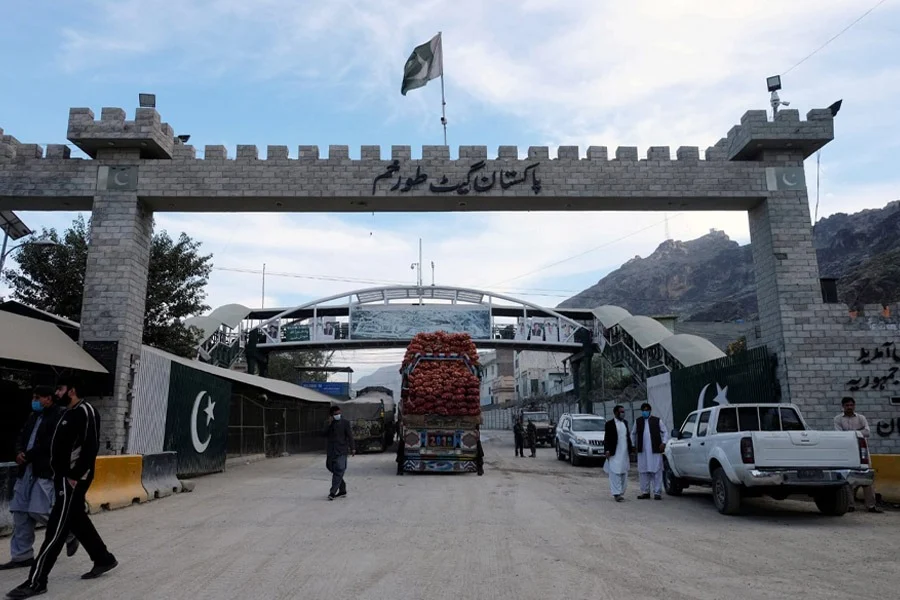
A truck loaded with goods stands at the Pakistani gate of the Torkham crossing as trade between Afghanistan and Pakistan remains suspended. (Photo credit: Reuters)

Reuters

Several traders in the country say the halt in trade between Afghanistan and Pakistan over the past year has caused them millions of afghanis in financial losses. They add that, as a result, they have been forced to suspend part of their commercial activities and reduce the number of their employees. According to them, the closure of trade crossings has not only caused them to lose their commercial contracts but has also forced them to use alternative and costly routes.

In interviews with the Hasht-e Subh Daily, the traders say that delays in shipping cargo, spoilage of goods, and rising transport costs are the main challenges they face when using alternative routes. They are calling for the reopening of trade routes with Pakistan, alongside the diversification of Afghanistan’s transit routes.

Gada Mohammad Kohdamani, a trader in the country, says that after a year of closed trade routes between Afghanistan and Pakistan, he and other traders have faced heavy financial losses. He adds that before the routes were closed, he exported three to four trailers of goods to Pakistan every day, but the volume of his business activity has now declined. According to him, over the past year traders have turned to alternative routes to transport goods, but high costs, congestion at crossings, and delays in the arrival of shipments have created new problems for them.

This trader says: “Before the Pakistan route was closed, we loaded four to five freight trucks every day, and we needed 35 to 40 workers to collect, package, and load each truck. But now the workers who used to work with us every year have become jobless, and out of necessity, we have also dismissed a number of the employees of our company and shops.”

Yamin Watanyar, another trader in the country, does not consider the continued closure of trade routes between Afghanistan and Pakistan to be in the interest of either country. He says that the Taliban and Pakistani officials should separate political disputes from trade and take action to reopen the crossings. In his view, the resumption of trade between the two countries could help improve the situation of traders and orchard owners.

This trader says: “Trade must be kept separate from politics. Pakistan is a suitable market for Afghanistan’s fruit and vegetables, and Afghanistan is also a good market for Pakistani products. Last year, after the Pakistan route was closed, we lost about $350,000 in the apple and grape trade. That money belonged to people, and we now owe money to orchard owners and money changers.”

Ahmadshah Yarzada, another trader in the country, says that the closure of the Pakistan trade route over the past year has created challenges for the export of Afghanistan’s goods to foreign markets and has raised their transport costs. According to him, before the closure of this route, transporting goods to India via Pakistan took 10 to 15 days, and the cost was 25 cents per unit of goods. Now, however, transporting goods via Iran takes about two months, and the cost has reached 70 to 80 cents.

This trader says: “Before the Pakistan route was closed, transporting goods to India took 10 to 15 days, and the cost was 25 cents. But now, transport via the Iran route takes about two months, and the cost has risen to 70 to 80 cents. This situation has caused serious problems for our exports. We hope the trade routes through Pakistan and Iran return to normal again.”

Ghulam Yahya Meshkwani, another trader in the country, says that the lengthening of goods transport routes has made it difficult for traders from Afghanistan to access foreign markets.

Meshkwani adds: “Before the Pakistan route was closed, transporting goods from Torkham to Wagah took seven days and from Chaman 13 days, and the transport cost per kilogram was 20 to 25 cents. But now this cost has risen to two dollars. The alternative routes have also created many problems for traders because they are time-consuming.”

Meanwhile, a number of economic experts say that the closure of Pakistan trade routes, despite creating room for the expansion of domestic production and the use of alternative routes, has caused serious challenges for Afghanistan’s trade.

Abdul Nasir Rishtya, an economic affairs expert, says that the closure of Pakistan trade routes, despite disrupting Afghanistan’s trade and raising the prices of some goods, has created an opportunity to reduce dependence on that country and find alternative routes. He adds that to reduce this dependence, Afghanistan must expand domestic production and diversify its access routes to global markets by connecting to the region’s railway networks.

Rishtya says: “The closure of the Pakistan route was both a challenge and an opportunity. On the one hand, it disrupted Afghanistan’s trade and the prices of some goods rose, but on the other hand, it created the ground for Afghanistan to become familiar with new routes and to produce domestically some of the goods it used to import from Pakistan.”

This economic expert stresses: “Afghanistan’s dependence will decrease when it is connected to the region’s railway network, because Afghanistan is a landlocked country, and to access global markets and the countries of the region, it needs diverse transit routes.”

Mir Shakib Mir, another economic affairs expert, says that to reduce its economic vulnerability, Afghanistan must diversify its transit routes and reduce its dependence on a single route. According to him, developing air transit infrastructure could provide more options for transporting goods and reduce trade costs. He warns that excessive dependence on a single route leaves Afghanistan’s economy vulnerable to political tensions and trade disruptions.

Mr. Mir says: “We must diversify our trade routes and never make more than 15 percent of our trade dependent on a single route, because the suspension or damage of that route could cause problems for the country’s trade.”

On October 12, 2025, Pakistan closed the trade and transit crossings between the two countries after clashes between Pakistani forces and the Taliban in areas near the Durand Line. The closure of these crossings disrupted trade between the two countries and confronted traders from Afghanistan with challenges such as higher goods transport costs, delays in the arrival of shipments, and limited access to the Pakistani market.

As a result, a number of traders from Afghanistan turned to alternative routes, particularly the Iran route, to transport their goods. However, longer transit times, congestion at crossings, and the spoilage of perishable goods have increased the costs and risks of transport.

The closure of the crossings continues while security disputes between Islamabad and the Taliban remain unresolved.


You can read the Persian version of the report here:

زیان میلیون‌دالری بازرگانان افغانستان؛ بسته‌ماندن مسیر پاکستان تجارت را فلج کرده است
ShareTweetSendSendShare

Related Posts

A decree issued by the Taliban’s Ministry for the Propagation of Virtue and Prevention of Vice bans Kandahar traders from photographing living beings at commercial events. (Photo credit: Exclusive)
Afghanistan News

Sources: Taliban Ban Kandahar Traders from Photographing Living Beings

7 October 2026 [t_time:1791377574]
Three leaders shake hands in front of a Makkah Agreement backdrop bearing the emblems of Turkey, Saudi Arabia and Pakistan. (Photo credit: Khaberni.com)
Analysis

Mecca Agreement vs. the Taliban, India and Israel: Is a New Regional Alignment Taking Shape?

4 October 2026 [t_time:1791121476]
Panelists sit on stage during an International Parliamentarians' Congress session on human rights protection in Afghanistan and the responsibility of the UN, OIC and SCO. (Photo credit: Social Media)
Analysis

The Islamabad Declaration and the Myth of 42 Percent

3 October 2026 [t_time:1791026142]

Latest

Loading latest news...

Popular stories

  • An aerial view shows collapsed buildings and widespread damage following an earthquake in Panama (Photo: Reuters)

    More Than 200 Aftershocks Recorded in Panama Since Friday’s Earthquake

    Share
    Share Tweet
  • Axios: Trump Expects Ukraine Not to Attack Russian Oil Refineries

    Share
    Share Tweet
  • UN Report Reveals Shifts in Family Attitudes and Rise in Domestic Violence in Afghanistan

    Share
    Share Tweet
  • The Politics We Inherited: Rethinking Afghanistan’s Political Culture

    Share
    Share Tweet
  • Mujahid: Pakistan Should Address Its Internal Problems Instead of Making Accusations

    Share
    Share Tweet

Podcast

Insights
Insights

Join Lynne O’Donnell for 8AM’s podcast series, Insights.
Lynne talks with generals, diplomats, soldiers, journalists, politicians, activists, people who have front row seats for conflicts around the world, and citizens with a story to tell, happy or sad. For this first series, Afghanistan is the focus. Lynne and her guests talk about the collapse of the republic in August, 2021, and the impact since — for the people of Afghanistan, for the security of the region, for the safety of the world. It’s important, interesting and insightful.

Insights/22: Controlling the Narrative with Mina Sharif
byinsights8am

Controlling the Narrative

Lynne O’Donnell talks with Mina Sharif, author, activist, women’s rights campaigner, educator and mentor. They discuss who controls the narrative and who speaks for Afghanistan’s people when the Taliban appear to have seized control not only of the country but of the message, too.

Have a listen

Insights/22: Controlling the Narrative with Mina Sharif
Episode play icon
Insights/22: Controlling the Narrative with Mina Sharif
Episode Description
Episode play icon
Insights/21: Media Meltdown with Zahra Joya
Episode Description
Episode play icon
Insights/20: Terror Inc with Scott Richards
Episode Description
Episode play icon
Insights/19: Busting Stereotypes with Bushra Gohar
Episode Description
Episode play icon
Insights/18: Media Matters with Waliullah Rahmani
Episode Description
Episode play icon
Insights/17: What Goes Around Comes Around with Sima Samar
Episode Description
Search Results placeholder
Hasht-e Subh

8AM Media, also known as Hasht-e-Subh Daily, stands as Afghanistan's premier independent and non-profit newspaper, resonating as a beacon of journalistic integrity since its establishment in June 2007 by esteemed Afghan journalists and human rights advocates. With a steadfast commitment to citizen journalism and civic education, Hasht-e-Subh Daily has earned its place as the most esteemed publication in the nation.

Publisher: Sanjar Sohail
Email: [email protected]
Executive Director: Parwiz Kawa
Email: [email protected]

Read More

UN: Cities Must Be at the Center of Planning

Egyptian and Pakistani Foreign Ministers Discuss Regional Issues

Pakistan Route Closure Cripples Trade, Costing Afghanistan’s Traders Millions of Dollars

US Federal Judge: Trump Likely Violated Constitution by Restricting Access for Three Media Outlets

WHO Calls for Expanded Access to Healthcare Services

Editor’s Choice

Every Saturday morning, 8AM MEDIA English Services Department will guide you through the week’s biggest stories from Afghanistan and the international community.

Subscribe

© 2026 - ©Hasht-e Subh Daily

No Result
View All Result
8am.Media
پښتو ویب‌پاڼه
ویب‌سایت فارسی
اۉزبېکچه ویب‌سایت
  • Home
  • News
    • Afghanistan News
    • World News
  • Opinion
    • Editorial
    • Analysis
  • Reports
    • Daily Reports
    • Investigative Reports
  • Society
    • The story of people
  • Women’s Word
  • Columns
    • Three Years After Afghanistan’s Fall: The Taliban’s Resurgence
    • Towards Equality
    • The Resurgence of the Taliban: Two Years Since Afghanistan’s Fall
    • Hebatullah Report Special Edition
    • Resistance for Education Special Edition
    • Special Column on Taliban’s Education Curriculum
    • Nawroz
  • Interviews
  • Contact Us
    • About Us
    • 8AM MEDIA Annual Awards
    • Submit an Article to Hasht-e-Subh
  • 8am.media

© 2026 - ©Hasht-e Subh Daily