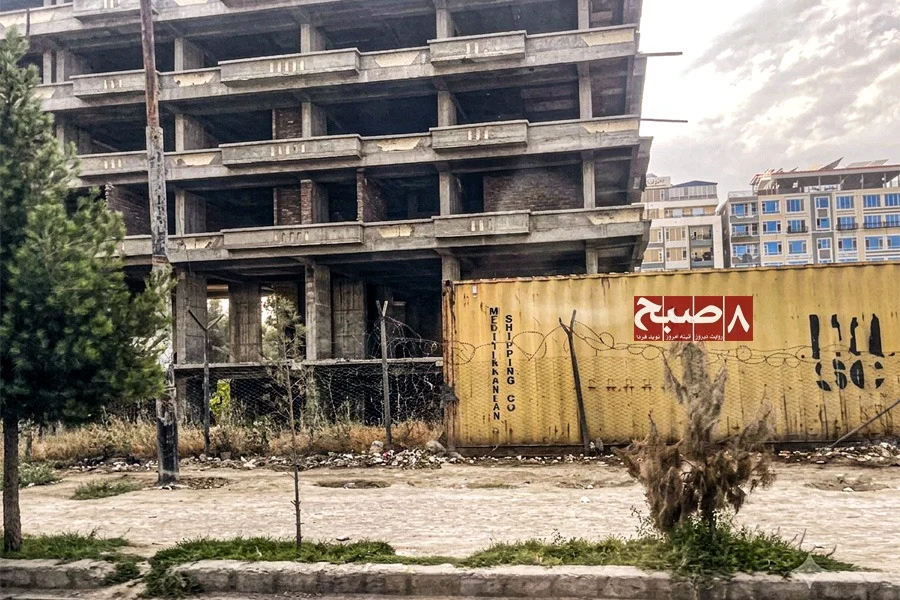
Alongside the expansion of joint-venture housing, or known as “Sharik-Abad,” in Afghanistan, legal experts are warning about the legal consequences of this trend in the absence of transparent contracts and valid documents. In their view, ambiguity in agreements among partners could lead to disputes over land ownership, the amount of investment, construction costs, the division of residential units, and revenue from the sale or rental of buildings. Meanwhile, economic experts warn that concentrating construction investment on expensive homes, without regard for the economic capacity and actual needs of citizens, could deepen the gap between the supply of housing and people’s purchasing power.
Mir Abdul Wahid Sadat, head of the Afghanistan National Association of Jurists, says that without precise contracts and valid documents, joint-venture housing could lead to disputes over land ownership, capital shares, construction costs, the division of apartments, and revenue from sales or rent.
Mr. Sadat says: “From a legal standpoint, the Civil Code of the former government of Afghanistan established principles on contracts and joint ownership. No partner should disregard the rights of others or make decisions about jointly owned property without agreement or legal authority. To protect the rights and capital of partners, a written and signed contract must be drawn up, specifying each partner’s share, the value of the land and cash capital, responsibility for additional costs, the project completion timeline, the method of dividing units, and the procedure for resolving disputes. Likewise, land ownership documents must be examined and payments documented.”
The jurist adds: “Trust alone is not enough. A clear contract, valid documents, and consultation with a lawyer knowledgeable about Afghanistan’s laws are essential to protect partners’ capital. The fundamental problem in the current situation is that the previous laws, including Afghanistan’s Civil Code, are no longer being consistently enforced. For this reason, a clear and enforceable legal framework is of fundamental importance.”
Behzad (pseudonym), an economic expert, says the spread of joint-venture housing in Afghanistan is the result of factors such as a shortage of individual capital, limited secure investment opportunities, and a growing need for housing. According to him, at a time when many people are unable to buy or build a home independently, taking part in construction projects has become a way to pool small amounts of capital and enter this sector.
This expert says: “The rise in the price of land and building materials, growing unemployment, and the decline in people’s purchasing power, alongside the growing need for housing, have paved the way for the expansion of joint-venture investments. This trend could have a positive effect on the country’s economy by pooling small amounts of capital, creating job opportunities for construction workers, and boosting related economic sectors. However, if construction is concentrated mainly on expensive homes and does not match actual market needs, the supply of expensive housing may increase while low-income families remain unable to afford a home.”
Mr. Behzad adds: “Joint-venture housing can contribute to the country’s economic growth when it proceeds on the basis of actual market needs, transparency in contracts, and trust among partners. Likewise, alongside the construction of expensive homes, priority should be given to building affordable housing suited to the economic capacity of low-income families, so that the benefits of this trend reach a broader segment of society.”
Abdul Nasir Rishtya, an economic expert, says the increase in joint-venture housing activity in Afghanistan is largely due to the situation of people who hold land but, because of a shortage of capital, are unable to build on it independently.
Mr. Rishtya says: “The rise in demand for housing has paved the way for the expansion of construction activity. The growth of the construction sector is considered one of the important drivers of economic activity in any country, because this sector, as one of the leading industries of the economy, is directly linked to numerous other sectors, including the production and supply of building materials and the industries related to homes and the items they require. Therefore, if construction activity is properly managed and investments in this sector are effectively directed, it can play an important role in creating job opportunities, increasing economic activity, and growing the country’s economy.”
Hikmat (pseudonym) says that the Taliban Prime Minister’s approval of high-rise construction and the unprecedented increase in the return of migrants from Iran and Pakistan have been influential factors in the expansion of joint-venture housing in Afghanistan in recent months. According to him, the concentration of a large number of returned migrants in Kabul has increased demand for housing and intensified pressure on the market for rental and sale homes.
He adds: “With the growing need for housing and the necessity of building new residential homes, a number of people have turned to launching joint-venture housing projects. Therefore, it can be said that social changes and the population increase resulting from the return of migrants have been important factors in the expansion of this type of investment. In addition to affecting the housing market, these developments have also created the conditions for a different economic situation.”
Jabbar (pseudonym), a Kabul resident who works in joint-venture housing, says that because of limited personal capital and an inability to finance construction projects independently, he decided to invest jointly with two other people.
He says: “The three of us work together, and so far we have succeeded in building and selling two apartment blocks, from which we have also earned good profits. The increase in demand for housing has created a favorable environment for continuing this activity. However, the Taliban raise many pretexts as the work progresses and take money from us. Despite these challenges, we continue our activity. Before starting each project, we enter into a contract among ourselves and carry out our activities based on the agreements and documents we have drawn up.”
Some time ago, a number of the country’s citizens had complained about the challenges in the construction process. Speaking to the Hasht-e Subh Daily, they had said that the construction process faces numerous structural and administrative challenges, including administrative corruption, bribery, and red tape within Taliban institutions. According to them, from the stage of obtaining permits to the implementation of projects, costs and the time needed to complete construction have risen sharply.
The return of migrants from Iran and Pakistan, coinciding with urban plans that place homes in the path of new roads and with rising house rents, has confronted citizens with unprecedented challenges.
This situation has not only increased pressure on the housing market but has also put many families in serious difficulty in finding suitable shelter. At the same time, the lack of orderly urban planning and a shortage of essential services have heightened concerns among citizens and added to the difficulties of daily life.
You can read the Persian version of this report here:
«شریکآباد»؛ راهی برای سرمایهگذاری یا زمینهای برای منازعات حقوقی؟