Introduction: Afghanistan’s Tumultuous Present
Four years after the Taliban’s dramatic return to power in Kabul, Afghanistan stands at the intersection of fragile domestic control and shifting regional geopolitics. The departure of US and NATO forces in 2021 was widely portrayed as a defeat for the West, but the reality, according to former acting president Amrullah Saleh, is far more complex. Saleh, who also served as intelligence chief and long-time opponent of the Taliban, argues that what has unfolded is less a military victory than a calculated political realignment, one that has turned the Taliban into reluctant “assets” for global powers.
In a wide-ranging interview, Saleh provides a critical examination of the Taliban’s evolution from their first rule in the 1990s to their current incarnation. He dissects their ties with terrorist groups, the role of external actors like China and the US, and why he believes the Taliban’s hold on power is destined to collapse. His analysis sheds light on Afghanistan’s uncertain trajectory and the miscalculations of those betting on the Taliban as a partner in regional stability.
Taliban 1.0 vs Taliban 2.0: From Guerrillas to “Assets”
The Taliban’s resurgence in 2021 was initially framed as a historic echo of their rise in the 1990s. Yet, Saleh insists that Taliban 2.0 are not merely the return of Taliban 1.0; they are an altered force, shaped by geopolitics and external sponsorship.
“In the 90s, we in the resistance had a better engagement with China,” he recalls. Back then, Beijing’s main concern was the presence of Uyghur fighters allied with the Taliban. China accepted Afghan evidence of its citizens fighting alongside the militants. Today, although the East Turkestan Islamic Movement remains a concern, Saleh argues it is far less central. Instead, what defined Taliban 2.0’s rise was the geopolitical scaffolding built around the 2020 Doha Agreement.
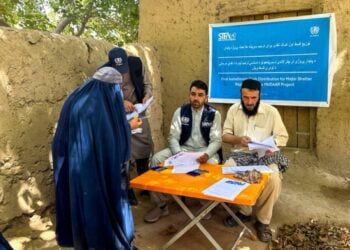
The Taliban, he stresses, “are implementing it item by item to serve the geopolitical interest of the US in the region.” Under the agreement, Al-Qaeda was designated as the only terrorist organisation, effectively insulating other militant groups under Taliban protection. Washington, meanwhile, provides the Taliban with \$60 million every week for humanitarian and civilian needs. While officially routed through NGOs, Saleh highlights that the Taliban themselves created “over 900 NGOs staffed by the Taliban,” channelling funds directly into their system of consolidation.
“The US/NATO weren’t defeated,” he asserts. “They just turned the Taliban into their assets.” That reality, he believes, has forced countries like China to recalibrate. Initially “jubilant and happy” at the Western withdrawal, Beijing compared Taliban leader Hibatullah Akhundzada to Mao Zedong. But as Saleh dryly notes, “they are realising their naivete.”
Terrorism Nexus: Al-Qaeda, ISKP, and Others
Despite its assurances in Doha, the Taliban remain deeply intertwined with transnational militant groups. Saleh’s view is blunt: “The Taliban are sincerely assisting the US in the pacification of Al-Qaeda. It is a multi-angle program to which the Taliban are committed.”
The killing of Ayman al-Zawahiri in Kabul in 2022, he argues, was not a unilateral American action but enabled by elements within the Taliban. Yet this cooperation is highly selective. Taliban factions that favour engagement with the outside world may quietly assist in dismantling Al-Qaeda, but there is no such commitment regarding other groups. “The Taliban have no commitment to fight other groups other than Al-Qaeda,” Saleh explains. “They aren’t bound to any document.”
The result is a permissive environment in which the Islamic State Khorasan Province (ISKP), the Tehrik-i-Taliban Pakistan (TTP), the Haqqani Network, and Uyghur militants continue to find refuge. This tolerance, he argues, “gives us reason to believe that their confidence in hosting these groups stems from a strategic secret deal. It is about the use of radical militant Islam as an instrument of foreign policy.”
Such dynamics make Afghanistan not a sanctuary of stability but a pressure point for the region. By allowing multiple terror networks to operate, while maintaining selective ties with Western intelligence, the Taliban have positioned themselves as both arsonists and firemen in the global counterterrorism equation.
China’s Calculated Gamble
No regional actor illustrates the contradictions of engaging with Taliban Afghanistan more than China. During the Islamic Republic era (2004-21), Beijing maintained diplomatic and economic ties, pledging cooperation with the elected government. Yet, Saleh contends, they also cultivated links with the state’s enemies. “They have set a negative example,” he remarks.
Since the Taliban’s return, China’s engagement has been defined more by caution than bold investment. Beijing finances certain Taliban factions, but “doesn’t have any project to benefit the Afghan people.” The emblematic case is the Mes Aynak copper mine, once touted as a flagship Chinese project but still dormant years later. For Saleh, this illustrates Beijing’s fundamental disposition: “China is not a risk-taking country. They are too cautious. Thus, I think we must not have an inflated view of their influence.”
China’s intelligence apparatus, the Ministry of State Security (MSS), maintains a presence in Kabul and several provinces, including Badakhshan, its most feared territory, supplying equipment and training. There was even a mission in Bagram, Saleh notes. But the scale of Chinese involvement is dwarfed by what the Taliban receive from the CIA. “Yes, they provide funds to various Taliban factions to buy favour and influence. They are not able to act like a strategic patron of the Taliban.”
Saleh is scathing in his assessment of those who see Hibatullah Akhundzada as a Mao-like figure capable of stabilising Afghanistan. “Hibatullah isn’t Mao,” he warns. “He is more of Pol Pot.”
The Taliban’s Future and Regional Miscalculations
For Saleh, the most glaring flaw in the regional calculus is the assumption that the Taliban’s rule is sustainable. He insists the group has “no popular mandate” and remains “too afraid to get the people engaged.” Their reliance on US cash infusions underscores this fragility. Without weekly stipends and CIA assistance, Saleh argues, “they will have to rely on Afghan resources, which can’t sustain their system. It will collapse.”
Meanwhile, the human cost of Taliban rule is staggering. “Millions have fled the country due to their racist and repressive policies,” he observes. Afghanistan’s pluralistic character, once enshrined in a fragile republic, “has been crushed by the Taliban.” The system is sustained not by legitimacy but by fear, patronage networks, and external stipends.
Saleh’s advice to China and other powers is unequivocal: “It will be best for countries to stay away from investing in an anti-people group who are paranoid to get legitimacy of any sort from the people.” He stresses that only a people-centric solution can bring lasting stability.
For Beijing, Washington, and regional states, the lesson is clear. Viewing Afghanistan through the narrow prism of counterterrorism or resource extraction risks strategic miscalculation. The Taliban’s current status, he predicts, “won’t last. There is no way.”
Conclusion: Beyond Short-Term Calculations
Amrullah Saleh’s warnings cut against the grain of realpolitik that has guided much of the world’s approach to the Taliban since 2021. By empowering a factional, anti-people regime, global powers have traded short-term tactical gains for long-term instability. China, in particular, risks becoming entangled in a fragile order that it cannot shape or stabilise.
“Afghanistan is neither Talibanistan nor Pashtunistan,” Saleh insists. Its pluralistic character cannot be erased, and those who align themselves with an “ethnically racist and ideologically terrorist system” will ultimately confront failure.
The Taliban may control Kabul today, but Saleh’s message is stark: without legitimacy, popular mandate, or sustainable governance, their grip on Afghanistan is temporary. For regional and global actors alike, the real choice lies not in whether to engage the Taliban, but in whether to bet on a system already destined to fall.
Author:
Amit Kumar is a Senior Research Fellow at BITS Pilani, India. His research focuses on China-Afghanistan relations, South Asian politics, and regional security.