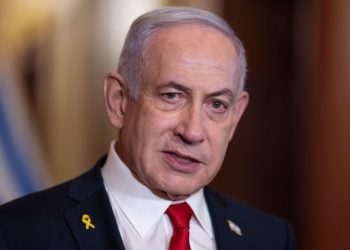
Israel’s election is no less important than the United States midterm elections, if not more so. What has added to the significance of both is the shaky and unstable state of the Middle East. The prevailing perception is that if Benjamin Netanyahu does not become prime minister for another term (which has not happened yet, but is far from ruled out, given coalition-building and the possibility of repeat elections), and if the Republicans lose their majority in the US Congress, particularly in the Senate, the war between the United States, Israel, and Iran will subside, and we will witness a new situation in the Middle East. So far, the outcome of Israel’s election is clear, but that of the United States is not.
Israel held its election without any of the three blocs (Netanyahu, Eisenkot and the Arabs) reaching the majority of 61 seats in the Knesset, which has 120 seats. Netanyahu’s bloc won 53 seats. Eisenkot’s bloc, which brings together the parties opposed to Netanyahu (Yashar, Together, the Democrats and Yisrael Beytenu), won 48 seats. The Arab bloc, which is also made up of two factions, Mansour Abbas and the three other parties, won 19 seats.
The question now concerns how the new government will be formed. It will inevitably emerge from a coalition of parties; otherwise, the way will be open for a “national unity” government or new elections. A possible government will likely have diverse leanings, unlike the incumbent government, which is regarded as the most right-wing government in Israel’s history. This right-wing government is accused of personalizing power and disregarding the demands and concerns of other factions, just as it has so far paid no heed to the world’s concern over the fate of the residents of Gaza, the West Bank and southern Lebanon.
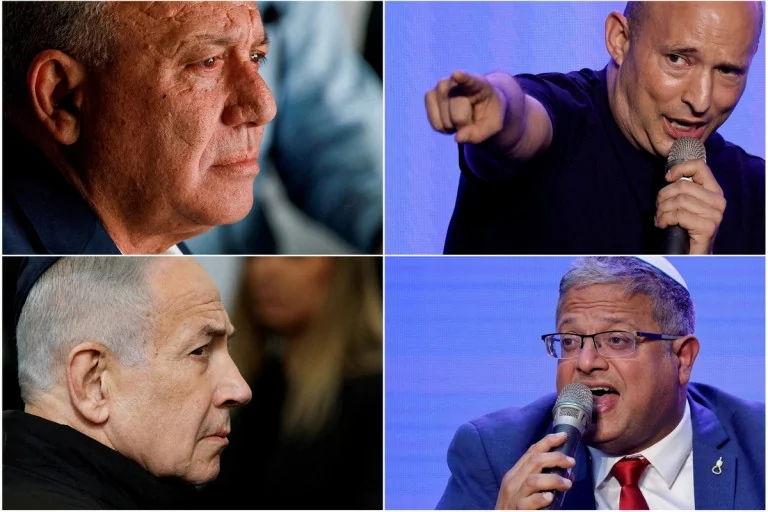
On the face of it, Netanyahu will not easily become prime minister through coalition-building. The reason is clear: Netanyahu’s bloc includes people whom secular forces cannot easily work with, if not people they cannot work with at all. For instance, Netanyahu’s bloc is made up of four parties: Religious Zionism and Jewish Power (regarded as national-religious), and Shas and United Torah Judaism (UTJ) (regarded as religious). The demands of these four parties are also clear. The national-religious parties, led by Smotrich and Ben Gvir, seek the destruction of the Palestinians and the complete occupation of their homes and land, while the religious parties seek more exemptions and privileges from the government, without accepting the burden of military service or taking on any other responsibility.
The secular forces, who have mostly gathered in Eisenkot’s bloc, cannot easily work with Netanyahu’s far-right allies, whether religious or national-religious. Even Avigdor Lieberman, the leader of Yisrael Beytenu (which won 7 seats), keeps his distance from the extremists in Netanyahu’s bloc, even though he agrees with them on the Palestinian file, Hezbollah and Iran, and may in some instances take an even harder line. Lieberman, who is himself secular, does not want the religious right-wing parties, which represent the Haredim, to enjoy exorbitant privileges without accepting any duties. The religious right-wing parties want the Haredim to be exempt from military service. The secular forces do not want this, and in their election pledges they have stressed the abolition of this exemption. Likewise, Naftali Bennett and Yair Lapid (who lead the Together party, which won 12 seats) do not want to form a coalition with Netanyahu’s current entourage, as the secular and religious divide and the question of who enjoys or is denied exemptions would arise once again.
More importantly, these same secular figures cannot easily work in one cabinet with Smotrich and Ben Gvir either. When Netanyahu tries, at least in appearance, to keep his distance from these two allies, who are also key members of his government, and not to accept their views wholesale, Lieberman, Bennett and Lapid will stay further away. The position of Eisenkot and Yair Golan (who leads the Democratic Party, made up of Meretz and Labor) is also clear. So Netanyahu has no choice but to pick one of two options: the secular forces in the opposing bloc, or the far-right parties that are still his allies. So far, he is unable to bring both together.
In addition, it is not only the religious and national-religious right wing but also Netanyahu himself who is unacceptable to Eisenkot’s bloc. Eisenkot and the other parties of the opposing bloc accuse Netanyahu of destroying Israel’s reputation, and say that if accusations of “genocide” and “war crimes” are being made against Tel Aviv, it is only because Bibi, at critical junctures, preferred staying in power to the interests of all Israelis. The opponents, who entered the race with the slogan of pushing Netanyahu out of power and highlighting his weaknesses, would now pay a price if they merged with Bibi in one government, and it would amount to a violation of their election slogans and promises. Of course, just as the secular parties of Eisenkot’s bloc do not want to form a coalition with the religious and national-religious right, those parties will not consent to such a move either. In the meantime, perhaps the only one who might show some flexibility is Netanyahu himself.
That leaves the Arab bloc. This bloc is also made up of two groups: the Joint List (made up of the Hadash, Ta’al and Balad parties) and Ra’am, led by Abbas Mansour. Mansour is a figure whose view of the conduct of Israeli governments toward the Palestinians is less critical. He also served as a minister in Lapid’s government. Some consider him to be influenced by the Muslim Brotherhood.
Here, the question of forming a coalition with the Arabs is decisive and bears on victory for both rival camps. Eisenkot is willing to unite with the Arabs, but he faces difficulties, including a negative atmosphere created by the far right. For instance, Netanyahu regards the Ra’am party as another face of Hamas and campaigns against it relentlessly. At a time when Israel is engaged in a conflict with Hamas, promoting this point, especially by the incumbent prime minister, is not without an effect on public opinion, a concern that Eisenkot does not overlook. Of course, Netanyahu’s position is clear: he will under no circumstances form a coalition with the Arab parties or give them a share in government. Likewise, the Arab parties will not agree to stay alongside Netanyahu. Another solution is also being raised: that the Arab parties, without joining the cabinet, vote for Eisenkot’s bloc or at least do not oppose it, a situation from which a “minority government” would emerge.
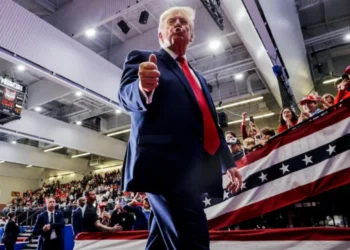
To exit the possible deadlock, forming a national unity government is also an option on the table, a government that would be run by both rival blocs based on a written agreement. Given that Israel is in a sensitive position and the files on Hamas, Hezbollah and Iran are still open, creating a national unity government and avoiding a struggle over the monopoly of power seems necessary. In the meantime, possible intervention by the United States will also be influential. Donald Trump can once again step in and encourage the sides to accept a national unity government, just as he did not hesitate to openly support Netanyahu in elections on two occasions.
You can read the Persian version of this analysis here: