• 8AM.MEDIA
  • ویب‌سایت فارسی
  • پښتو ویب‌پاڼه
  • اۉزبېکچه ویب‌سایت
  • Podcast
Friday, October 9, 2026
Hasht-e Subh
  • Home
  • News
    • Afghanistan News
    • World News
  • Opinion
    • Editorial
    • Analysis
  • Reports
    • Daily Reports
    • Investigative Reports
  • Society
    • The story of people
  • Women’s Word
  • Columns
    • Three Years After Afghanistan’s Fall: The Taliban’s Resurgence
    • Towards Equality
    • The Resurgence of the Taliban: Two Years Since Afghanistan’s Fall
    • Hebatullah Report Special Edition
    • Resistance for Education Special Edition
    • Special Column on Taliban’s Education Curriculum
    • Nawroz
  • Interviews
  • Contact Us
    • About Us
    • 8AM MEDIA Annual Awards
    • Submit an Article to Hasht-e-Subh
  • 8am.mediaBack
Subscribe
No Result
View All Result
  • Home
  • News
    • Afghanistan News
    • World News
  • Opinion
    • Editorial
    • Analysis
  • Reports
    • Daily Reports
    • Investigative Reports
  • Society
    • The story of people
  • Women’s Word
  • Columns
    • Three Years After Afghanistan’s Fall: The Taliban’s Resurgence
    • Towards Equality
    • The Resurgence of the Taliban: Two Years Since Afghanistan’s Fall
    • Hebatullah Report Special Edition
    • Resistance for Education Special Edition
    • Special Column on Taliban’s Education Curriculum
    • Nawroz
  • Interviews
  • Contact Us
    • About Us
    • 8AM MEDIA Annual Awards
    • Submit an Article to Hasht-e-Subh
  • 8am.mediaBack
No Result
View All Result
Hasht-e Subh
No Result
View All Result

Pakistan’s Offensive Engineering in Reordering Afghanistan’s Strategic Equation

Abdul Nasir Noorzad Abdul Nasir Noorzad
26 November 2025 - Solar Hijri Date: 1404/09/05 [t_time:1764175859]
Pakistan (green) and Afghanistan (orange) share a complex and contentious border, with Islamabad wielding significant influence over Afghan affairs through military, intelligence, and diplomatic channels as regional and extra-regional powers compete for strategic advantage. (Photo Credit: Wikipedia)

Wikipedia

Following the shift in Afghanistan’s political landscape, Pakistan, acting in alignment with extra-regional directives, is seeking to reshape the situation in ways that not only correspond to its domestic needs but also enhance its capacity to counter emerging national-security threats. Islamabad’s convergence with extra-regional powers has yielded economic, security, and political dividends, and amid today’s climate of volatility, this alignment has acquired added significance as a platform for influence and leverage. Pakistan’s cooperation with Saudi Arabia, Türkiye, the United Arab Emirates, Qatar, the United States, and the United Kingdom has produced a new, carefully calibrated bloc in relation to Afghanistan.

Meanwhile, India is attempting, within its available means, to take advantage of the new environment. New Delhi seeks to exploit the current opening and, through maximum pressure, reclaim its lost strategic position in Afghanistan. But India faces two major rivals: Pakistan and China, both of which can impose significant friction on India’s ambitions. Although India’s approach is broadly aligned with Washington’s policy, it remains partially acceptable to Tehran, Moscow, and Beijing as well, since in the short term it restrains the unilateral dominance of the opposing bloc and remains digestible within the logic of regional power competition.

This configuration activates a new puzzle of complex and dangerous proxy rivalries, competitions in which support for terrorism, the engineering of armed groups, and the instrumental use of power vacuums have become operational tools for the actors involved. Today, the entire region and the extra-regional powers are seated at the same table, each seeking to extract maximum advantage from Afghanistan’s situation within a dominance-driven framework.

The United States is now entering the second phase of its strategic game by altering the operational environment, and Pakistan’s role in this phase becomes particularly prominent. It is a country that has repeatedly demonstrated its destructive capacity and its formidable networked influence, securing for itself a pivotal position in the Taliban project and the shaping of the new order. At this juncture, Pakistan is deploying the full spectrum of its military, intelligence, security, and diplomatic instruments to keep the management of the Afghan situation firmly under its control. From the bombing of Kabul and other regions of Afghanistan, to attempts at establishing contact with anti-Taliban opposition and resistance fronts; from a string of security and diplomatic visits to neighboring states, including Tajikistan, to a multi-stop European tour by the foreign minister and meetings with NATO officials, all reflect the sophistication of Pakistan’s statecraft and its multilayered capabilities in coordination with the ISI.

Pakistan’s foreign minister, during his European tour, has succeeded in shifting European officials’ positions on the Taliban, convincing them that the group does not hold the moral high ground against Pakistan and must ultimately comply with Islamabad’s demands. This diplomatic capability and persuasive power demonstrate Pakistan’s growing bargaining capacity and influence in the international diplomatic arena.

At the military and security level, Pakistan’s coordinated efforts to form a front capable of exerting heavy pressure on the Taliban continue. All anti-Taliban forces in exile, as well as active military fronts, have been invited by Pakistan to rely on Islamabad’s support in their struggle against the group. This security and intelligence-oriented approach indicates that the United States and extra-regional powers are providing serious backing to this dangerous strategic game. Now that the Taliban have distanced themselves from Pakistan and expressed interest in a regional alignment with Russia, China, and Iran, they have lost their appeal to Washington. The Taliban were once useful to the West insofar as they could generate calibrated instability to create leverage and bargaining space. But today, the group has fragmented into multiple factions with diverging agendas, expanding opportunities for the West’s rivals to increase their influence. For Washington and Islamabad, it is unacceptable to lose exclusive control over this project; thus, reshaping obstructive elements within the Taliban has become part of the new agenda.

At the regional and international levels, Pakistan’s efforts remain extensive and highly consequential. Islamabad’s diplomacy, armed with fluency in English and bolstered by long-standing intelligence and military experience, has equipped Pakistan with the ability to enter into wide-ranging political and security deals in pursuit of its strategic interests. At the same time, the dual pressure generated by threats emanating from both the Taliban and India, coupled with stalled Chinese projects in Afghanistan, has pushed Pakistan toward accepting another major bargain with the West.

Alongside these efforts, Pakistan continues to maintain significant security and intelligence assets across the region. From tactical coordination with Tehran during the twelve-day conflict, to the creation of communication channels with Türkiye, to outreach in Central Asia and diplomatic missions across Europe and the United States, all are noteworthy. Pakistan has also retained hard-power options, including the potential deployment of reserve security forces in the form of terrorist organizations such as ISIS, as tools of pressure against the Taliban.

Today, even extra-regional powers appear convinced by Pakistan’s rationale for altering Afghanistan’s trajectory, and international media have also highlighted this dynamic. Islamabad’s push to maintain the current situation ensures that the Eastern bloc and India remain sidelined from directing Taliban affairs. There are even reports that Pakistan is seeking to establish potential proxy groups to exert maximum pressure on the Taliban.


You can read the Persian version of this analysis here:
مهندسی تهاجمی پاکستان در تغییر معادله افغانستان

ShareTweetSendSendShare

Related Posts

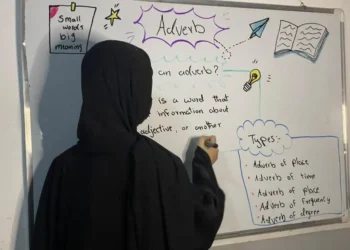
A girl writes an English lesson on adverbs on a whiteboard as students at Behdukht Online Academy teach one another. (Photo credit: Exclusive)
Opinion

Barred from School, Now Teaching: The Story of Behdukht Online Academy on Teacher’s Day

8 October 2026 [t_time:1791485322]
A baby wrapped in cloth as UNICEF expands primary healthcare services for children and mothers in Afghanistan. (Photo credit: UNICEF)
Afghanistan News

UNICEF Announces Expanded Primary Healthcare Services for Children and Mothers in Afghanistan

8 October 2026 [t_time:1791482597]
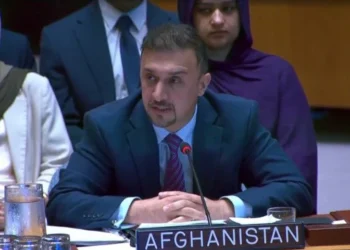
Naseer Ahmad Faiq speaks during a United Nations session on the situation in Afghanistan. (Photo credit: faiq_naseer)
Afghanistan News

Faiq at UN Calls for End to Arbitrary Detentions, Torture and Killings in Afghanistan

8 October 2026 [t_time:1791477737]

Latest

Loading latest news...

Popular stories

  • An Afghan woman gazes out of her home, reflecting the isolation and challenges faced by women in Afghanistan under Taliban rule. (Photo Credit: 8am.media)

    UN Report Reveals Shifts in Family Attitudes and Rise in Domestic Violence in Afghanistan

    Share
    Share Tweet
  • Taliban Shoot Young Man from Herat After Torturing Him with Hands Tied

    Share
    Share Tweet
  • Taliban Intelligence Deputy in Faizabad Killed with Two Guards

    Share
    Share Tweet
  • Iraq Reports Export of Two Million Barrels of Crude Oil Through Strait of Hormuz

    Share
    Share Tweet
  • Al-Qaeda Releases Hamza bin Laden Message on 9/11 Anniversary

    Share
    Share Tweet

Podcast

Insights
Insights

Join Lynne O’Donnell for 8AM’s podcast series, Insights.
Lynne talks with generals, diplomats, soldiers, journalists, politicians, activists, people who have front row seats for conflicts around the world, and citizens with a story to tell, happy or sad. For this first series, Afghanistan is the focus. Lynne and her guests talk about the collapse of the republic in August, 2021, and the impact since — for the people of Afghanistan, for the security of the region, for the safety of the world. It’s important, interesting and insightful.

Insights/22: Controlling the Narrative with Mina Sharif
byinsights8am

Controlling the Narrative

Lynne O’Donnell talks with Mina Sharif, author, activist, women’s rights campaigner, educator and mentor. They discuss who controls the narrative and who speaks for Afghanistan’s people when the Taliban appear to have seized control not only of the country but of the message, too.

Have a listen

Insights/22: Controlling the Narrative with Mina Sharif
Episode play icon
Insights/22: Controlling the Narrative with Mina Sharif
Episode Description
Episode play icon
Insights/21: Media Meltdown with Zahra Joya
Episode Description
Episode play icon
Insights/20: Terror Inc with Scott Richards
Episode Description
Episode play icon
Insights/19: Busting Stereotypes with Bushra Gohar
Episode Description
Episode play icon
Insights/18: Media Matters with Waliullah Rahmani
Episode Description
Episode play icon
Insights/17: What Goes Around Comes Around with Sima Samar
Episode Description
Search Results placeholder
Hasht-e Subh

8AM Media, also known as Hasht-e-Subh Daily, stands as Afghanistan's premier independent and non-profit newspaper, resonating as a beacon of journalistic integrity since its establishment in June 2007 by esteemed Afghan journalists and human rights advocates. With a steadfast commitment to citizen journalism and civic education, Hasht-e-Subh Daily has earned its place as the most esteemed publication in the nation.

Publisher: Sanjar Sohail
Email: [email protected]
Executive Director: Parwiz Kawa
Email: [email protected]

Read More

Barred from School, Now Teaching: The Story of Behdukht Online Academy on Teacher’s Day

When Colonialism Redesigned Religion

UNICEF Announces Expanded Primary Healthcare Services for Children and Mothers in Afghanistan

Residents Fund Construction of Health Center in Ghazni

Faiq at UN Calls for End to Arbitrary Detentions, Torture and Killings in Afghanistan

Editor’s Choice

Every Saturday morning, 8AM MEDIA English Services Department will guide you through the week’s biggest stories from Afghanistan and the international community.

Subscribe

© 2026 - ©Hasht-e Subh Daily

No Result
View All Result
8am.Media
پښتو ویب‌پاڼه
ویب‌سایت فارسی
اۉزبېکچه ویب‌سایت
  • Home
  • News
    • Afghanistan News
    • World News
  • Opinion
    • Editorial
    • Analysis
  • Reports
    • Daily Reports
    • Investigative Reports
  • Society
    • The story of people
  • Women’s Word
  • Columns
    • Three Years After Afghanistan’s Fall: The Taliban’s Resurgence
    • Towards Equality
    • The Resurgence of the Taliban: Two Years Since Afghanistan’s Fall
    • Hebatullah Report Special Edition
    • Resistance for Education Special Edition
    • Special Column on Taliban’s Education Curriculum
    • Nawroz
  • Interviews
  • Contact Us
    • About Us
    • 8AM MEDIA Annual Awards
    • Submit an Article to Hasht-e-Subh
  • 8am.media

© 2026 - ©Hasht-e Subh Daily