Colonial power fears more than armies. It also fears a society that can think and organize itself without it. An army can be defeated, but a civilization that has its own schools, scholars, language, and historical memory retains the ability to rebuild itself. For this reason, colonialism did not only seize territories. It also identified the structures through which a society reproduced itself.
Religion was one of the most important of these structures. A religious scholar did not speak only about worship. He built schools, trained students, and enjoyed social legitimacy. Such a network could turn into a force for mobilization and resistance. The question begins here: how did a geography that was once home to great centers of Islamic science, art, mysticism and thought later become a field for interpretations that labeled part of that very heritage as innovation or deviation?
To answer, one must look at that civilization itself. In the eras of the Tahirids, Samanids, Ghurids and Timurids, Khorasan was not merely a political territory. It was one of the major centers of Iranian-Islamic culture. Balkh, Merv, Nishapur, Bukhara and Herat were home to jurists, poets, Sufis, physicians and historians. Jurisprudence, hadith, Sufism, the Persian language, trade, art and learning flourished in a shared space, and education took place in mosques and madrasas.
In Timurid-era Herat, the mosque and madrasa stood alongside the library, poetry, calligraphy, historiography and mysticism. Religion was one part of a civilizational world, not a force that reduced every aspect of life to a single interpretation. Khorasan did, of course, experience sectarian conflicts, but its civilization was not reduced to one narrow reading.
A large part of Khorasan and Afghanistan lived within the Hanafi tradition. One of the juristic tools of this tradition was “istihsan.” When rigid application of analogical reasoning led to hardship or to a result inconsistent with the realities of life, the jurist could take into account a stronger argument and the circumstances of the people. In the works of Shams al-A’imma al-Sarakhsi, too, the role of removing hardship and attending to the public interest in jurisprudence is emphasized. Abu Yusuf, in his “Kitab al-Kharaj,” likewise stresses the prohibition of oppression and the avoidance of imposing obligations beyond the people’s capacity.
Alongside Hanafism, Shia and Jafari traditions were also present in parts of Khorasan, and reason and independent juristic reasoning (ijtihad) were also important. This plurality was not limited to the interior of Islam. Jewish, Christian, and Zoroastrian communities were also present in parts of this geography. They did not, of course, enjoy equal rights in the modern sense, but Khorasan was not an entirely single-faith society.
It was this religious and social network that the colonial powers encountered. They faced not only states but also scholars, madrasas, Sufi orders, bazaars, and bonds that were not necessarily under the command of the government. In the Second War between Britain and Afghanistan, too, there were examples of religious and social mobilization against British forces, including the role of some scholars and religious leaders in mobilizing local forces. These examples showed that religious networks could supply manpower and legitimacy for resistance outside the official structure of the state.
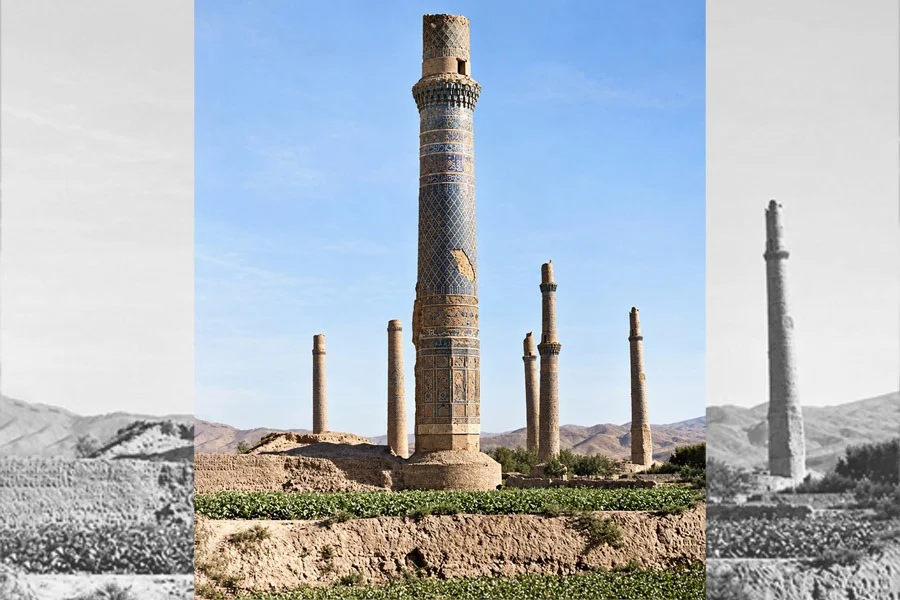
The fate of the Herat Musalla Complex also takes on meaning in this context. This complex was not merely a religious building. It was part of the scientific and cultural heritage of Herat. During the era of Abdur Rahman Khan, parts of it were destroyed, and this process was also linked to security concerns about Russian advances and to British pressures and consultations. The destruction of this complex can be seen as a symbol of the damage done to a structure that bound together science, religion and culture.
From such experiences, colonial power learned that to control a society, knowing the army is not enough. One must also know the networks that give meaning and mobilize people. Not all religious currents were alike. A network might be considered a threat in one place, yet be a political partner or a tool of balance in another geography. Policy was therefore not only the suppression of religion. Understanding, containing, bargaining, and sometimes selectively strengthening existing networks could also be part of power politics.
This point is important for understanding Wahhabism, Salafism and Deobandism. If we call these currents an “invention of colonialism,” we have oversimplified history. Wahhabism emerged in eighteenth-century Najd, before the alliance between Britain and the House of Saud. Deobandism took shape in nineteenth-century India from within the South Asian Hanafi tradition, and a number of its scholars later stood against colonialism. Salafism, too, has a more complex history and roots that go beyond a single period or political power.
But this reality makes the question more precise. The issue is not that colonialism built these ideas from scratch. The issue is, when several religious readings exist, who determines the conditions for their growth, their capital, their networks, and their political power? There is a great difference between “building an idea” and “building the conditions of power for an idea.”
Britain was wary of pan-Islamism on one side of the Islamic world, and on the other, in 1915, it concluded a treaty with Abdulaziz bin Saud and later supported his rule financially. This does not mean it built Wahhabism. Rather, it shows that imperial policy could treat different religious currents differently, based on political and geopolitical considerations.
The redesign of the religious field also does not necessarily occur through a secret decree. If one current has the opportunity to print books, build schools, recruit students, and create a cross-border network, while another is deprived of these opportunities, the balance of power between them changes. If one reading is connected to the state, capital and media, while another remains in a local mosque or Sufi lodge, then a few generations later their social weight will not be equal. In this sense, the redesign of religion is not the invention of a creed. It is a change in the conditions of competition among interpretations.
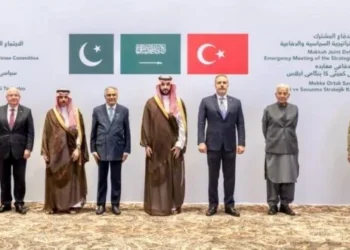
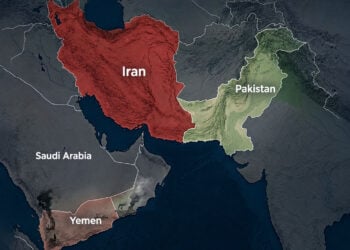
In the twentieth century, this process entered a new phase. Saudi oil revenues made possible the expansion of schools, universities, religious institutions, scholarships and religious publishing on a cross-border scale. At the same time, the Cold War brought religion into geopolitical calculations. The United States, Saudi Arabia, Pakistan and other regional actors entered this arena, and religion, capital and security policy became intertwined.
Here a distinction must be drawn between Deobandism and the Taliban. Nineteenth-century Deobandism was a South Asian Hanafi current. But after the creation of Pakistan, the migration of Afghanistan’s citizens, the growth of madrasas in border regions, and the Soviet war, a different environment took shape. The Deobandism of 1866 was not the same as the border networks of the 1980s, and those networks were not the same as the Taliban of the 1990s. Even so, war can militarize a tradition, the state can politicize it, and capital can increase the range of its influence.
In the final decades of the twentieth century, Afghanistan became the site of collision for these very forces: the rivalry between the United States and the Soviet Union, Pakistan’s security policy, Saudi religious influence, the madrasas of Afghanistan’s refugees, and the Hanafi and Sufi traditions of Afghanistan. The consequence was not only war. The structure for producing and transmitting religious thought also changed. A madrasa that had a budget, books, dormitories, and a student recruitment network gained greater power of reproduction than a local mosque or an independent scholar. Under such conditions, no one needs to announce that one reading must replace another. The structure can gradually bring about this displacement.
The ultimate issue is not only Wahhabism, Salafism, or Deobandism. The issue is the change in the relationship between religion and civilization. In the Khorasani tradition, religion, alongside poetry, science, architecture, mysticism, trade and government, built a cultural world. In its ideological form, this relationship can be reversed: society must adapt itself to a particular reading of religion. In the first, jurisprudence finds a path for life. In the second, life must change for the sake of jurisprudence.
For this reason, the precise historical question is not “which creed did colonialism build?” The deeper question is how colonialism and the powers that followed it changed the field of religious competition: which network they saw as a threat, which force they struck bargains with, and how capital, schools, the state and war increased the weight of some readings while pushing others to the margins.
For Afghanistan, too, the question is the same: how did a land that had made religion, alongside science, art, mysticism and social plurality, a part of its civilization arrive at a place where part of that same heritage must be removed or denied in order to prove “religious authenticity”? The answer cannot be sought in a conspiracy. It must be seen in a chain of colonialism, war, state-building, capital and religious reinterpretation. Colonialism leaves its deepest mark when it no longer needs a flag and soldiers, when the balance of power among ideas has changed so much that a society sets aside part of its civilizational heritage in the name of “authenticity.” At that point, colonialism is no longer only in geography. It continues in the architecture of the society’s intellectual power.
You can read the Persian version of this analysis article here: