• 8AM.MEDIA
  • ویب‌سایت فارسی
  • پښتو ویب‌پاڼه
  • اۉزبېکچه ویب‌سایت
  • Podcast
Saturday, November 14, 2026
Hasht-e Subh
  • Home
  • News
    • Afghanistan News
    • World News
  • Opinion
    • Editorial
    • Analysis
  • Reports
    • Daily Reports
    • Investigative Reports
  • Society
    • The story of people
  • Women’s Word
  • Columns
    • Three Years After Afghanistan’s Fall: The Taliban’s Resurgence
    • Towards Equality
    • The Resurgence of the Taliban: Two Years Since Afghanistan’s Fall
    • Hebatullah Report Special Edition
    • Resistance for Education Special Edition
    • Special Column on Taliban’s Education Curriculum
    • Nawroz
  • Interviews
  • Contact Us
    • About Us
    • 8AM MEDIA Annual Awards
    • Submit an Article to Hasht-e-Subh
  • 8am.mediaBack
Subscribe
No Result
View All Result
  • Home
  • News
    • Afghanistan News
    • World News
  • Opinion
    • Editorial
    • Analysis
  • Reports
    • Daily Reports
    • Investigative Reports
  • Society
    • The story of people
  • Women’s Word
  • Columns
    • Three Years After Afghanistan’s Fall: The Taliban’s Resurgence
    • Towards Equality
    • The Resurgence of the Taliban: Two Years Since Afghanistan’s Fall
    • Hebatullah Report Special Edition
    • Resistance for Education Special Edition
    • Special Column on Taliban’s Education Curriculum
    • Nawroz
  • Interviews
  • Contact Us
    • About Us
    • 8AM MEDIA Annual Awards
    • Submit an Article to Hasht-e-Subh
  • 8am.mediaBack
No Result
View All Result
Hasht-e Subh
No Result
View All Result

Abu Dhabi Talks: Russia and Ukraine Agree on Prisoners, Not on Peace

Translated by Farhad Farhaad | Originally written in Persian by Latifa Mohammadi

Mohammad Farhaad Mohammad Farhaad
14 November 2026 - Solar Hijri Date: 1405/08/23 [t_time:1794638949]
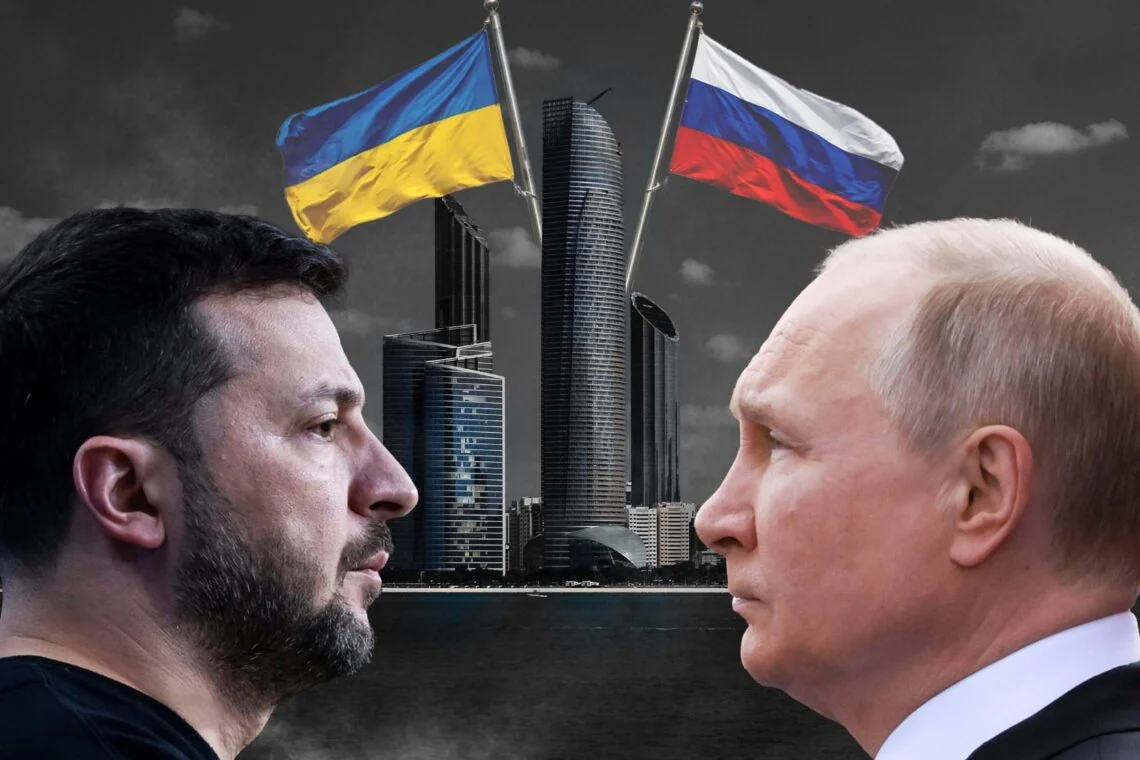
Ukrainian and Russian flags fly above the Abu Dhabi skyline as the faces of Volodymyr Zelenskyy and Vladimir Putin stand opposite each other, symbolizing the stalled peace talks. (Photo credit: Wikipedia + Reuters + Getty Images)

WikiPedia + Reuters + Getty Images

As negotiations between Russia and Ukraine continue, disagreements over the occupied territories and Ukraine’s future security remain one of the most significant obstacles to a peace agreement. The recent talks in Abu Dhabi, the capital of the United Arab Emirates, mediated by the United States of America, once again showed that the gap between the two sides is not limited to halting the fighting. The future of Europe’s security order has also become one of the central points of dispute.

Volodymyr Zelenskyy, President of Ukraine, stresses the need to end the war and to reach an agreement that also guarantees his country’s future security. In contrast, Russia has opposed a temporary ceasefire, arguing that halting the fighting could allow Ukraine to rebuild and strengthen its military capacity. Instead of a temporary halt to the war, Moscow seeks a comprehensive agreement that, in addition to issues related to Ukraine, would also cover Europe’s security structure.

However, the Abu Dhabi talks did not lead to an agreement on the main issues. The most significant announced achievement was the two sides’ understanding on carrying out a large-scale exchange of prisoners of war, an issue that could signal the possibility of progress on humanitarian matters, although fundamental disagreements persist.

One notable point in Russia’s position is its emphasis on the need to change the security structure of the whole of Europe. Moscow believes the Ukraine issue is only part of a broader debate about the security of the European continent. Nevertheless, Russia showed no willingness to allow European representatives to participate directly in the Abu Dhabi talks. This position raises an important question: how can the future of Europe’s security be negotiated while European countries are to be excluded from a direct role in these discussions? On the other hand, European countries are concerned that an agreement between Washington and Moscow, reached without their effective participation, could affect their security and interests.

Alongside the security disputes, the issue of the occupied territories, particularly the Donbas region, is one of the most complicated obstacles in the negotiations. Russia demands that Ukraine cede Donbas entirely, a demand that Kyiv has rejected. Donbas, located in eastern Ukraine, is of considerable importance because of its industrial history and economic resources, as well as its geographic and military position.

However, the issue is not only the economic and geographic importance of this region. From the perspective of international law, Donbas is part of Ukrainian territory, and the military seizure of land does not mean that ownership of it is recognized. From this perspective, when Russia demands negotiations over the cession of areas that belong to Ukraine under international law, a question arises about the nature of the concessions being demanded in the negotiations.

In reality, if Russia were to retreat from part of its territorial claims, could that retreat be considered a concession equivalent to Ukraine giving up part of its sovereign powers and security choices? This is particularly relevant given that, if Ukraine is deprived of membership in the North Atlantic Treaty Organization (NATO), it will need credible alternative security guarantees.

This issue becomes even more significant when we consider Ukraine’s concern about a recurrence of the war. If an agreement is reached but no reliable mechanism exists to prevent another Russian attack, the end of hostilities will not necessarily mean the end of security threats.

Here, the concept of the “security dilemma” in international relations can be helpful. A security dilemma arises when one country takes measures to increase its own security, but another country perceives those same measures as a threat to its own security. As a result, the second country’s reaction makes the first country feel even less secure, and a cycle of tension and military competition takes shape.

The central issue of the Ukraine negotiations also largely comes down to this cycle: Russia regards the expansion of NATO’s military presence near its borders as a security threat, while Ukraine, facing Russia’s military threat, seeks guarantees to protect its independence and territorial integrity.

Therefore, the main challenge of the negotiations is not only reaching an agreement to stop the war, but also finding arrangements that can reduce security concerns without undermining Ukraine’s sovereignty and its right to determine its own future. An agreement that merely halts the fighting but offers no clear answer on Ukraine’s future security may, instead of resolving the crisis, lay the ground for its continuation.


You can read the Persian version of this article here:

اوکراین و روسیه در ابوظبی؛ تفاهم بر سر اسرا، اختلاف بر سر صلح
ShareTweetSendSendShare

Related Posts

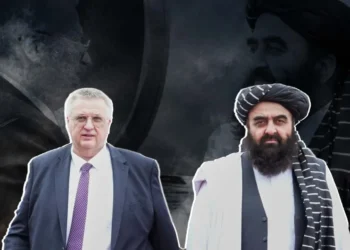
A man in a dark suit and a man in a black-and-white turban stand side by side in an image illustrating growing Russia-Taliban engagement over Afghanistan. (Photo Credit: AP)
Analysis

From America’s Exit to Russia’s Return: What Is Moscow Planning for Afghanistan?

14 November 2026 [t_time:1794635600]
Vladimir Putin - Russian President (Photo: TASS)
World News

Putin: Presence of Foreign Forces in Ukraine Is Unacceptable

12 November 2026 [t_time:1794503926]
Taliban and Russian officials meeting to talk bilateral relations (Photo: @FitratHamd)
Afghanistan News

Taliban Prime Minister Holds Talks With Russian Deputy Prime Minister on Expanding Bilateral Relations

12 November 2026 [t_time:1794498888]

Latest

Loading latest news...

Popular stories

  • A scanned copy of the Taliban order outlining new restrictions requiring female doctors to have a mahram when working with male colleagues. (Photo credit: 8am.media)

    Taliban Order Female Doctors to Have Male Guardians to Work With Male Colleagues

    Share
    Share Tweet
  • Araghchi Warns: US Must Choose Between Accepting Iran’s Proposal and Continuing the War

    Share
    Share Tweet
  • ISIS-Khorasan: A Real Threat to the People of Afghanistan and a Political Opportunity for the Taliban

    Share
    Share Tweet
  • UN Report Reveals Shifts in Family Attitudes and Rise in Domestic Violence in Afghanistan

    Share
    Share Tweet
  • Taiwan Accuses China of Escalating Military Activities in the Western Pacific

    Share
    Share Tweet

Podcast

Insights
Insights

Join Lynne O’Donnell for 8AM’s podcast series, Insights.
Lynne talks with generals, diplomats, soldiers, journalists, politicians, activists, people who have front row seats for conflicts around the world, and citizens with a story to tell, happy or sad. For this first series, Afghanistan is the focus. Lynne and her guests talk about the collapse of the republic in August, 2021, and the impact since — for the people of Afghanistan, for the security of the region, for the safety of the world. It’s important, interesting and insightful.

Insights/22: Controlling the Narrative with Mina Sharif
byinsights8am

Controlling the Narrative

Lynne O’Donnell talks with Mina Sharif, author, activist, women’s rights campaigner, educator and mentor. They discuss who controls the narrative and who speaks for Afghanistan’s people when the Taliban appear to have seized control not only of the country but of the message, too.

Have a listen

Insights/22: Controlling the Narrative with Mina Sharif
Episode play icon
Insights/22: Controlling the Narrative with Mina Sharif
Episode Description
Episode play icon
Insights/21: Media Meltdown with Zahra Joya
Episode Description
Episode play icon
Insights/20: Terror Inc with Scott Richards
Episode Description
Episode play icon
Insights/19: Busting Stereotypes with Bushra Gohar
Episode Description
Episode play icon
Insights/18: Media Matters with Waliullah Rahmani
Episode Description
Episode play icon
Insights/17: What Goes Around Comes Around with Sima Samar
Episode Description
Search Results placeholder
Hasht-e Subh

8AM Media, also known as Hasht-e-Subh Daily, stands as Afghanistan's premier independent and non-profit newspaper, resonating as a beacon of journalistic integrity since its establishment in June 2007 by esteemed Afghan journalists and human rights advocates. With a steadfast commitment to citizen journalism and civic education, Hasht-e-Subh Daily has earned its place as the most esteemed publication in the nation.

Publisher: Sanjar Sohail
Email: [email protected]
Executive Director: Parwiz Kawa
Email: [email protected]

Read More

Abu Dhabi Talks: Russia and Ukraine Agree on Prisoners, Not on Peace

Women Trapped in Fear: Girls Recount Taliban Harassment and Interrogation in Kabul

The Guardian: Taliban Ban Male Doctors from Treating Women in Parts of Afghanistan

From America’s Exit to Russia’s Return: What Is Moscow Planning for Afghanistan?

Five Years Into Taliban Rule, Filmmakers in Afghanistan Battle Poverty and Unemployment

Editor’s Choice

Every Saturday morning, 8AM MEDIA English Services Department will guide you through the week’s biggest stories from Afghanistan and the international community.

Subscribe

© 2026 - ©Hasht-e Subh Daily

No Result
View All Result
8am.Media
پښتو ویب‌پاڼه
ویب‌سایت فارسی
اۉزبېکچه ویب‌سایت
  • Home
  • News
    • Afghanistan News
    • World News
  • Opinion
    • Editorial
    • Analysis
  • Reports
    • Daily Reports
    • Investigative Reports
  • Society
    • The story of people
  • Women’s Word
  • Columns
    • Three Years After Afghanistan’s Fall: The Taliban’s Resurgence
    • Towards Equality
    • The Resurgence of the Taliban: Two Years Since Afghanistan’s Fall
    • Hebatullah Report Special Edition
    • Resistance for Education Special Edition
    • Special Column on Taliban’s Education Curriculum
    • Nawroz
  • Interviews
  • Contact Us
    • About Us
    • 8AM MEDIA Annual Awards
    • Submit an Article to Hasht-e-Subh
  • 8am.media

© 2026 - ©Hasht-e Subh Daily