Recent fluctuations in the relations between the Iranian government and the Taliban have sparked discussions among Afghans, as well as among politicians, analysts, and media activists. Speculations about the future of Iran’s relationship with the Taliban have emerged. Some argue that Iran made a mistake in defending the Taliban and is now seeking to rectify it. These arguments can be categorized into two groups: one suggesting that Iran’s support for the Taliban was temporary, perhaps even due to a miscalculation, and the other asserting that Iran’s support for the Taliban is deliberate and strategic.
Iran’s Dual Reactions
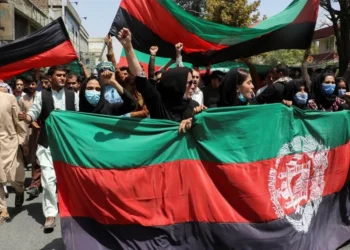
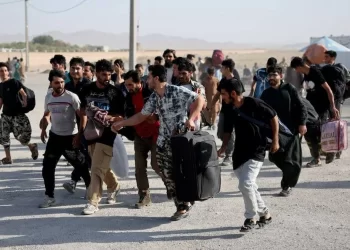
When the Taliban returned to Kabul, we encountered at least two reactions from Iranians. Some deeply empathized with non-Taliban figures. Some in the media joined voices with the people of Afghanistan and supported migrants and those fleeing from the fear of Taliban repression and revenge. Campaigns were launched at the Afghanistan-Iran border and inside Iran to rescue Afghans in danger. This section of the Iranian people’s response was widespread. The Iranian masses, especially those opposed to the Taliban regime and supportive of the development of democracy in the region, expressed dissatisfaction with the surrender of power to the Taliban. Another group, consisting of statesmen and conservatives, celebrated the Taliban’s “victory” and regarded it as progress for regional security and stability. They spoke of the Taliban’s change and their “commitment” to establishing an inclusive government. Some explicitly believed that Iranian intelligence and political apparatuses had a role in bringing about this change and felt a sense of victory from their years of political and military cooperation with the Taliban. In summary, the Islamic Republic of Iran openly stood by the Taliban and labeled any protest or resistance against this group as anarchy and an American conspiracy. Mr. Kazemi Qomi’s statement in the month of August last year, suggesting that the United States is seeking internal unrest by organizing the resistant fronts in Afghanistan, disappointed those who thought that Iran might at least covertly support the National Resistance Front (NRF). For some, his remarks seemed unexpected. Although Mr. Qomi attempted to justify his statement a few days later and soften his position, he did not express new words and merely reiterated what had been happening in official meetings of the Iranian government and what the official position of the Islamic Republic of Iran required.
Iran did not adopt this position after the return of the Taliban; rather, it had been following this path for years and considered itself a stakeholder in the Taliban regime. They directly funded individuals within the Taliban in certain parts of Afghanistan, it had the Taliban Council of its own, and considered powerful commanders in the provinces of Farah and Helmand as allies, expecting to secure a significant share in the Taliban government. The Taliban leaders had also established special relations with the Islamic Republic of Iran after Mullah Omar. After relocating his family to Iran and staying there for a month and a half, Mullah Akhtar Mohammad Mansour was killed upon his return to Quetta. Similarly, at the beginning of his leadership, Mullah Hibatullah Akhundzada spent about a month in Iran to avoid the tensions that occurred in Pakistan during the power struggle of the Taliban group, and to strengthen his influence in the Mashhad Council of the Taliban. These are pieces of information that have been made available to the public, and it is likely that numerous exchanges occurred behind these relationships.
It does not seem that the Islamic Republic of Iran will easily abandon its cooperation with the Taliban or support the movements desired by the non-Taliban regime in Afghanistan. This position is rooted in the identity of the Islamic Republic and its strategic perspective on Iran and the region. Several elements are evident in the identity of the Islamic Republic: Islamic conservatism, Iranian nationalism, economic and administrative exclusivity, and cultural Persianism.
Amidst this, the principle of “Guardianship of the Islamic Jurist” (religious conservatism and political and economic exclusivity) is the ideological foundation and the most significant part of their identity. They have embraced Islam, Iran, and the Persian heritage as their legacy, or perhaps it can be said that the environment has imposed it upon them.
Shia-Religious Crescent, Not the Persian Crescent
Governments use language as a tool to pursue their political and economic objectives, and the Islamic Republic of Iran is no exception. Iran makes substantial investments in promoting and expanding the use of Persian within the country. Furthermore, it seeks to promote Persian regionally and globally through initiatives such as establishing cultural centers, providing scholarships, organizing cultural events, and disseminating books, films, and other cultural products. The publication of books, magazines, film production, and the establishment of language research and promotion centers in Iran have played a crucial role in sustaining and advancing the language. However, the Persian employed by the Islamic Republic of Iran possesses its own distinct characteristics. In Iran, Persian serves the conservatives of “Guardianship of the Islamic Jurist”, not as a vehicle for democracy. While the Iranian book market is abundant with excellent works and writings, they do not stem from the regime’s policy. Instead, they originate from a segment of Iranian society that opposes the “Guardianship of the Islamic Jurist” system, enduring constant suppression, imprisonment, emigration, and deprivation. Its endurance is the outcome of sacrifices made by intellectuals and individuals who cherish a progressive way of life, and we are witnessing the fruits of their labor in Afghanistan as well. Afghans who have received education within their country, with limited access to foreign languages, have greatly benefited from Iranian texts and translations.
Many among our compatriots, who prioritize the Persian language over other aspects of identity, believe that the Islamic Republic of Iran is willing to incur significant costs to support the Persian-speaking community. However, while there are some individuals within the Islamic Republic of Iran who hold such views, Iran’s overall policy does not revolve around supporting the Persian-speaking community. The relationship between Iran and the government of Emomali Rahmon in Tajikistan serves as an example in this regard. Most of the time, their relationship has been tensing due to Iran’s engagement and collaboration with Islamist groups that oppose Rahmon’s government, at times escalating to hostility. Iran does not perceive the cultural environment in Tajikistan as advantageous to the Islamic Republic government and seeks to establish relations with that government without promoting the same model within Iran. Despite Rahmon being a lifelong leader like Ali Khamenei, the social system desired by his government does not align with the principles promoted by the Islamic Republic of Iran. Similarly, this factor played a decisive role in Iran’s relationship with the non-Taliban regime in Afghanistan, leading the Iranian government to align with the Taliban. The cultural system promoted in Afghanistan over the course of twenty years, as well as what was disseminated through Afghan media, did not find favor with the Iranian government. The constitution approved in Afghanistan and the definition of freedom within our country stood in contrast to the ideology of the Islamic Republic of Iran.
Over the past twenty years, the cultural influence of the Iranian government has significantly weakened, and the people of Afghanistan have lost interest in cultural centers, libraries, and references that promote the policies of the government of the Islamic Republic of Iran. Individuals and groups within Afghanistan who wanted the “Guardianship of the Islamic Jurist” system in Afghanistan, have been marginalized in Afghanistan, and the cultural relationship between the two countries has mainly developed outside of government channels. As time passed, the printing of books censored in Iran gained popularity in Kabul markets, and there was a growing number of viewers of Afghan television programs in Iran. Life in Afghanistan was comparatively more challenging than in Iran. However, the opportunity that our people had to pursue and promote democratic ideals, which were partially reflected in the media, was both admired by some in Iran and condemned by the Iranian government. The regions that were once considered within Iran’s sphere of influence during the Soviet invasion, where Khomeini’s images and slogans of the Islamic Republic of Iran were prevalent, had undergone significant changes. As a result, the Iranian government adjusted its political alliances and ultimately decided to align with the Taliban. The government encouraged politicians, cultural figures, and religious activists who remained loyal to Iran to support the Taliban.
The Islamic Republic of Iran encompasses Iranian nationalism as part of its identity, much like its utilization of the Persian language. Throughout the approximately 40 years of its existence, the Islamic Republic of Iran has made significant investments in strengthening religious groups. The Iranian government’s expenditure on the Shia crescent in the Middle East surpasses any other political investments it has made. Not only did Iran support unified Shia groups and organizations affiliated with “Guardianship of the Islamic Jurist” in Iraq, Lebanon, and other countries, but it also provided support to several Sunni religious parties and movements in North Africa and the Middle East. Iran’s relationship with Hamas and the unprecedented tribute to Khalid al-Islambouli in Tehran exemplify this association.
It is not surprising that the Iranian “Guardianship of the Islamic Jurist” stands alongside the Taliban Emirate, as it seeks to survive and expand its influence by aligning itself with anti-democratic movements in the region. The Islamic Republic of Iran will never engage in war with the Taliban to protect the Persian region, as it does not see the “Persian Crescent” as a guarantee of its survival. Those who, on the one hand, advocates for democratic government and respect for the people’s vote, consider the collapse of the non-Taliban regime in Afghanistan a crime and claim that they will not submit to the Taliban regime while expecting Iran to support them against Mullah Hibatullah, are confused. They are unaware that it is unlikely to be friends with “Guardianship of the Islamic Jurist” and fight for an elected and democratic government. The Islamic Republic has many “acquaintances” and is willing to form tactical alliances for its political goals, but its primary allies are those who do not desire democracy, do not consider the people’s vote as a criterion for leadership, do not recognize civil liberties as the rights of the people, and openly fight to establish a government that sees itself as the representative of God.