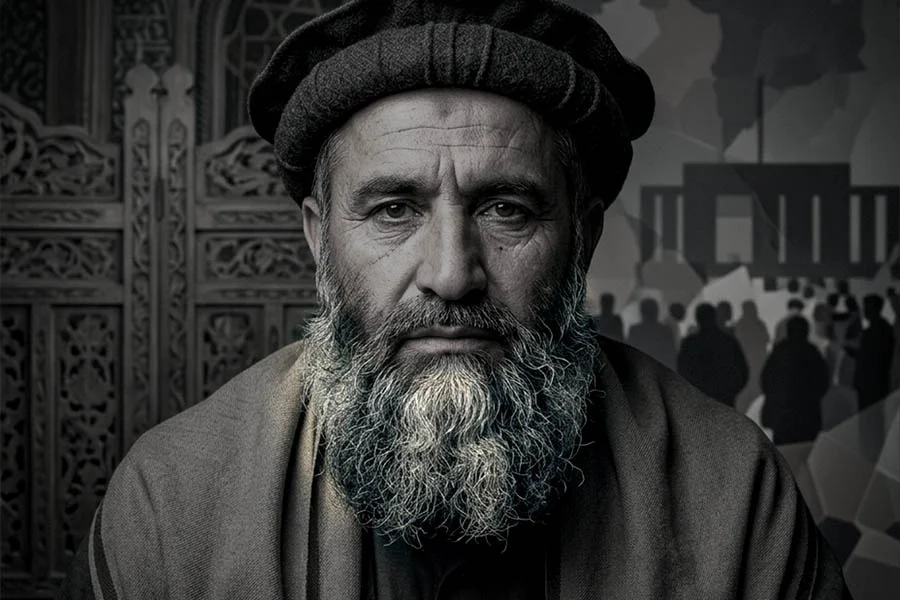
In recent weeks and months, the issue of the beard has become a social problem in Afghanistan. Little attention is now paid to education and progress, and young people are instead focused on aligning their appearance with the ideological symbols of the Taliban. This alignment is imposed on young people and government employees through ideological coercion. The central question is this: how has this prophetic tradition shifted from a custom and marker of identity into a tool of political distinction and a yardstick of social superiority? To answer it, we must examine the position of early Islam under the Prophet and that of the Taliban regime on the issue of the beard.
From the perspective of Muslims, the political system that the Prophet of Islam labored tirelessly for years to build is regarded as one of the most important and worthy models of a political order. Contemporary political systems in Islamic countries have also, in some way, been shaped under the influence of this political tradition and its rulings, and they follow some of its principles and laws. Therefore, examining this system and its rulings on the beard is important for studying this subject.
The place of the beard in early Islam was not what is seen today. In that period, the beard among Muslims carried mainly an identity-related and religious distinguishing function, because Islam was growing in a setting where various religious groups were present. In pre-Islamic Arab society, and at the time of the emergence and spread of Islam, having a beard was a general custom and a sign of manliness for men at large, whether Muslim, Jewish, or polytheist. The Prophet of Islam also presented the beard as a tradition consistent with human nature, and instructed Muslims to keep their beards long and trim their mustaches in order to distinguish themselves from certain other tribes, including the Magians. This characteristic could not be considered a special privilege or a criterion of superiority.
On the other hand, in the narrations and hadiths transmitted from the Prophet in both Shia and Sunni sources, the beard is not “criminalized” in any of them. In short, the Prophet’s recommendations and instructions about the beard were mainly within the framework of moral and devotional advice and aimed at preserving the distinct identity of Muslims.
For example, it is narrated in Sahih al-Bukhari and Sahih Muslim from Abdullah ibn Umar that the Messenger of God said: “Oppose the polytheists; let your beards grow thick and trim your mustaches.” Likewise, in the book Man La Yahduruhu al-Faqih, one of the Shia sources, it is narrated from the Prophet: “Trim the mustaches and let the beards grow, and do not make yourselves resemble the Magians.”
In the Prophet’s view, the beard was part of human creation and nature, and it was used, in the form of moral advice, to create an identity distinction between Muslims and followers of other religions. There is also no record of the Prophet ever treating bearded and beardless men differently. In Islam, superiority has always been based on piety and God-consciousness.
But how do the Taliban define the beard?
Since returning to power in August 2021, the Taliban have taken positions on the beard in several stages and have turned it into a tool of social and ideological control and a sign of loyalty to the structure of the Islamic Emirate. In the political discourse of the Taliban, the beard has gone beyond a devotional and moral recommendation and has become one of the symbols of political legitimacy and governing discipline, a matter that has been articulated through regulations issued by the relevant institutions.
For example, under the ratified Law for the Propagation of Virtue and Prevention of Vice of the Taliban, shaving the beard or trimming it to less than one fist length (four fingers) is prohibited and criminalized. The Taliban have also made having a beard mandatory for employees of government offices, professors,s and students. In many provinces, people who shave their beards are dismissed from their jobs or are denied entry to offices.
These positions reflect a disregard for the ethnic diversity and natural differences among the people of Afghanistan, since some individuals do not have thick beards for genetic reasons. On the other hand, such an approach has imposed a kind of “superficial Islam” on the country. As a result, expertise and education are giving way to outward conformity, an issue that in the long run could lead to the training of ineffective personnel and a rise in hidden unemployment in government offices.
In early Islam, growing a beard was a tool for defining the new identity of a community in the face of outsiders. Under the Taliban regime, however, the beard has become a lever for exercising power over the bodies of citizens and a measure of how obedient society is to the ruling authority.
You can read the Persian version of this analysis article here: