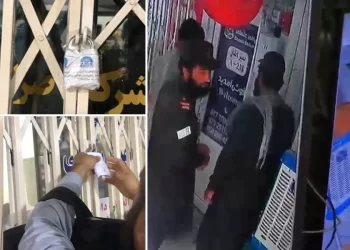
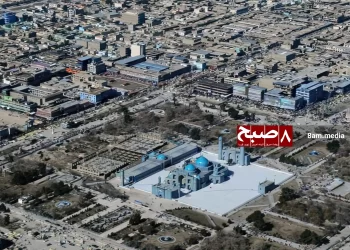
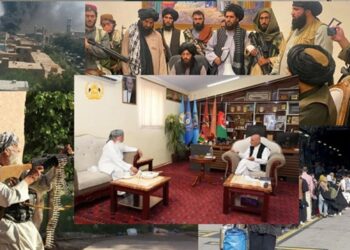
Coinciding with the arrival of August 15, the anniversary of the complete fall of Afghanistan to the Taliban and the forced installation of the group’s flags on homes, shops, and across cities, some women in Mazar-e-Sharif, the center of Balkh province, say that seeing the Taliban flag fills them with fear, dread, and hopelessness. Many women say that seeing these flags increases their despair and hopelessness. Likewise, some residents of Mazar-e-Sharif say that the Taliban forcibly sell the group’s flags to people so that they install them above their shops. According to them, even those who could not afford to buy a flag have been beaten.
With the arrival of August 15, the anniversary of the fall of Afghanistan to the Taliban, the group is forcibly selling its flags to people in all provinces of the country and ordering them to install these flags above shops, homes, and other publicly visible locations to declare their support for the group.
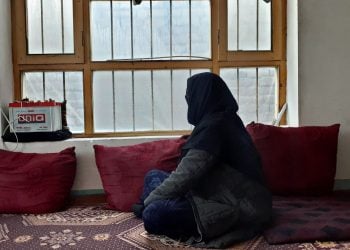
Some women and girls in the city of Mazar-e-Sharif, the center of Balkh province, say that seeing the Taliban flag gives them an unpleasant feeling, and they consider this flag a symbol of women’s suffering, repression, and despair.
Zahra (pseudonym) says: “When I see the Taliban flag, I feel as though a shroud has been wrapped around my head, suffocating me.”
Sarina (pseudonym) says: “When I see the Taliban flag, I think that with the arrival of this flag, we have been deprived of education.”
Gulpari (pseudonym) says: “I am a girl who has been deprived of education. When I look at the Taliban flag, I feel that all my dreams have been buried beneath this flag.”
Parisan says: “When I see the Taliban flag, fear and dread come into my heart, and I feel like a prisoner.”
Nastaran says: “When I see the Taliban flag, I remember the hard days I have endured. They deprived girls and women of their basic rights, and I too was forced to take my children and migrate away from my own country, becoming displaced and without shelter.”
Fariba (pseudonym) says: “When I look at the Taliban flag, I feel hopelessness and sorrow. I think of all the progress we had made and the better life people had achieved, which was suddenly destroyed.”
Sarwanaz says: “When I see the Taliban flag, I feel hopeless and miserable. Our education was stopped, and we can no longer work.”
Adalatkhah, another woman in the city of Mazar-e-Sharif, says: “I had gone into the city to shop when I suddenly noticed that the entire city was shrouded and Taliban flags were hanging throughout the city. My heart trembled, and I could not hold back my tears. I felt terrible, and thousands of questions formed in my mind. I asked myself: Is this the same flag whose raising deprived all the girls of my country of education?”
This woman further adds: “Is this the same flag under whose rule women are not counted as human beings, and the right to work, the right to education, the right to speak, and even the right to breathe have been forbidden to women, and the women of a land have been imprisoned and held captive? Is this the same flag because of which our youth clung to the wings of an airplane, trying to escape and save themselves, but tragically lost their lives? Is this the same flag that does not allow men to decide the length of their own hair, beard, and clothing themselves? Is this the same flag under which people have lost their lives from unemployment and misery, from thirst and hunger in deserts and plains, and which brings with it thousands of other miseries and sufferings?”
According to her, “Under this flag, my country’s people have received nothing but suffering, violence, fear and dread, oppression and injustice.” She hopes that next year, the people of Afghanistan will be freed from the suffering and oppression of the Taliban.
At the same time, some residents of the city of Mazar-e-Sharif have expressed concern over the forced sale of the Taliban flag, saying that the group forcibly sells its flags to them and compels them to install the flags above their shops and homes.
A resident of Balkh says: “One person apologized for not having the financial means to buy a flag, saying he did not have the money to purchase it, but for this very reason, he was slapped across the face.”
You can read the Persian version of this report here:
پرچم طالبان؛ نماد ترس و ناامیدی زنان مزارشریف و ابزار فشار بر مردم