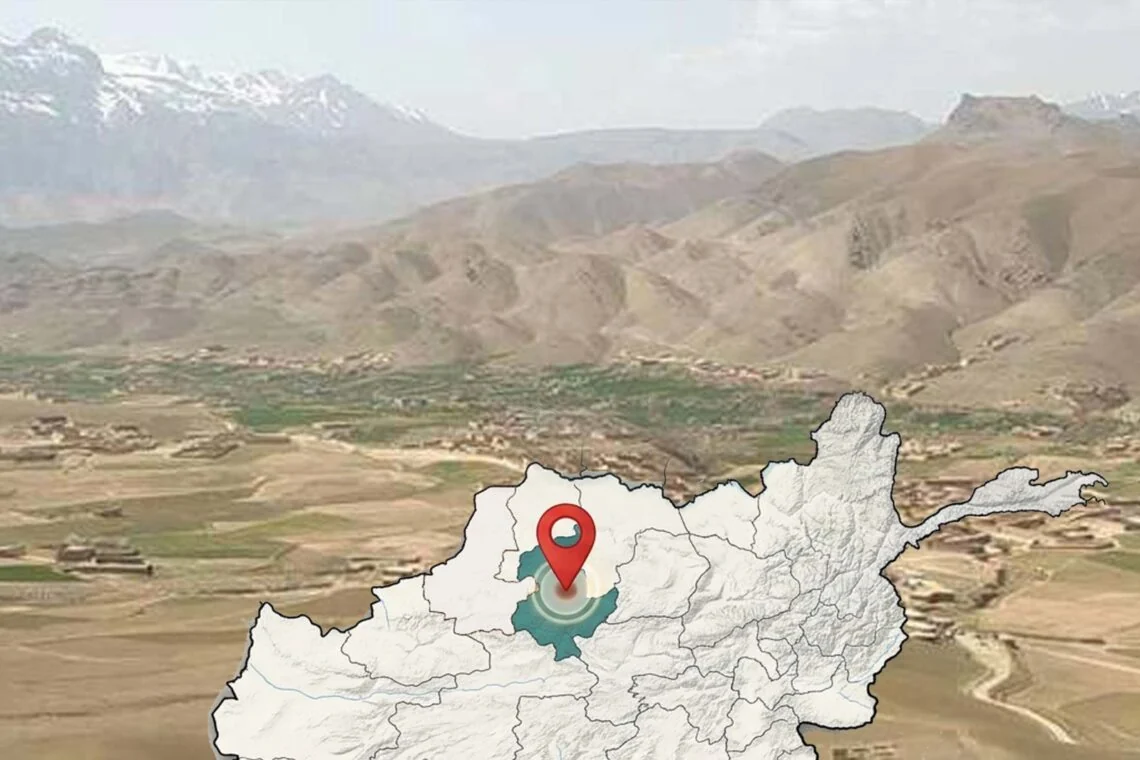
Local sources in Gosfandi District of Sar-e Pol Province say that local Taliban officials are forcing shopkeepers to relocate to a new township on the outskirts of the district and to buy shops there, threatening to seal their shops and burn their property. According to these sources, the township in question was originally a private residential project. How it was turned into a commercial city, and how people’s land was allocated to specific individuals, faces serious questions.
These sources say the plan to create the township in Gosfandi District began under the previous government. At that time, a construction company intended to build the township on people’s private land, but the plan was postponed because of opposition from a number of landowners and a lack of interest among residents.
According to one source, a number of individuals at that time, including the then mayor of Gosfandi District, had launched a campaign claiming that the project was a commercial city registered with the Ministry of Urban Development and Housing (MUDH).
This source claims that a number of influential individuals had earmarked dozens of shops on people’s private land for themselves. They had promised the landowners that once the market was moved to this area, the value of a single shop would be several times the total value of their agricultural land. According to him, with the fall of the previous government and the Taliban’s renewed takeover, the implementation of the project stopped, and until last year there was no sign of it being carried out.
However, local sources claim that last year a man named Mawlawi Nasir, under the guise of establishing a jihadi madrasa and claiming to have received an order from Hibatullah Akhundzada, the Taliban Supreme Leader, had about eight jeribs of people’s private land deeded in his son’s name. According to these sources, a number of commercial plots belonging to local people have also been allocated to specific individuals.
The sources also claim that Damullah Sher Mohammad, the Taliban district governor in Gosfandi, has gone along with this process, and that Damullah Yasin, one of his close associates, has been appointed as the district’s mayor.
The Existing Market: An Important Source of Revenue for Local Taliban Officials
The sources say that local Taliban officials in Gosfandi District are insisting on moving shops to the new market, even though the current market has for years been the main center of trade and of meeting the economic needs of the district’s residents.
According to local sources, a plan to create a commercial city in the Gosfandi area was registered with the MUDH in 2016, but it was not carried out because of political disputes and conflicts among the officials of the time.
Based on the sources’ statements, there are about 600 active shops in the current Gosfandi market, nearly 400 of which, in the market’s prime locations, are state property. The rent from these shops is collected by the Taliban’s municipal administration and added to the group’s revenue. Part of the salaries of municipal employees is also paid from this income.
In addition, government offices under Taliban control, including the municipality and the offices of Information and Culture and of Hajj and Awqaf, own properties in this market from which they earn revenue through the shops built on them.
One local source says the annual revenue of the Gosfandi market is about seven million afghanis, and that if the market is expanded and commercial projects are completed, this figure could rise to about ten million afghanis.
This source adds that a two-story commercial market with a capacity of 108 shops had also been approved on state land during the previous government. According to him, a construction company has also obtained a permit from the Taliban’s Ministry of Urban Development and Land (MUDL) to build this market, but construction has been delayed because of the interference of a number of influential individuals.
Sale of Shops and Economic Pressure on Shopkeepers
Local sources say that during Taliban rule, about 300 shops have been built on state land, and shopkeepers were granted the right to occupy each shop in return for key money of around 300,000 afghanis, give or take. According to them, these shops have been demolished and rebuilt several times, and at the latest stage, they were built as permanent, standard masonry structures.
These sources stress that people’s economic situation is dire and that many residents of this district cannot afford even 10,000 afghanis. They ask how people could buy shops from the Taliban several times within five years. According to the sources, income from work in Iran, which was an important source of livelihood for a number of families, has also fallen sharply. In such circumstances, forcibly relocating shopkeepers and compelling them to buy new shops could place even greater economic pressure on people.
Threats to Seal Shops and Burn Property
The sources say that delegations made up of representatives of the Taliban’s municipality, the group’s district administration, and the Taliban’s Ulema Council visit the shops daily and warn shopkeepers that they must leave the market and buy shops in the new township. According to them, shopkeepers who refuse to relocate have been warned that their shops will be sealed and their property burned.
At the same time, shopkeepers say they do not have the financial means to buy shops in the new township, and that moving the market to an area far from the district center could also reduce their customers and business opportunities.
Local sources ask: if the new township is an official project in line with urban development, why are its legal documents, approved map, land ownership documents, and the way shops are being allocated not made available to people transparently?
Residents of Gosfandi District have called for an independent review of the new township’s documents, the land deeds, the method of allocating shops, the revenue of the current market, and the reasons for the halt of the market construction project. They stress that urban development and the creation of commercial centers must not come at the cost of people losing their property and hundreds of families being deprived of their source of income.
You can read the Persian version of this report here:
بازار گوسفندی سرپل؛ کسبهکاران از انتقال اجباری به بازار جدید شکایت دارند