Residents of Omar Gulistan Township in Third Makroryan, Kabul, say the Taliban’s Ministry of Justice (MoJ) has declared the township “usurped” property and warned them to either fill out a rental contract form and pay money every month or vacate their homes. Presenting a set of Sharia, registration, and administrative documents from previous governments of Afghanistan, they stress that the township’s land has a history of private ownership and that its buildings were constructed after going through official procedures and with lawful investment. Residents say they bought these apartments and hold the purchase and ownership documents.
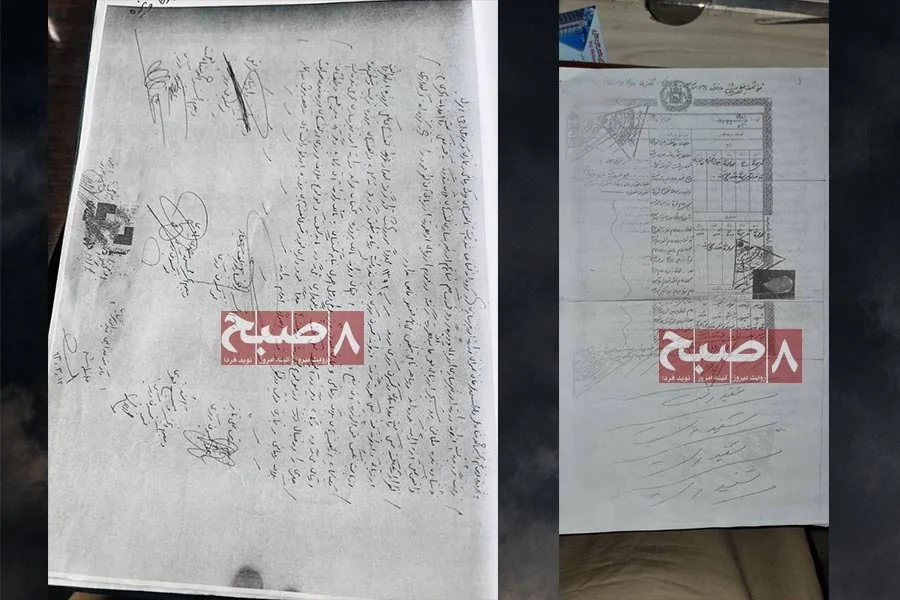
A number of residents of Omar Gulistan Township in Third Makroryan, Kabul, say they are fed up with the mounting pressure from Abdul Hakim Sharayi, the Taliban’s Minister of Justice. They say the ownership documents and legal procedures for the township were completed under the former government, and that the apartment owners also hold purchase and ownership documents. According to them, the former government’s Ministry of Urban Development Affairs (MUDA), which is now under Taliban control, holds a two percent share in the project. Nevertheless, the Taliban’s special court, without reviewing the documents submitted by the residents, declared the township’s land “usurped” property and placed it under the group’s control.
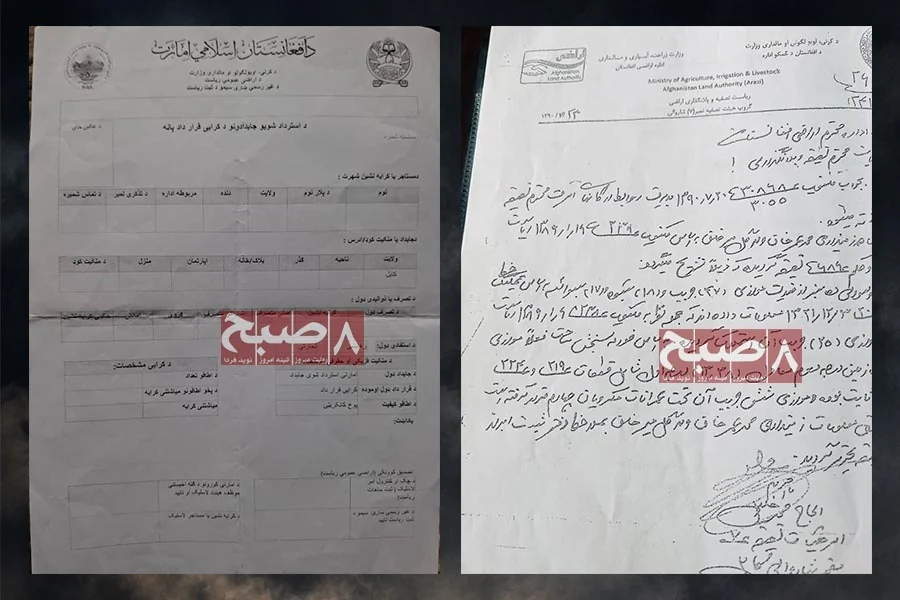
Residents of Omar Gulistan Township say Sharayi, the Taliban’s Minister of Justice, has pressured them to fill out the home rental contract form or vacate their homes. According to them, 30 to 40 homes have also been seized so far by individuals affiliated with the Taliban’s Minister of Justice. The residents add that, following the ruling of the Taliban’s special court, they have for about seven months been forced to pay rent to the Taliban to live in apartments they themselves bought.
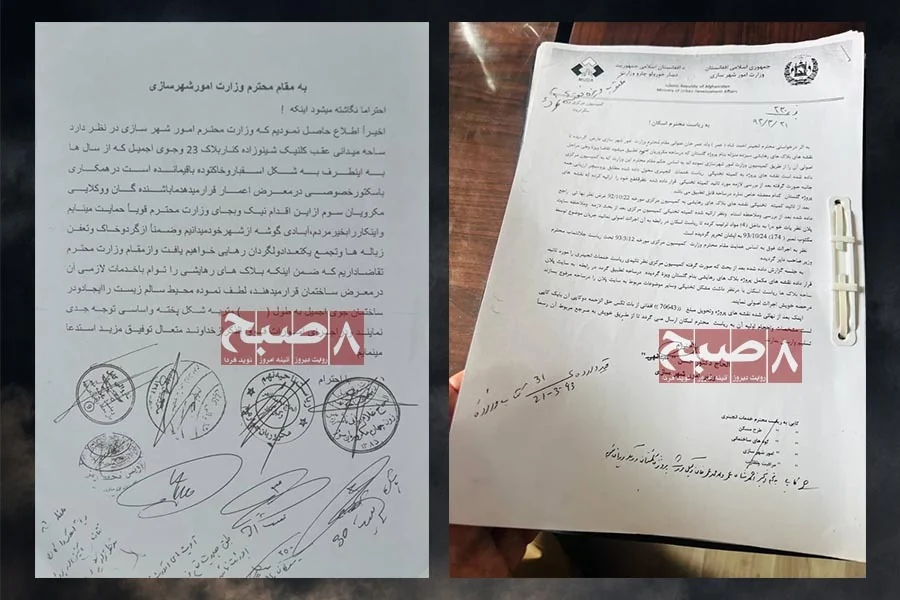
One of the township’s residents says: “People went to the Minister of Justice [of the Taliban] many times, but unfortunately it produced no result. Even in all the government institutions under this group’s control that they went to, they told people that this matter is beyond our capacity.”
This resident adds: “The Taliban’s Minister of Justice has threatened and cursed at people and said, ‘Fill out the forms as soon as possible or leave the homes.’”
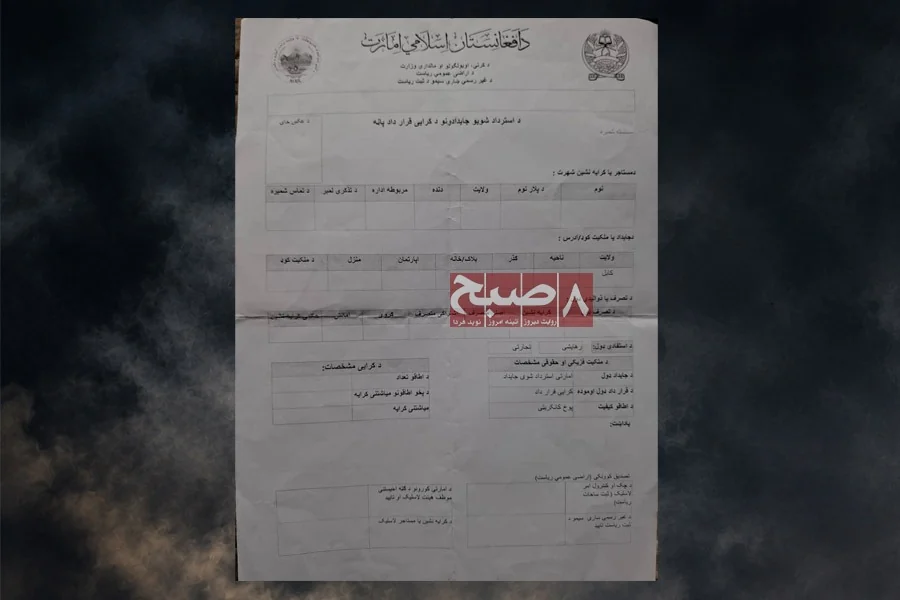
According to him, responsibility for the upkeep and maintenance of the township has also been handed to individuals affiliated with the Taliban’s Minister of Justice. Residents previously paid 1,200 afghanis per month for upkeep and maintenance, but the Taliban now collect 2,000 afghanis per month from each home.
Another resident of the township says: “When people said they could not afford to pay 2,000 afghanis, the Taliban’s MoJ summoned them and said, ‘Who do you think you are, refusing to pay? This contract was processed through my desk.’”
Residents of the township say that after presenting the special court’s ruling to the Taliban’s Minister of Justice, they asked him to abide by the provisions of the ruling. According to them, the ruling explicitly states that the decision was issued concerning the township’s land, not people’s apartments. But in response, the Taliban’s Minister of Justice said: “The court did wrong by saying this.” According to the residents, Omar Gulistan Township has about 700 apartments and eight blocks.
In letter No. 100/51 dated August 2, 2026, addressed to the group’s Commission for the Prevention of Land Grabbing, the Taliban’s “Special Court of the Central Zone for the Prevention of Land Grabbing and Recovery of Emirate Lands” wrote, following a petition by residents of Omar Gulistan Township in Kabul’s District 9, that the court’s decision related to the land itself and not the constructed buildings.
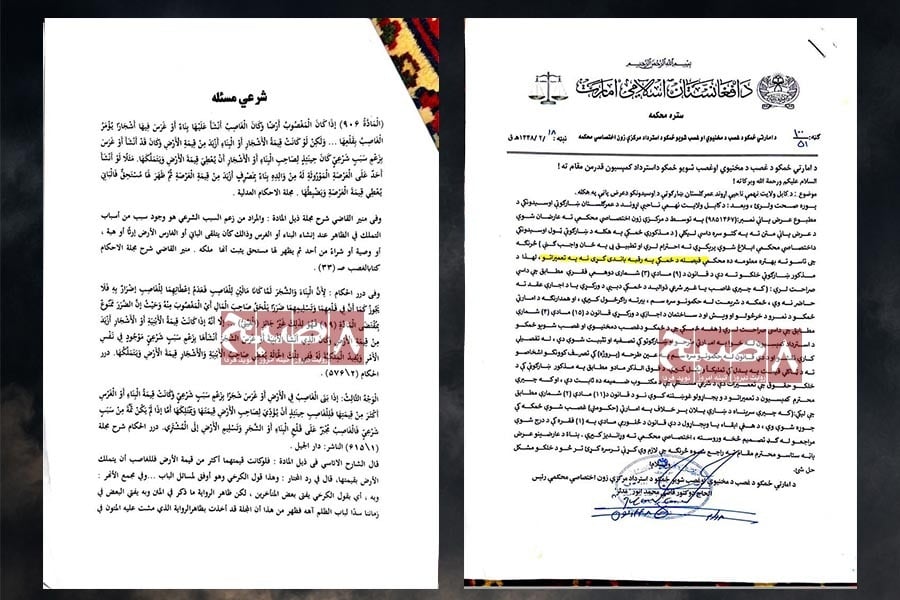
Citing Articles 9, 11 and 15 of the Law on the Prevention of Land Grabbing, the court raised the options of paying the price of the land or concluding a lease agreement, transferring the land in exchange for a set price, and a joint decision by the relevant authorities on whether to retain or demolish the buildings. It also called for legal review and the necessary measures to resolve the problem of the township’s residents.
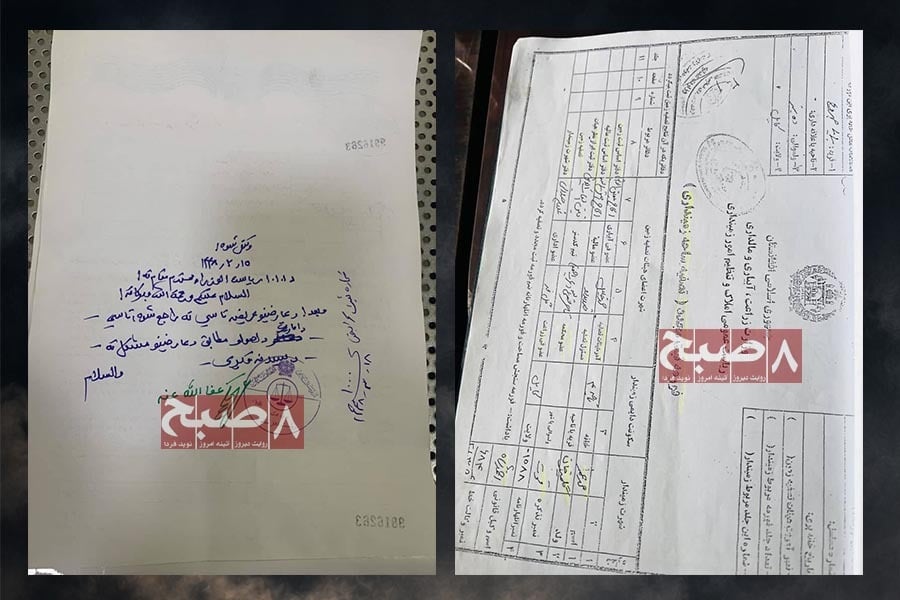
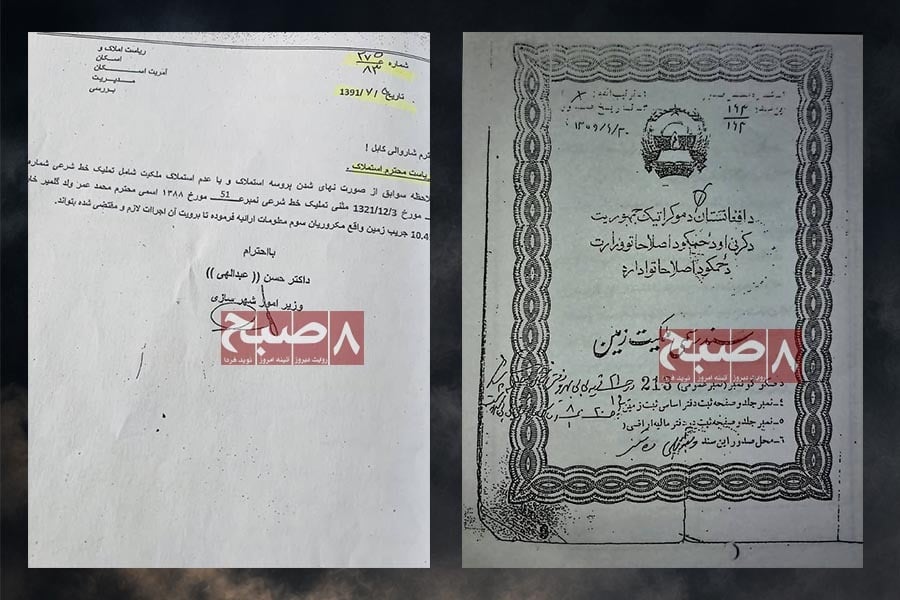
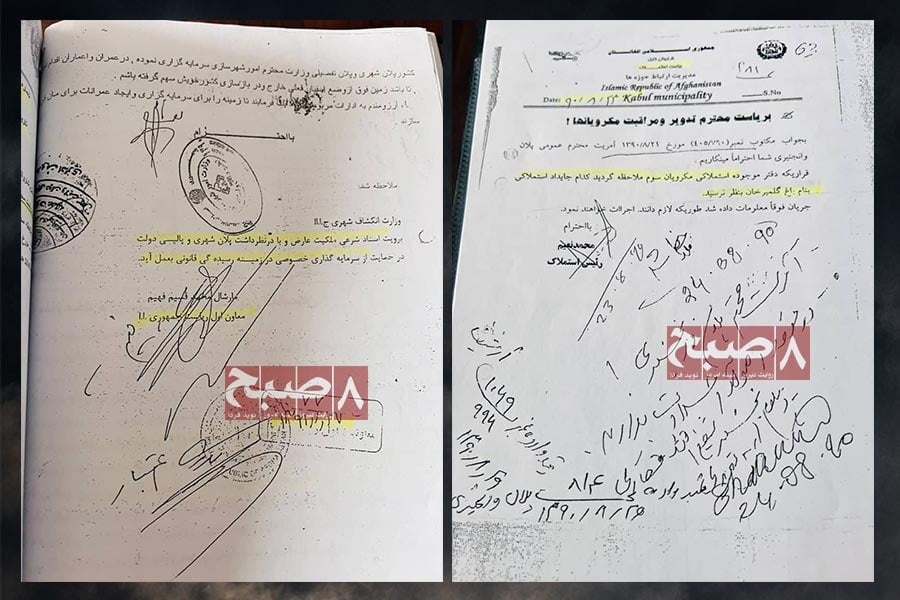
To refute the claim of the Taliban’s Minister of Justice, residents of Omar Gulistan Township have presented a set of Sharia and registration documents and official correspondence from the former government. According to these documents, the land in question in Bibi Mahru, Third Makroryan, was registered in the name of Mohammad Omar Khan, son of Gulmir Khan. Sharia deed No. 20/6114 dated February 22, 1943, has been introduced as one of the foundational documents of its ownership.
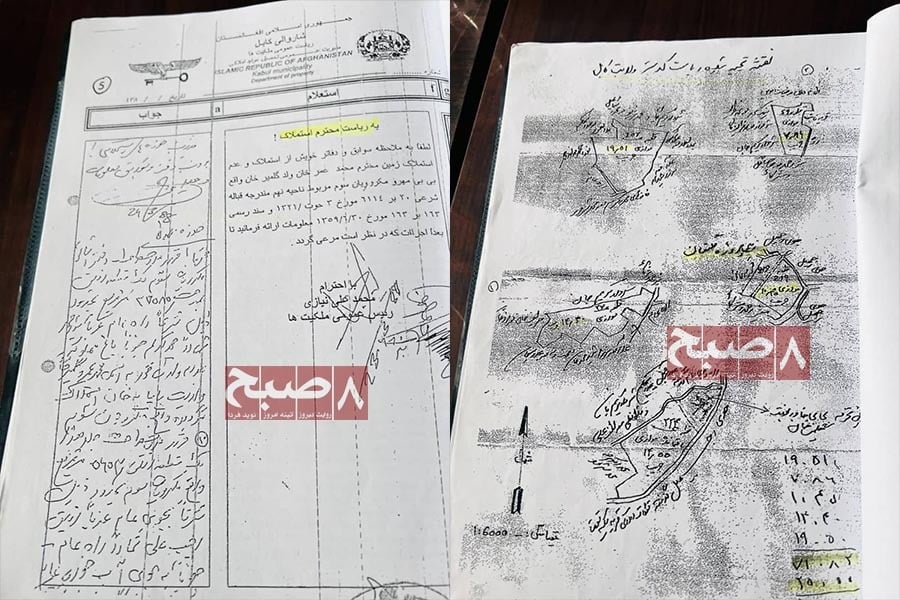
Official document No. 163/162 dated September 21, 1980, re-registration and land settlement forms, a land specifications table, and cadastral maps are among the other documents submitted in this case.
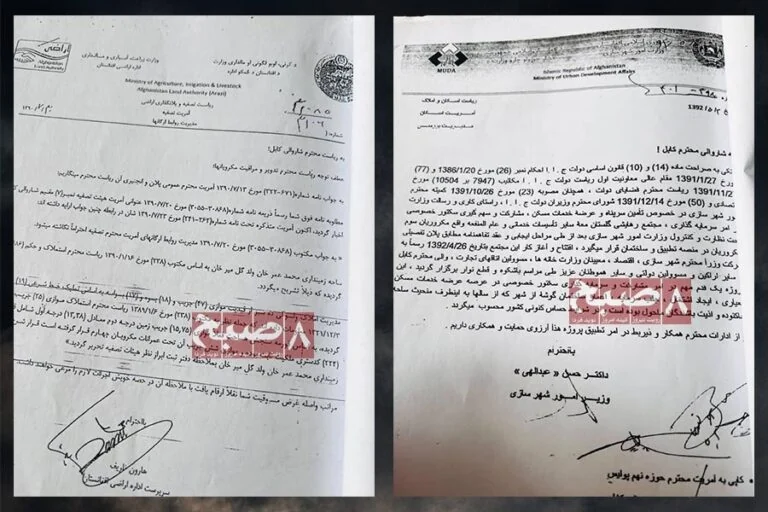
A letter from Settlement Board Group No. 7 of Kabul Municipality, dated October 15, 2011, also states that of the total land registered in the name of Mohammad Omar Khan, 25 jeribs (5 hectares) were expropriated, and 10.45 jeribs (2.09 hectares) of third-grade land, equivalent to 13.68 jeribs (2.74 hectares) of first-grade land, were confirmed in plots 219 and 224/1. The same letter states that about six more jeribs (1.2 hectares) belong to the construction area of the buildings of Fourth Makroryan.
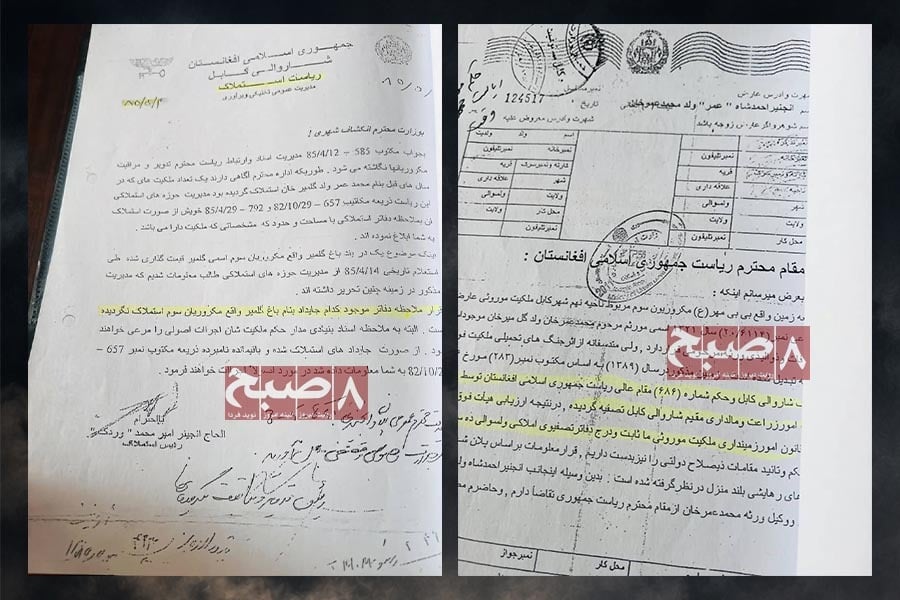
In another letter, No. 275/84 dated March 26, 2012, the then MUDA had asked KM to review the final status of expropriation or non-expropriation of the land in question by referring to official documents and records.
On the other hand, in 2014, in letter No. 230 dated June 11, MUDA had confirmed the approval of the Gulistan project’s plans after review by the technical committee and the MUDA central commission. The letter also records the payment of 70,643 afghanis in taxes and government service fees.
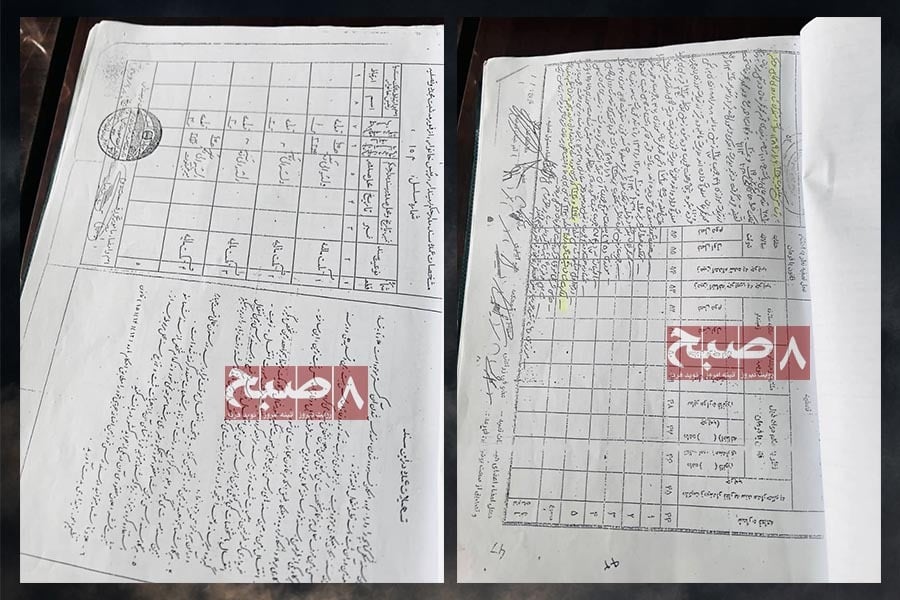
Another letter, obtained by the Hasht-e Subh Daily, states that the minutes of the MUDA central commission dated June 2, 2014, approved the plans for the 13-story residential and commercial blocks of the Gulistan project after technical reviews, and stressed that the buildings be constructed in accordance with the approved plans.
Also, a 2013 memorandum of understanding between MUDA and Engineer Ahmad Shah, son of Mohammad Omar, for the construction of residential and commercial blocks, and setting the ministry’s two percent share of the project, is among the other matters raised in the documents of this case.
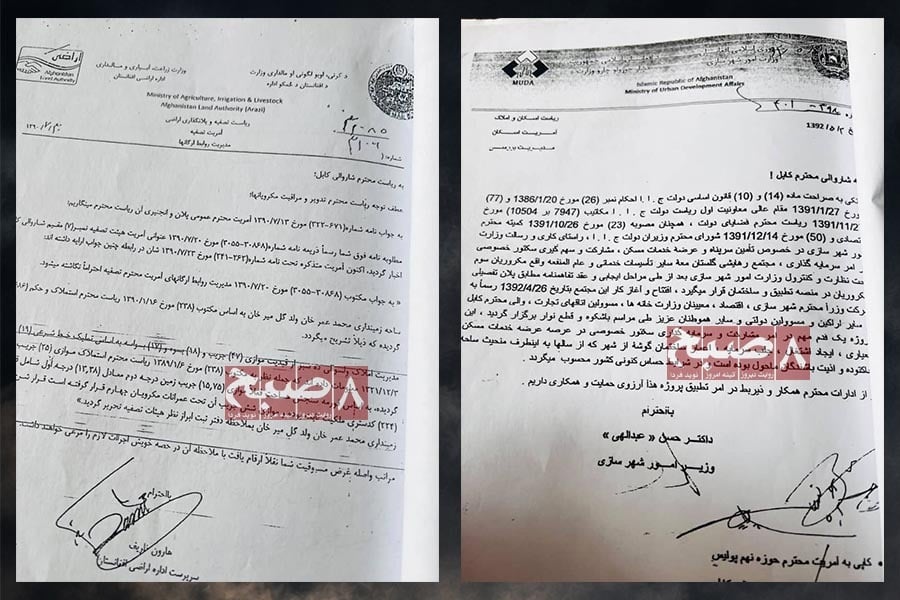
Another submitted document states that one of the applicants, claiming the land in question was inherited, had asked the former government of Afghanistan to create the conditions for investment in and construction on it. Following this request, Marshal Mohammad Qasim Fahim, the then First Vice President, ordered MUDA on February 15, 2013, through an official directive, to handle the request through legal channels, taking into account the applicant’s Sharia ownership documents, the urban plan, and the government’s policy of supporting private investment.
Previously, the Taliban’s Minister of Justice had also ordered residents of Omid-e Sabz Township to vacate their homes or pay the group rent of 4,000 afghanis per month for each room. Residents of this township are currently expressing serious concern over the pressure from the Taliban’s MoJ and the extortion and racketeering by the group.
Note: A jerib is a traditional unit of land area used in Afghanistan, which is equal to 2,000 square meters, or 0.2 hectares.
You can read the Persian version of this report here:
باشندهگان شهرک عمر گلستان: طالبان خانههای خریداریشده ما را غصب کرده و کرایه میخواهند