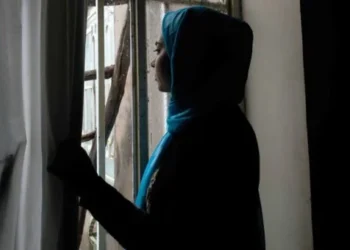
The imposition of restrictions on society, and specifically the Taliban’s hostility toward women, has become part of the group’s identity. From its inception to the present day, the Taliban have always imposed numerous inhumane restrictions on women wherever it has gained control. The group’s policies toward women, especially since their return to power in 2021, have followed a rising trajectory, and there seems to be no indication that these restrictions will stop; on the contrary, new restrictions will likely be imposed, further suffocating women. The Taliban is known for its strict interpretation of Islamic Sharia law, and its actions—such as banning girls’ education, imposing severe restrictions on women’s presence in society, limiting women’s visibility and voice, curbing their freedom of movement, and more—are attributed to the group’s reading of Sharia. The Taliban themselves claim that these extensive restrictions on women are in line with Islamic law, which has led many analysts to believe that these limitations are ideological. But are these restrictions merely a reflection of the Taliban’s ideological beliefs, or are there deeper political objectives behind these decisions?
The Taliban strongly promotes two causes: religion and culture. The concept of culture refers to the traditions of the Afghan people, which is closely associated with the notion of “Afghanism” promoted by former President Ashraf Ghani and his circle. What Ghani and his allies once referred to as Afghanistan is now, at times, called Afghanism, at other times culture, and sometimes tradition by the Taliban. Whatever it is called, it was a hollow slogan during the Republic era, and it remains nothing but a lie today. What the Taliban are doing is not even representative of Pashtun tribal culture. For example, respect for women is part of the valuable traditions of all ethnicities and tribes in Afghanistan, but the Taliban are blatantly disregarding this tradition.
On the other hand, Islam is another cornerstone for the Taliban, who claim to be the exclusive guardians of it. They act as though the entire population of Afghanistan is non-Muslim, and only they possess Islam, with the responsibility to convert the people to their interpretation. The construction of schools and mosques by the Taliban, while society is already saturated with mosques and schools, is grounded in this belief. However, in practice, what the Taliban are doing has nothing to do with religion or Islam; it contradicts Islamic teachings. Islam does not endorse the monopolization of power, nor does it advocate for ethnocentrism, discrimination against other ethnic groups, or the prevention of women’s education and work. It does not sanction the destruction of books in libraries, nor the replacement of experienced and educated teachers with illiterate and poorly educated clerics in educational institutions, as the Taliban have done. These actions are part of the group’s official policy, which contradicts Islamic teachings.
For the Taliban, religion is a profitable business and a tool for manipulation. The restrictions they impose on society, including women, are not religious. Although these restrictions are imposed under the guise of religion, they are politically motivated. The Taliban are hostile toward educated and free-thinking women. They know that they can only maintain power over an uneducated and ignorant society. In a society where people are educated and aware, regimes like the Taliban are not long-lasting. High-quality and abundant universities and schools shorten the lifespan of the Taliban. This is why the group forbids women from attending universities and schools, replacing them with religious schools—institutions where numerous reports have surfaced of sexual abuse of female students. A recent example is a report by the organization “Tolerance” about the rape of six girls in a religious school in the Ghor province. Women who are educated in these Taliban-controlled religious schools do not learn about freedom; instead, they become chains that will bind society.
Those who view the Taliban’s restrictions on women as ideological seem to have been influenced by the group’s propaganda. If the Taliban were truly ideologically opposed to women’s education, their leaders would not send their daughters abroad to study in schools and universities. It is impossible to oppose women’s education within Afghanistan while supporting it abroad. Likewise, it is contradictory to oppose the education of a neighbor’s or non-Taliban daughter while permitting your own daughter’s education. If the Taliban’s ideology allows their leaders to send their daughters to schools and universities, then their opposition to the education of other girls is not ideological. These oppositions are based on political calculations of benefit and loss. Religion and ideology are merely used as decorations and cover-ups to justify these political actions.
By imposing these restrictions, the Taliban seek to show the people of Afghanistan and even foreigners that whatever they decree will be enforced in Afghanistan, even if the orders are inhumane and illogical. This demonstrates the extent of their control and surveillance over society. Tight control over society and limiting freedoms make it easier for the Taliban to maintain their rule. A free society holds the government accountable and criticizes it when it steps out of line. The Taliban, who take no righteous steps, would be finished if they allowed freedom to society. They know that a free society cannot tolerate an illegitimate and forceful regime. This is why they impose restrictions on society—not because of ideology or religion, but for political reasons.
You can read the Persian version of this analysis here: