• 8AM.MEDIA
  • ویب‌سایت فارسی
  • پښتو ویب‌پاڼه
  • اۉزبېکچه ویب‌سایت
  • Podcast
Thursday, September 17, 2026
Hasht-e Subh
  • Home
  • News
    • Afghanistan News
    • World News
  • Opinion
    • Editorial
    • Analysis
  • Reports
    • Daily Reports
    • Investigative Reports
  • Society
    • The story of people
  • Women’s Word
  • Columns
    • Three Years After Afghanistan’s Fall: The Taliban’s Resurgence
    • Towards Equality
    • The Resurgence of the Taliban: Two Years Since Afghanistan’s Fall
    • Hebatullah Report Special Edition
    • Resistance for Education Special Edition
    • Special Column on Taliban’s Education Curriculum
    • Nawroz
  • Interviews
  • Contact Us
    • About Us
    • 8AM MEDIA Annual Awards
    • Submit an Article to Hasht-e-Subh
  • 8am.mediaBack
Subscribe
No Result
View All Result
  • Home
  • News
    • Afghanistan News
    • World News
  • Opinion
    • Editorial
    • Analysis
  • Reports
    • Daily Reports
    • Investigative Reports
  • Society
    • The story of people
  • Women’s Word
  • Columns
    • Three Years After Afghanistan’s Fall: The Taliban’s Resurgence
    • Towards Equality
    • The Resurgence of the Taliban: Two Years Since Afghanistan’s Fall
    • Hebatullah Report Special Edition
    • Resistance for Education Special Edition
    • Special Column on Taliban’s Education Curriculum
    • Nawroz
  • Interviews
  • Contact Us
    • About Us
    • 8AM MEDIA Annual Awards
    • Submit an Article to Hasht-e-Subh
  • 8am.mediaBack
No Result
View All Result
Hasht-e Subh
No Result
View All Result

The Necessity of Not Glorifying Public Executions

By: Sorkh Kohi

Moqim mehran Moqim mehran
29 February 2024 - Solar Hijri Date: 1402/12/10 [t_time:1709201724]
The Necessity of Not Glorifying Public Executions

AFP

These days, the Taliban are executing public executions with increased intensity, a crucial component of their oppressive regime. Among these circumstances, one aspect that should not be overlooked is the misguided fascination of people with witnessing these barbaric displays. Why do people eagerly desire to witness the execution of their fellow human beings by a terrorist group?

We’ve often seen that when an incident occurs in the city, people flock to the scene to witness what has happened or is happening. For example, when there’s an explosion resulting in casualties, when someone is arrested for theft and paraded by the Taliban through the city, when two individuals engage in a violent altercation, or when individuals identified as criminals by the Taliban are to be lashed or executed… In all these events, people are always present, unwilling to miss the spectacle staged ostensibly to deter them. However, their presence is always passive, one-sided, and uncritical.

People merely attend to witness the spectacle and return to their homes and workplaces once it’s over. Most of those who watch the spectacle sympathize with the actions of the Taliban because of a shared religious belief that considers execution as a legitimate, legal, and accepted form of punishment for criminals, emphasizing its enforcement. Therefore, when people witness the execution of an individual deemed a criminal by the Taliban, they not only do not feel anger or hatred but openly express approval, or if they outwardly remain silent due to certain considerations, they inwardly feel gratification towards the Taliban’s actions.

For another segment of the population, who have a strange addiction to spectacles, it doesn’t matter what is included in the display; whether it’s stoning, public flogging, the execution of multiple individuals, or scenes of people being victimized by explosions or natural disasters like floods and earthquakes. Even when victims or survivors of an event require assistance, most spectators prefer not to intervene and opt to distance themselves from the scene. In the case of public executions, these individuals only gather at the venue because a spectacle is being staged in the stadium.

In conclusion, the fascination with witnessing public executions reflects a disturbing aspect of human behavior, driven by a combination of morbid curiosity, religious beliefs, and desensitization to violence. It underscores the necessity of discouraging such displays and promoting a more humane and empathetic society.

In all these events, people desire to spectate: a spectacle for the sake of spectacle. But is spectacle for the sake of spectacle possible? By relying on this recursive idea that serves no purpose other than seeing, you demonstrate irresponsibility and a lack of human commitment toward the ongoing tragedy. This apathy and inadequacy can impose a heavy cost on your and others’ lives. So, while spectacle for the sake of spectacle may seem fine on the surface, behind it lies a grand political ideology that seeks to mold everyone in its image. This ideology, by staging spectacles, distracts you from critical thinking and aims to transform you into indifferent, confused, obedient beings whose only key concern is: “I don’t like politics.” Now you must be convinced that spectacle for the sake of spectacle, like the idea of art for art’s sake, is one of the most political beliefs in favor of desensitization.

The Necessity of Not Glorifying Public Executions

What is unfamiliar and alien among the people of Afghanistan is the refusal to glorify horror and the avoidance of witnessing such barbaric and inhumane ceremonies. People, both due to the shared religious beliefs they hold with the Taliban and because of an addiction to uninterrupted spectacles that poison all aspects of life, have a great interest in witnessing ceremonies of humiliation and torture. However, this perpetuation ultimately victimizes the people themselves. It’s a longstanding habit of the Afghan people to look indifferently at the harsh reality around them as long as they are not directly attacked or harmed, ignoring the fact that disaster lurks behind their doors, waiting to catch each of them sooner or later. We must not allow “every man for himself” to become the norm. We must identify and eradicate the tragedy before it leads us to the slaughterhouse. We must refuse the Taliban’s horror show, which includes executions and suppression, and strive for an alternative. The fundamental principle of this alternative is the refusal to glorify horror. When the Taliban realize that no one is coming to see their inhumane spectacle, they may eventually desist from it in the long run.

Of course, this is a minimal suggestion for combating Taliban intimidation politics. If people have access to a more serious fighting capability, which has significantly broader effects compared to the above suggestion, it is clear that they should choose it. However, if people feel that there is no better way to resist the Taliban, refusing to glorify the executions of this group can be a brave form of response that may lead to the formation of the first nuclei of popular resistance against the Taliban.
ShareTweetSendSendShare

Related Posts

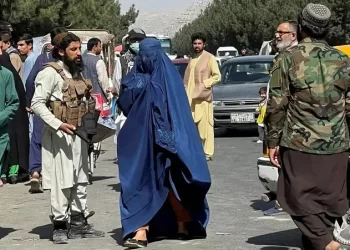
A Taliban fighter stands guard as a woman in a blue burqa crosses a street in Kabul. (Photo credit: Reuters)
Daily Reports

UN Report: Taliban Continue Human Rights Violations and Restrictions Against Afghanistan Citizens

16 September 2026 [t_time:1789585744]
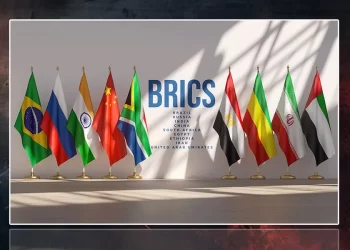
Flags of BRICS member states, including Brazil, Russia, India, China, South Africa, Egypt, Ethiopia, Iran and the United Arab Emirates, are displayed together ahead of the bloc's New Delhi summit. (Photo credit: Chicagopolicereview)
Analysis

The BRICS Summit: Where Does Afghanistan Stand on the Map of a Changing Global Economy?

16 September 2026 [t_time:1789579885]
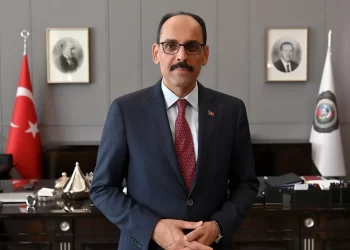
Turkey’s intelligence chief Ibrahim Kalin stands in his office amid a delegation visit to Kabul. (Photo credit: MİT)
Afghanistan News

Turkish and Qatari Intelligence Delegations in Kabul; Possible Meeting with Hibatullah in Kandahar

16 September 2026 [t_time:1789578796]

Latest

Loading latest news...

Popular stories

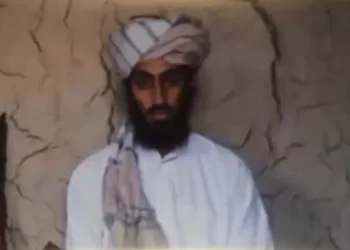
  • Hamza bin Laden - the son of Osama bin Laden (Photo: Social Media)

    Al-Qaeda Releases Hamza bin Laden Message on 9/11 Anniversary

    Share
    Share Tweet
  • Sajjad Haider Khan: Those with Valid Visas Will Continue Their Studies in Pakistan

    Share
    Share Tweet
  • UN Report Reveals Shifts in Family Attitudes and Rise in Domestic Violence in Afghanistan

    Share
    Share Tweet
  • Taliban Shoot Young Man from Herat After Torturing Him with Hands Tied

    Share
    Share Tweet
  • German Politician Calls for Faster Deportation of Undocumented Afghan Migrants

    Share
    Share Tweet

Podcast

Insights
Insights

Join Lynne O’Donnell for 8AM’s podcast series, Insights.
Lynne talks with generals, diplomats, soldiers, journalists, politicians, activists, people who have front row seats for conflicts around the world, and citizens with a story to tell, happy or sad. For this first series, Afghanistan is the focus. Lynne and her guests talk about the collapse of the republic in August, 2021, and the impact since — for the people of Afghanistan, for the security of the region, for the safety of the world. It’s important, interesting and insightful.

Insights/22: Controlling the Narrative with Mina Sharif
byinsights8am

Controlling the Narrative

Lynne O’Donnell talks with Mina Sharif, author, activist, women’s rights campaigner, educator and mentor. They discuss who controls the narrative and who speaks for Afghanistan’s people when the Taliban appear to have seized control not only of the country but of the message, too.

Have a listen

Insights/22: Controlling the Narrative with Mina Sharif
Episode play icon
Insights/22: Controlling the Narrative with Mina Sharif
Episode Description
Episode play icon
Insights/21: Media Meltdown with Zahra Joya
Episode Description
Episode play icon
Insights/20: Terror Inc with Scott Richards
Episode Description
Episode play icon
Insights/19: Busting Stereotypes with Bushra Gohar
Episode Description
Episode play icon
Insights/18: Media Matters with Waliullah Rahmani
Episode Description
Episode play icon
Insights/17: What Goes Around Comes Around with Sima Samar
Episode Description
Search Results placeholder
Hasht-e Subh

8AM Media, also known as Hasht-e-Subh Daily, stands as Afghanistan's premier independent and non-profit newspaper, resonating as a beacon of journalistic integrity since its establishment in June 2007 by esteemed Afghan journalists and human rights advocates. With a steadfast commitment to citizen journalism and civic education, Hasht-e-Subh Daily has earned its place as the most esteemed publication in the nation.

Publisher: Sanjar Sohail
Email: [email protected]
Executive Director: Parwiz Kawa
Email: [email protected]

Read More

The Rise of Germany’s Far-Right Party and What It Means for Afghanistan’s Asylum Seekers

UN Report: Taliban Continue Human Rights Violations and Restrictions Against Afghanistan Citizens

Travel Agency Fraud: Even the Companies Themselves Fall Victim to Forged Offers

The BRICS Summit: Where Does Afghanistan Stand on the Map of a Changing Global Economy?

Turkish and Qatari Intelligence Delegations in Kabul; Possible Meeting with Hibatullah in Kandahar

Editor’s Choice

Every Saturday morning, 8AM MEDIA English Services Department will guide you through the week’s biggest stories from Afghanistan and the international community.

Subscribe

© 2026 - ©Hasht-e Subh Daily

No Result
View All Result
8am.Media
پښتو ویب‌پاڼه
ویب‌سایت فارسی
اۉزبېکچه ویب‌سایت
  • Home
  • News
    • Afghanistan News
    • World News
  • Opinion
    • Editorial
    • Analysis
  • Reports
    • Daily Reports
    • Investigative Reports
  • Society
    • The story of people
  • Women’s Word
  • Columns
    • Three Years After Afghanistan’s Fall: The Taliban’s Resurgence
    • Towards Equality
    • The Resurgence of the Taliban: Two Years Since Afghanistan’s Fall
    • Hebatullah Report Special Edition
    • Resistance for Education Special Edition
    • Special Column on Taliban’s Education Curriculum
    • Nawroz
  • Interviews
  • Contact Us
    • About Us
    • 8AM MEDIA Annual Awards
    • Submit an Article to Hasht-e-Subh
  • 8am.media

© 2026 - ©Hasht-e Subh Daily