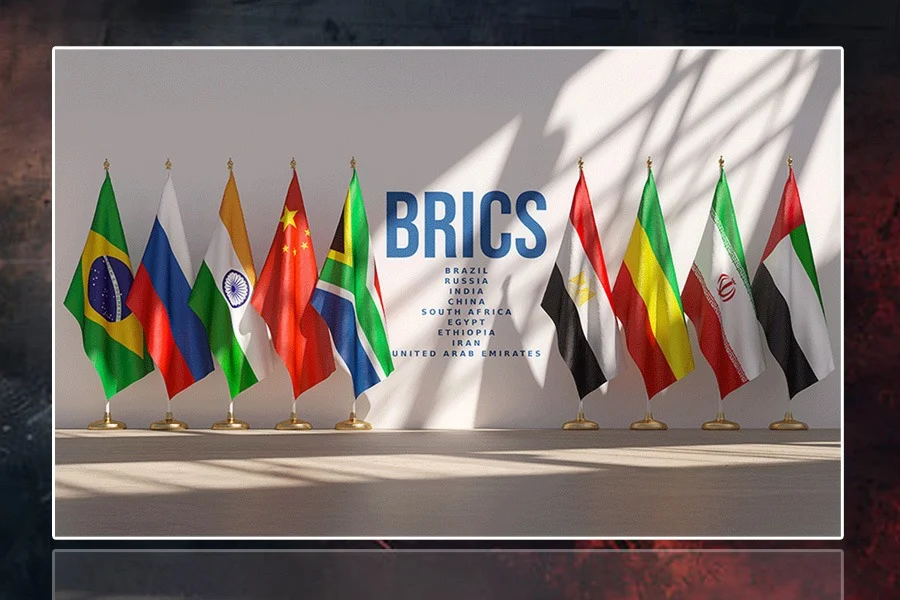
The BRICS summit in New Delhi passed through some important moments. First, after sharp disagreements over the US-Iran war (which in May of this year had made even issuing a joint statement difficult), BRICS members finally managed to agree on a joint statement. At the same time, Indian Prime Minister Narendra Modi met with Chinese President Xi Jinping, a meeting that, given today’s tense regional and global conditions, appears to be far more than a ceremonial encounter.
For background, it is worth recalling that BRICS was formed in 2009 by Brazil, Russia, India, China and South Africa. The original idea was that large, emerging economies could have a louder voice within international institutions largely dominated by Western countries. But BRICS today is no longer that small original group; with the expansion of its membership (the addition of Iran, Saudi Arabia, the United Arab Emirates, Egypt, Ethiopia and Indonesia), it has become one of the most important forums for discussing the changing global economic and political order.
This is exactly where the significance of the Delhi summit lies. Eleven BRICS members managed to issue a statement on a war that directly affects the interests of several members of the group. They expressed concern over the situation in the Middle East and called for maximum restraint. Yet no one was blamed, and no one was named as responsible. There was no clear culprit on paper, and perhaps that is part of the reality of BRICS diplomacy. But why? Because the war has directly drawn in three BRICS members: Iran, the United Arab Emirates, and Saudi Arabia, three countries that are not themselves aligned on the same side. During this crisis, Iran struck targets in the UAE and Saudi Arabia, while the relations of all three countries with the United States also factor into the region’s security equation. Nevertheless, all three sat in the same room in Delhi today. Iran and the UAE even held a bilateral meeting, and China has expressed readiness to play a role in reducing tensions.
At first glance, these may seem like purely diplomatic events, but they carry significant meaning for Afghanistan, a country positioned among these very players that cannot simply watch regional developments unfold from behind a window. Iran lies to Afghanistan’s west, China to its east, Central Asia to its north, India to its south, and the Gulf states along Afghanistan’s trade and financial routes. Any shift in relations among these countries, directly or indirectly, affects trade, transit, energy, and even the price of goods in Afghanistan.
Modi and Xi had met previously in Kyrgyzstan, but Xi’s visit to India, after years of frozen relations, carries a different weight. Relations between the two countries entered a harder period following the deadly clash along the disputed Himalayan border in 2020 in the Galwan Valley, where, in hand-to-hand combat, 20 Indian soldiers and 40 Chinese soldiers were killed. Now, however, this meeting between the two leaders in Delhi signals a thaw in diplomatic relations between the two countries. The message of this meeting is not only for Delhi and Beijing; part of it is also directed at Washington: the new world order is not meant to be designed in a single capital for others to simply implement.
India wants to preserve its strategic independence; China wants a bigger role in the global order; Russia, Iran and the Gulf states are each pursuing their own interests. In the midst of this, BRICS is less a traditional economic alliance and more a large negotiating table among different powers. Afghanistan stands right behind this table, but still has no chair to sit at. This may be the most important point to understand about Afghanistan’s relationship with BRICS. Afghanistan is not currently a member of BRICS, and the country’s central issue is not immediate membership in the bloc. The issue is that a large part of the economies of the countries gathered in BRICS today are directly linked to Afghanistan’s economic geography. If Kabul cannot make use of this reality, the same old story may repeat itself: others deciding on regional routes while Afghanistan merely stands beside the map, watching the country’s lucrative pathways from a distance. Afghanistan sits among Iran, India, China, Central Asia and Pakistan, and through these very countries it can connect to the Gulf and to major global markets. So when India and China discuss trade, borders and investment, when Iran and the Gulf states negotiate energy security and maritime routes, and when Russia and Central Asia pursue new trade paths, Afghanistan cannot treat these as matters belonging only to others. All of this is part of the question of Afghanistan’s borders and economic corridors.
This is where a comparison between the Republic system and today’s economic situation becomes important. Despite challenges such as heavy dependence on foreign aid, weak institutions, insecurity, and scattered decision-making, the Republic’s economic policy direction was toward connecting with the world. Membership in the World Trade Organization (WTO), the development of trade relations with India and Iran, efforts to use Chabahar port, negotiations with Pakistan on trade and transit, links with Central Asia, energy projects, and participation in regional investment forums all showed that Kabul wanted to transform Afghanistan from a dependent, landlocked economy into a connected one. Looking at BRICS today as a network of major Asian economies and key energy and trade nations, many of the routes pursued during the two decades of the Republic aligned with that same economic geography, including relations with India, Iran, China, Central Asia, Russia and the Gulf states.
Alongside this, another reality must be acknowledged: during those same two decades, Afghanistan’s economy grew considerably, new infrastructure was built, a large number of people gained access to electricity and telecommunications, the banking and administrative system developed, and a new generation of civil servants, economists, engineers, bankers, project managers and entrepreneurs was trained. Between 2001 and 2020, Afghanistan’s economy grew on average by more than seven percent, and national revenue increased by nearly 180 percent. Although this growth was not sustainable, its effects on infrastructure, education, trade, communications, and government capacity cannot be ignored. In simple terms, the Republic received large sums of money from foreign donors, and although it was not always spent properly, part of it was converted into genuine capacity. The problem was that this capacity could not stand on its own.
One of the notable features of that period was the presence of officials who understood economics as a specialized field. Anwar-ul-Haq Ahadi at the Ministry of Commerce and Industries, Omar Zakhilwal at the Ministry of Finance, Wahidullah Shahrani at the Ministry of Mines, Asif Rahimi at the Ministry of Agriculture, Mustafa Mastoor at the Ministry of Economy, and Ajmal Ahmady in the fields of trade and banking, each with their own political and managerial differences, were part of a relatively specialized economic apparatus. Alongside them, diplomats such as Zalmai Rassoul and Salahuddin Rabbani, the foreign ministers of that time, also worked to link foreign relations with economic interests. This difference in personnel matters, because economics is not a ministry that can be run by decree alone. A finance minister must understand budgets, revenue and debt; a commerce minister must understand tariffs, exports, markets and trade agreements; a mines minister must understand contracts, investment, geology and value chains; and a ministry of economy must be able to connect growth, employment, poverty and investment. If this expertise is set aside, economic management gradually shifts from policymaking to a kind of day-to-day administration and state pocket money management.
Afghanistan’s accession to the World Trade Organization (WTO) is a clear example of the Republic’s effort to build a transparent economic framework. Mohammad Khan, First Deputy Chief Executive of the National Unity Government, signed Afghanistan’s accession document to the organization in Nairobi, a process that had begun in 2004 and was pursued seriously during Ahadi’s tenure as well. In those same years, Afghanistan was also seeking to open new routes. The trilateral agreement among Afghanistan, India and Iran on Chabahar port, signed on May 23, 2016, with Ashraf Ghani, Modi and Hassan Rouhani in attendance, was one of the most important examples of this policy.
For Afghanistan, Chabahar was not merely a port; it was also an economic strategy. Afghanistan is a landlocked country, and if it has only one route, that route can one day become a lever of pressure against it. The Republic tried to change this equation: Pakistan as one route, Iran as another; Central Asia as one market and India as another; China as an investment partner, and the Gulf states as sources of capital and trade. This is precisely the logic of multiple routes, multiple partners and multiple markets that Afghanistan needs today more than ever.
A year later, in October 2017, the first shipment of Indian wheat arrived in Afghanistan via the Chabahar route. Rabbani was present alongside Sushma Swaraj during this process. India had also committed to providing 1.1 million tons of wheat aid to Afghanistan. For ordinary people, that day may have seemed like just a shipment of wheat, but in economic policy terms it carried a much larger meaning: Afghanistan was turning an alternative trade route from paper and maps into reality. The same outlook can be seen in the visit of Afghanistan’s economic delegation to Delhi in 2012. Zalmai Rassoul, Ahadi, Zakhilwal, Shahrani and Rahimi were brought together in a single economic delegation, where diplomacy, trade, mining, agriculture and finance were meant to work in coordination. Zakhilwal made a similar effort in economic relations with Pakistan. At the Afghanistan Pakistan Joint Economic Commission in February 2014, discussions covered increasing bilateral trade from about 2.5 billion dollars to five billion dollars, energy projects, the Torkham to Jalalabad road, the Chaman to Spin Boldak railway, and routes linking Afghanistan to Central Asia through the TAPI pipeline project. Although not all of these plans were realized, the policy direction was clear: Pakistan could simultaneously be a difficult neighbor and an important trade partner. Mastoor, at Davos in January 2020, also presented Afghanistan as a connecting point among Pakistan, China, Turkmenistan, Iran, Uzbekistan and Tajikistan, emphasizing the development of transit and connectivity. In trade and the private sector, Ajmal Ahmady also worked to introduce Afghan producers to regional markets. The “Made in Afghanistan” exhibition held in Baku in 2019, with the participation of around 30 Afghan companies and producers ranging from carpets and saffron to dried fruit and precious stones, was a small example of this same effort. All of this carried one message: Afghanistan should not be merely a consumer; it should also be a producer and exporter.
During this period, women also entered the country’s formal and semi-formal economy on a broader scale for the first time. Women in Afghanistan during the Republic era were not merely recipients of aid; they were teachers, doctors, bank employees, journalists, government ministry staff, entrepreneurs, business owners, workers in financial and customs departments, university lecturers, and participants in dozens and hundreds of other small and medium-sized economic ventures. Women in Kabul, Herat, Mazar-e-Sharif and Jalalabad were active in tailoring, handicrafts, food production, saffron, carpet weaving, educational services, media, trade and professional services. The importance of this participation was not limited to women’s own income. In many families, a woman’s income went directly toward children’s education, medical care, food and rent. When a woman worked in a carpet workshop, her earnings were not simply her own; they were part of the economy of her community and her family. When a woman worked at a bank, a skilled worker was added to the country’s financial system; when a woman owned a small company, she created job opportunities for other women as well.
This is exactly where today’s debate over Taliban policy toward women’s active presence in the labor market intersects with the question of economic development. Restricting women is not only a human rights issue; it is a matter of production, income, and human capital. If a girl cannot attend university today, five years from now she cannot become an engineer, economist, doctor, accountant or manager. If a woman cannot work in a government office, there will be one fewer skilled worker within the state apparatus. If a woman cannot expand her company, several jobs for several women will not be created.
These restrictions have occurred at a time when Afghanistan needs human capital more than anything else. The country’s economy is poor, the labor market is limited, young people are unemployed, and millions have migrated to neighboring countries in search of economic opportunity. Under such conditions, pushing women out of education and the labor market carries an economic cost that families and society bear. Even so, Afghan women, without official support, have continued to show that this capacity has not disappeared. Thousands of women are still active in homes, workshops, and small businesses: producing goods, selling them, and in some cases even reaching export markets. The problem is that their capacity has been constrained rather than allowed to grow.
Although the Taliban regime has managed to achieve a degree of relative stability in some areas, including an increase in domestic revenue, relatively better control of customs, relative exchange rate stability, and the continuation of regional trade, these are things that cannot be dismissed. But there is an important distinction here: “economic growth” is not the same as “economic development.” An economy might grow by four or five percent, but if the population grows faster, per capita income falls, and not enough jobs are created, people will not experience prosperity and will instead struggle with hardship. One should also ask to what extent these relative successes of the Taliban stem from new policies, and to what extent they stem from using capacities built in the past. The customs posts that collect revenue today did not appear out of nothing. Roads, dry ports, financial systems, telecommunications networks, banks, universities, human resources, trade frameworks, transit projects, and much of the infrastructure in use today were built or developed during the Republic era, of which Chabahar is a clear example, a route that has now become important for Afghanistan in the face of pressure from Pakistan. It is therefore fairer to say that the Taliban have managed, in some areas, to partially restart a portion of the inherited economic machine, but they have not yet been able to replace it with a new, sustainable economic model.
The deeper problem lies in the structure of government. After 2021, Afghanistan did not experience only a political change; it also experienced a major human and institutional shock. A large number of specialists, senior officials, managers, bankers, economists, engineers, and people with experience in government administration left the country or stepped away from formal structures. Yet a modern state needs something that cannot be built overnight. An experienced manager knows why a project failed, how to structure a contract, what a foreign bank will accept, what an investor fears, and what consequences a trade agreement carries. This kind of experience cannot be replaced by administrative decree. Another problem is the relationship between expertise and political decision-making. When economic decisions are overly shaped by ideological interpretation, the space needed for expert critique shrinks. Economics, however, operates according to its own realities: numbers, markets, trust, capital, production and incentives. Wherever dogmatism replaces analysis, it eventually carries a cost.
This problem also shows itself in economic foreign policy. Afghanistan cannot place China on one side and India on the other and choose one while excluding the other. It cannot view Pakistan only through a security lens while ignoring economics. It cannot remember Iran only when the border with Pakistan is closed. It cannot ask the Gulf states for capital while failing to create a secure investment environment. BRICS teaches Afghanistan exactly this lesson: Iran, Saudi Arabia and the UAE can have disagreements, India and China can be rivals, but when economic interests demand it, they sit at the same table. Afghanistan must learn this same art, not by selling off its foreign policy, but by refusing to sacrifice its economic interests to the rivalries of others. Afghanistan can learn this great lesson from BRICS even without being a member.
If Afghanistan has only one transit route, its closure could cripple the economy. But if it develops Chabahar, Torkham, Central Asia, China, and various air and sea routes simultaneously, no single neighbor can easily hold Afghanistan’s trade hostage. Yet a country that only imports goods or exports raw mineral materials without producing anything will, no matter how many transit routes it has, remain largely a consumer market for others. Afghanistan must move from exporting saffron, dried fruit, carpets and raw stone toward processing industries, packaging, food production, textiles and regional value chains. This requires universities, engineers, entrepreneurs, skilled men and women, and banking connectivity. If Afghanistan only extracts and exports its iron ore, copper, lithium, or other raw materials while importing finished goods, the old story will repeat itself: the mine here, the factory elsewhere, the jobs elsewhere, and the added value elsewhere.
China can bring capital and technology to Afghanistan; India can serve as a market and trade partner; Iran can serve as a route to open waters; Central Asia can serve as a market and source of energy; and the Gulf states can play a role in capital, logistics and trade. But none of them can substitute for domestic policies and reforms.
This may be exactly where the difference between the Republic and the Emirate needs to be seen more clearly. The Republic, despite all its weaknesses, largely defined the economy through the language of institutions, specialized personnel, international agreements, investment and regional connectivity. The Taliban have relied more heavily on direct administration, control, domestic revenue, and centralized decision-making. The current regime sometimes makes decisions faster by bypassing bureaucracy, but speed of decision-making does not substitute for expertise and institution building. As the saying goes, force alone can open a door, but a market needs trust, an investor needs trust, a bank needs trust, and an economy, above all, needs trust. For this reason, Afghanistan’s international isolation carries consequences beyond the political; the lack of international recognition, restrictions on banking relations, difficulties in transferring money, and investor distrust all bring economic consequences as well. Regional countries continue to engage with Kabul, and this engagement could increase, but there remains a large gap between political engagement and economic integration.
If Kabul wants a share in the economic network taking shape across Asia and the world, it must narrow this gap. That work begins from within Afghanistan: from citizens’ rights, from the role of women, from free universities, from banking, from the Ministry of Economy, from the private sector, from skilled professionals, and from a balanced foreign policy. All of this requires one simple understanding: in today’s world, Afghanistan cannot isolate itself from others and then expect the door of the global economy to remain open to it.
BRICS in Delhi demonstrated a new reality: the world is becoming multipolar, but multipolarity does not mean severing ties with the West. India maintains relations with both the United States and China at the same time; the Gulf states work simultaneously with Washington, Beijing and Delhi; Iran, despite deep disagreements with the West, seeks its own place within regional economic networks. Afghanistan too, through domestic policy reform and adherence to international norms, can follow this same logic, not against the East or the West, not against India or China, not against Iran or Pakistan, and not even against its own citizens, but for Afghanistan and its people. If the current regime wishes to move from day-to-day economic management toward building a “sustainable economy,” it will have to make new choices between ideology and expertise, between domestic politics and economic interests, and between isolation and engagement.
Afghanistan needs neither a great patron nor a great enemy; it needs multiple routes, multiple partners and multiple markets. In the end, perhaps the most important lesson Afghanistan can take from BRICS is this: in the new world, power lies not simply in having friends, but in having options. A country with only one route becomes trapped whenever that route is closed. A country with multiple routes, multiple partners and multiple markets can choose. Afghanistan still has this opportunity, but to use it, it must first open the roads within its own borders: the road of education, the road of expertise, the road of women’s participation, the road of investment, the road of dialogue, and the road of engagement with the world.
You can read the Persian version of this analysis article here:
نشست بریکس؛ افغانستان در کجای نقشه اقتصادی جهانِ در حال تغییر ایستاده است؟