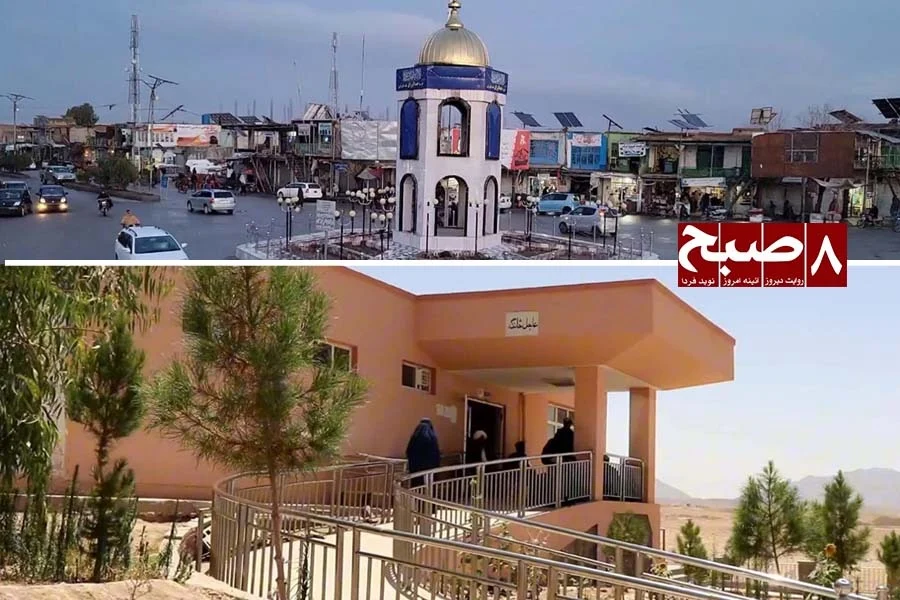
Residents of Uruzgan province, expressing concern over the lack of health facilities in the province, say that many common illnesses are not being treated at health centers. According to them, the delivery of health services in the province is severely weak.
Mohammad Shafiq, a resident of Gizab district, says that health services in the district’s health centers are poor, the number of health workers is small, professional doctors are not present, and some health workers have not even graduated from the nursing field. He adds that the distance between Tarinkot center and Gizab district center is about eight hours by car, and the poor condition of the roads has led drivers to charge people high fares.
This Gizab resident says the public hospital faces a severe shortage of medicine, and patients who visit the hospital are advised to purchase their needed medicines from the market.
Shafiq adds: “The best equipped hospital in our district is the district’s central hospital, but even simple illnesses such as the common cold are not treated there. We take our patients to Tarinkot. It is an eight-hour journey, and if someone hires a car, they have to pay five thousand Afghanis in fare. The condition of our district hospital has become completely dire.”
Gizab residents are not the only ones facing these problems. Residents of several other districts in Uruzgan also complain about the state of health services, saying that since the Taliban took control, the health sector in the province has been paralyzed.
Residents of Uruzgan Khas district also complain of health problems, saying that long travel routes, a shortage of professional doctors, a lack of medical equipment in hospitals, and poor service delivery have created serious difficulties for the district’s population.
One resident of this district says that some health centers in Uruzgan Khas are funded by the Taliban, while others are funded by international organizations, but the condition of these centers is very poor, and the services provided do not meet people’s needs. He says people transfer their patients for treatment to the provincial hospital in Tarinkot or to Jaghori and Malistan districts in Ghazni province.
This Uruzgan Khas resident says: “Very poor health services are provided in our district. There are no medicines or facilities in the hospitals at all. We take our patients to Tarinkot or to Malistan and Jaghori for treatment.”
Saifullah, a young man from Chinartu district who brought his sick wife to a private hospital in Tarinkot city for treatment, says that on one hand, people’s economic situation is very poor, and on the other hand, public health centers do not provide adequate medical services. He says there is no female doctor in Chinartu district at all, and across the entire district only two midwives provide services to female patients.
This young man adds: “People do not have food for breakfast and dinner and do not know how they will get through the night. They sleep with empty stomachs, and when they fall ill, they do not know how to cover the cost of treatment. There is no female doctor anywhere in our district, and only one or two midwives are present. There is no one else. The situation of the people in our districts is very dire, and they do not know how to treat themselves or their family members.”
Several civil society activists in the province say that the condition of health centers in Uruzgan and other parts of Afghanistan is poor, and that the reduction in international aid, along with what they describe as Taliban negligence, are among the main factors behind this situation.
A civil society activist in Uruzgan, who asked not to be named in this report due to security concerns, says that a large number of health centers in the province have closed due to reduced funding.
However, a source at one of the organizations responsible for providing health services in the province says that 105 health centers are currently active across Uruzgan. He adds that “white areas” still exist in some regions, where there are no active health centers, and that health services need to be established in these areas as well.
You can read the Persian version of this report here: