• 8AM.MEDIA
  • ویب‌سایت فارسی
  • پښتو ویب‌پاڼه
  • اۉزبېکچه ویب‌سایت
  • Podcast
Monday, September 28, 2026
Hasht-e Subh
  • Home
  • News
    • Afghanistan News
    • World News
  • Opinion
    • Editorial
    • Analysis
  • Reports
    • Daily Reports
    • Investigative Reports
  • Society
    • The story of people
  • Women’s Word
  • Columns
    • Three Years After Afghanistan’s Fall: The Taliban’s Resurgence
    • Towards Equality
    • The Resurgence of the Taliban: Two Years Since Afghanistan’s Fall
    • Hebatullah Report Special Edition
    • Resistance for Education Special Edition
    • Special Column on Taliban’s Education Curriculum
    • Nawroz
  • Interviews
  • Contact Us
    • About Us
    • 8AM MEDIA Annual Awards
    • Submit an Article to Hasht-e-Subh
  • 8am.mediaBack
Subscribe
No Result
View All Result
  • Home
  • News
    • Afghanistan News
    • World News
  • Opinion
    • Editorial
    • Analysis
  • Reports
    • Daily Reports
    • Investigative Reports
  • Society
    • The story of people
  • Women’s Word
  • Columns
    • Three Years After Afghanistan’s Fall: The Taliban’s Resurgence
    • Towards Equality
    • The Resurgence of the Taliban: Two Years Since Afghanistan’s Fall
    • Hebatullah Report Special Edition
    • Resistance for Education Special Edition
    • Special Column on Taliban’s Education Curriculum
    • Nawroz
  • Interviews
  • Contact Us
    • About Us
    • 8AM MEDIA Annual Awards
    • Submit an Article to Hasht-e-Subh
  • 8am.mediaBack
No Result
View All Result
Hasht-e Subh
No Result
View All Result

Vienna Versus Doha

Mohammad Farhaad Mohammad Farhaad
29 June 2024 - Solar Hijri Date: 1403/04/09 [t_time:1719662468]
Vienna Versus Doha

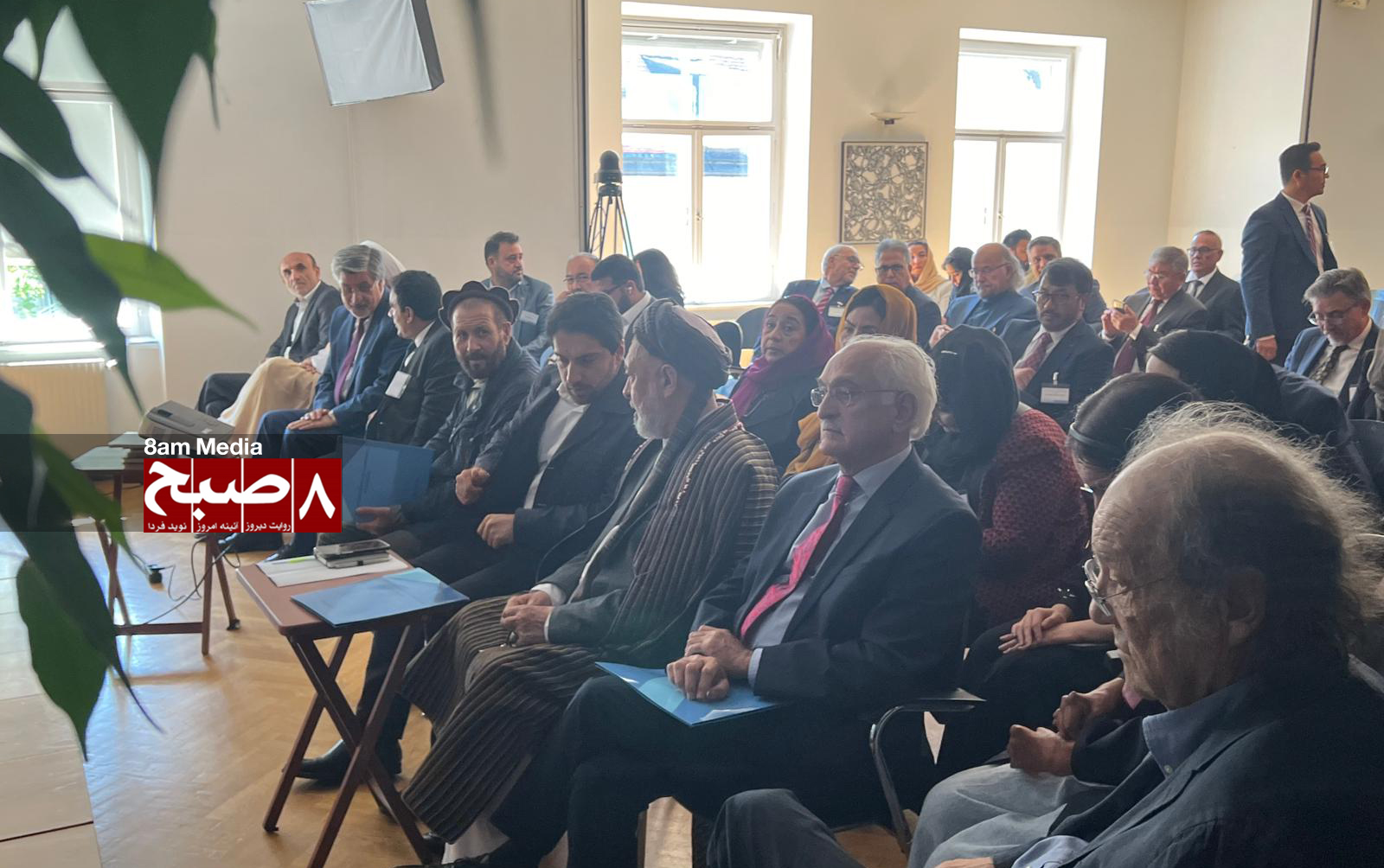
Vienna, the capital of Austria, yesterday hosted anti-Taliban factions for the fourth time. These gatherings in Vienna have now become a process known as “The Vienna Process.” In the fourth round of the Vienna Process, nearly seventy representatives from various political movements opposing the Taliban participated. Women, civil activists, and media representatives have consistently had the opportunity to participate in all Vienna Conferences. The first session of the Vienna Summit was launched on September 15, 2022, followed by the second on April 26, 2023, and the third on December 3, 2023.

What sets the fourth round apart from previous sessions is the increase in the number of attendees, contrasting with earlier meetings that hosted thirty or fewer participants. The current and previous Vienna Conferences share a single objective: achieving real cohesion among anti-Taliban fronts and finding solutions to navigate current conditions toward a desired outcome.

Following the fall of the previous Afghan government and the Taliban’s return to power, two seemingly competing political processes have emerged to address the country’s issues: Doha and Vienna. The Doha process appears to be evolving towards a Taliban-centric approach, with recent actions even excluding invitations to women and civil activists. In contrast, Vienna exclusively involves anti-Taliban factions, who would decline any Taliban participation if extended.

This distinction highlights that these two processes have intentionally or coincidentally positioned themselves opposed: Doha for the Taliban and Vienna for their opponents.

When compared, the Doha process seems more potent than Vienna for several reasons:

1- In the Doha process, the issue of Taliban presence or absence is prominently debated, primarily due to recognition as the current rulers of Afghanistan. The necessity of Taliban participation in the Doha process is emphasized to the extent that some countries view their absence as equivalent to the failure of that initiative. The Taliban, recognized as de facto rulers, impose strict conditions for their participation in Doha Meetings, often declining invitations as their opponents continuously advocate for inclusion. Conversely, in the Vienna process, participants are those opposed to the Taliban, and seeking power. It is noteworthy that the United Nations attaches great importance to the Taliban’s control of territory. For instance, reports from the United Nations Assistance Mission in Afghanistan (UNAMA) consistently highlight the inability of any anti-Taliban fronts to pose a “territorial challenge” to the group. UNAMA’s continual reference to this issue underscores its significance, indicating that anti-Taliban forces are only considered challengers when they possess territory and geography, otherwise, they are largely overlooked.

2- Most neighboring countries, regional powers, and the international community support the proceedings in Doha. Some countries solely support the presence of the Taliban, while others favor the participation of both groups but refrain from taking a firm stance. The attendance of special envoys from predominant countries at the Doha Meetings indicates their support. However, the Vienna process has not garnered comparable attention from countries. Therefore, it is imperative for the organizers of the Vienna process to actively seek international support, as failure to do so may lead it into a deadlock in the future, merely focusing on fostering cohesion among anti-Taliban forces while disregarding global endorsement.

3- The Doha process is led by the United Nations, an organization whose words and positions hold significant importance for most countries. The role of the United Nations has prompted even those countries not entirely comfortable with the Taliban to participate in Doha Meetings and sign onto agreements they may not fully support. If the process were led by one of the major powers, conflicting national interests could diminish support for the Doha process. In contrast, the Vienna process is facilitated by the Austrian Institute for International Affairs, led by Wolfgang Petritsch, a retired Austrian diplomat.

4- The hosts of both processes, Doha and Vienna, also differ significantly in their strengths. Doha has actively played a role in Afghanistan affairs for years, serving as host to the Taliban and facilitating their return to power. Austria, however, has been less involved in Afghanistan matters despite its significant role in broader historical European developments. Therefore, the Vienna process is led by an Austrian non-governmental entity rather than necessarily by the Austrian government. In the current climate where many countries are considering engagement with the Taliban, Vienna’s transformation into a platform reflecting anti-Taliban voices is noteworthy.

Furthermore, the Vienna process holds several advantages over the Doha process:

1- The Vienna process began and continues without substantial support from major foreign powers, which in itself is an achievement. Its longevity, hosting four sessions compared to Doha’s three, underscores its enduring relevance. This continuity suggests hope for its prospects. If anti-Taliban forces seriously commit, they could potentially navigate without significant international support, though efforts to secure greater backing from countries would enhance their position.

2- Despite not yet yielding specific outcomes, the Vienna process enjoys broader public acceptance compared to Doha. Criticisms of Vienna are predominantly aimed at improvement rather than fundamental opposition, unlike the destructive scenarios often associated with Doha. Even human rights organizations, under the UN umbrella, have approached the Doha process cautiously, indicating a growing preference for Vienna’s inclusivity and constructive approach.

3- The Vienna process benefits from inclusivity and comprehensiveness, something which the Doha process completely lacks. Now that the United Nations has invited the Taliban as the sole representative of Afghanistan to the Doha meeting, this process has become even more exclusive than before. In Vienna meetings, political figures represent various political and military factions. Women also participate freely despite Taliban restrictions and express their views comfortably. However, this process has not yet become sufficiently comprehensive because some other factions, ostensibly opposed to the Taliban, do not participate, perhaps because they perceive the Doha framework as more restrictive. Vienna’s focus is also on achieving Afghanistan’s inclusivity, which will ensure its success. In that case, the United Nations will have no choice but to turn to Vienna and integrate both processes, a step that could pave the way towards establishing a more inclusive government.

You can read the Persian version of this analysis here:
ویانا در برابر دوحه | روزنامه ۸صبح 

ShareTweetSendSendShare

Related Posts

A dry riverbed and low water flow are seen along the Tarinkot River in Uruzgan province, as residents await construction of the Aghajan Dam. (Photo credit: 8am.media)
Daily Reports

Uruzgan Residents: Two Years After Groundbreaking, Aghajan Dam Construction Still Not Started

27 September 2026 [t_time:1790532173]
Worshippers gather at the Sakhi Shrine in Kabul, a site visited by Shia and Sunni followers alike, amid ongoing reports of restrictions on religious freedom in Afghanistan. (Photo credit: 8am.media)
Daily Reports

Citizens Say Taliban Have Restricted Religious Freedom

27 September 2026 [t_time:1790531897]
The emblem of the Afghanistan Freedom Front (AFF), a resistance movement that has pledged to cooperate with the UN's newly established independent accountability mechanism to document human rights violations and Taliban crimes in Afghanistan.
Afghanistan News

Freedom Front Claims 37 Taliban Fighters Killed in Nuristan and Kunar

27 September 2026 [t_time:1790530890]

Latest

Loading latest news...

Popular stories

  • Surveillance footage shows Taliban fighters surrounding and shooting a bound man in Herat. (Photo credit: Social Media)

    Taliban Shoot Young Man from Herat After Torturing Him with Hands Tied

    Share
    Share Tweet
  • Al-Qaeda Releases Hamza bin Laden Message on 9/11 Anniversary

    Share
    Share Tweet
  • UN Report Reveals Shifts in Family Attitudes and Rise in Domestic Violence in Afghanistan

    Share
    Share Tweet
  • Pakistani Army Says Five Killed Over Alleged Links to Terrorism

    Share
    Share Tweet
  • Afghanistan: A New Battlefield as Iran and America Redraw the Taliban’s Role in Regional Power

    Share
    Share Tweet

Podcast

Insights
Insights

Join Lynne O’Donnell for 8AM’s podcast series, Insights.
Lynne talks with generals, diplomats, soldiers, journalists, politicians, activists, people who have front row seats for conflicts around the world, and citizens with a story to tell, happy or sad. For this first series, Afghanistan is the focus. Lynne and her guests talk about the collapse of the republic in August, 2021, and the impact since — for the people of Afghanistan, for the security of the region, for the safety of the world. It’s important, interesting and insightful.

Insights/22: Controlling the Narrative with Mina Sharif
byinsights8am

Controlling the Narrative

Lynne O’Donnell talks with Mina Sharif, author, activist, women’s rights campaigner, educator and mentor. They discuss who controls the narrative and who speaks for Afghanistan’s people when the Taliban appear to have seized control not only of the country but of the message, too.

Have a listen

Insights/22: Controlling the Narrative with Mina Sharif
Episode play icon
Insights/22: Controlling the Narrative with Mina Sharif
Episode Description
Episode play icon
Insights/21: Media Meltdown with Zahra Joya
Episode Description
Episode play icon
Insights/20: Terror Inc with Scott Richards
Episode Description
Episode play icon
Insights/19: Busting Stereotypes with Bushra Gohar
Episode Description
Episode play icon
Insights/18: Media Matters with Waliullah Rahmani
Episode Description
Episode play icon
Insights/17: What Goes Around Comes Around with Sima Samar
Episode Description
Search Results placeholder
Hasht-e Subh

8AM Media, also known as Hasht-e-Subh Daily, stands as Afghanistan's premier independent and non-profit newspaper, resonating as a beacon of journalistic integrity since its establishment in June 2007 by esteemed Afghan journalists and human rights advocates. With a steadfast commitment to citizen journalism and civic education, Hasht-e-Subh Daily has earned its place as the most esteemed publication in the nation.

Publisher: Sanjar Sohail
Email: [email protected]
Executive Director: Parwiz Kawa
Email: [email protected]

Read More

Hazara Genocide Remembrance and Solidarity Day Commemorated in Germany, With Calls for Unity in Afghanistan

Hazara Genocide Commemorated in Germany with Calls for Documentation and Global Advocacy

Uruzgan Residents: Two Years After Groundbreaking, Aghajan Dam Construction Still Not Started

Citizens Say Taliban Have Restricted Religious Freedom

WHO: No COVID-19 Deaths Recorded in Afghanistan Since January

Editor’s Choice

Every Saturday morning, 8AM MEDIA English Services Department will guide you through the week’s biggest stories from Afghanistan and the international community.

Subscribe

© 2026 - ©Hasht-e Subh Daily

No Result
View All Result
8am.Media
پښتو ویب‌پاڼه
ویب‌سایت فارسی
اۉزبېکچه ویب‌سایت
  • Home
  • News
    • Afghanistan News
    • World News
  • Opinion
    • Editorial
    • Analysis
  • Reports
    • Daily Reports
    • Investigative Reports
  • Society
    • The story of people
  • Women’s Word
  • Columns
    • Three Years After Afghanistan’s Fall: The Taliban’s Resurgence
    • Towards Equality
    • The Resurgence of the Taliban: Two Years Since Afghanistan’s Fall
    • Hebatullah Report Special Edition
    • Resistance for Education Special Edition
    • Special Column on Taliban’s Education Curriculum
    • Nawroz
  • Interviews
  • Contact Us
    • About Us
    • 8AM MEDIA Annual Awards
    • Submit an Article to Hasht-e-Subh
  • 8am.media

© 2026 - ©Hasht-e Subh Daily