Recently, Iranian authorities have reported a 20% increase in the production of industrial drugs (methamphetamine) in Afghanistan over the past ten months. Eskandar Momeni, the head of Iran’s Drug Control Headquarters, stated that regarding the Taliban’s claims of reducing drug cultivation and production, “It should not be the case that traditional drugs decrease while industrial drugs increase. The fight against drugs in Afghanistan should encompass all types of drugs.” Previously, the United Nations also reported an increase in the production and trafficking of methamphetamine in Afghanistan under Taliban control, indicating how deceptive and false the group’s claims of combating drugs are.
Do the Taliban genuinely combat drugs?
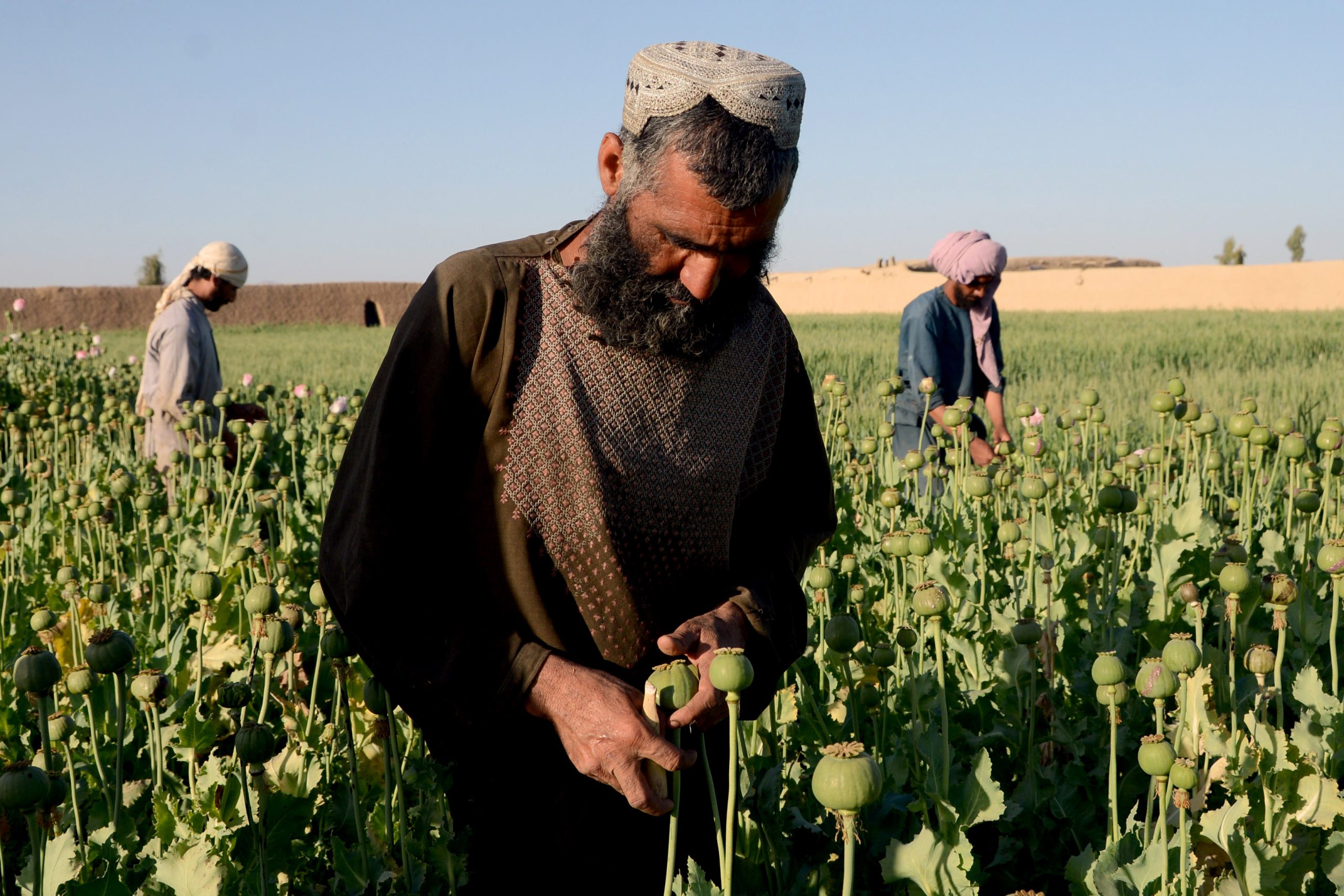
The Taliban is a group that, during the twenty-year war with the United States and the Afghan government, funded its military operations through the cultivation, production, and trafficking of drugs. The group was a major supporter of opium cultivation, especially in the southern and eastern provinces, and alongside collecting taxes from opium, they were involved in the production and trafficking of drugs. However, upon regaining power in Afghanistan, the Taliban declared the cultivation, production, and trafficking of drugs illegal. While the Taliban claimed to reduce opium cultivation, reports showed that those involved in cultivation, production, and trafficking found a new and more lucrative avenue compared to opium and heroin production, which is the production of industrial drugs (methamphetamine). According to United Nations experts, for the production of these types of drugs, “You don’t need to wait for anything to grow. You don’t need arable land. You need chefs and knowledge. Laboratories are mobile and hidden. Afghanistan also has ephedra, which is not found in the largest producer countries of methamphetamine, namely Myanmar and Mexico. The cultivation of this plant is legal in Afghanistan and grows everywhere, but you need a large amount of it.”
Well, now that Iranian authorities are speaking of a 20% increase in the production of this type of drug in Afghanistan under the Taliban control, the question arises: If the Taliban indeed have control over the entire country as they claim, why can’t they stop the activities of industrial drug production factories? Are the Taliban not fully controlling Afghanistan? If the answer is yes, then the claim of complete control over the country is baseless, and if the answer is no, then the Taliban are still connected to the drug mafia and are profiting greatly from this route.
If we consider this conclusion as a criterion, the Taliban, who have sufficient experience in profiting from the cultivation, production, and trafficking of drugs, would never be willing to lose one of the most lucrative sources of income in their controlled country.
Failure to provide suitable alternatives to opium cultivation:
Reports indicate that despite the Taliban’s efforts to prevent it, farmers still engage in opium cultivation. This group, like the previous government, is trying to control opium cultivation through force and mechanical methods. One of the reasons for farmers’ disobedience is the lack of better, effective, and sustainable alternatives provided by both the previous government and the Taliban regime in place of opium. The previous government promised a lot in connection with alternative cultivation to farmers; however, these promises were often not fulfilled, or if implemented, the alternatives offered lacked the capacity for sustainable replacement of opium cultivation, and therefore failed to attract farmers’ support.
While the Taliban, in some provinces, have resorted to destroying opium fields, they have been even less capable than the previous government in providing viable alternatives and have only attempted to prevent farmers from opium cultivation through coercion, which is neither a suitable nor a rational method.
The eradication program of opium cultivation in Afghanistan can only be more effective when, on the one hand, it enjoys public support. On the other hand, the regime provides significantly better alternatives to opium cultivation. At the same time, we know that the Taliban, like the previous government, lacks the necessary will and honesty in this regard. While officials of that government repeatedly claimed to be involved in drug cultivation, production, and trafficking, and some senior government officials were benefiting from it, what no government official dared to do was to disclose the names of these senior officials, let alone arrest and punish them. The government contented itself with disclosing and arresting low-level drug traffickers, which had little effectiveness. A government that couldn’t even disclose the names of major drug traffickers, how could it seriously combat drug trafficking?
In the Taliban regime, we are also faced with a long list of officials accused of involvement in drug production and trafficking. For this reason, we can argue that the motivation to combat drugs in this regime is much weaker than in the previous government. So, the “fight against drugs,” whether in the previous government or the Taliban regime, was more of a deceptive propaganda program that, despite extensive propaganda and claims by officials, remained merely at the level of mechanical and short-term efforts, holding conferences and occasional superficial sessions, and yielded no positive results.