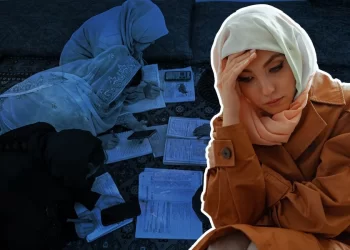
Three years after the establishment of the Woman Online University, this institution has opened a new path for girls in Afghanistan who were cut off from higher education by Taliban bans. Today, more than 17,000 female students study across 16 academic disciplines. The university operates with the support of over 800 instructors and 150 staff members. Alongside academic courses, it offers psychological counseling, practical training programs, and academic webinars. Students describe their time at the university as life-changing and hopeful, saying that it has strengthened not only their academic knowledge but also their motivation, self-confidence, and vision for the future.
University officials say the Woman Online University was founded on December 22, 2022, shortly after girls and women were barred from universities, with the clear goal of protecting access to education. Under the leadership of Abdulfareed Salangi and in cooperation with instructors from universities across Afghanistan, more than 800 volunteer professors now teach at the institution. Over the past three years, the university has provided education to more than 17,000 girls in 16 fields of study, following the standard curriculum of the former government.
Responding to the country’s needs, the university gradually established 16 faculties, including medicine, pharmacy, midwifery, nursing, stomatology, economics, law, psychology, literature, education, engineering, Sharia studies, computer science, fine arts, journalism, and agriculture. With the support of 150 administrative staff, teaching continues without interruption. The university has also launched a counseling clinic within the Faculty of Psychology, offering free mental health support to girls who have suffered emotional and psychological harm as a result of being denied education.
Despite immense challenges, the Woman Online University has organized graduation ceremonies, allowing students to celebrate their achievements and step into the private-sector job market with confidence. Officials say the university has signed cooperation agreements with respected international institutions, including Afghanistan Canada, the Rahila Trust charity, the Vita Care health center in Hamburg, and several Indian pharmaceutical institutions. These partnerships have strengthened its role in advancing online education.
University officials also report that, for the first time, a proposal to formally recognize online education in Afghanistan and to support the Woman Online University was presented at a public session of the European Parliament. The proposal followed a written request from more than 17,000 students and received a positive response.
Adela Zamani, Deputy for Student Affairs at the Woman Online University, told the Hasht-e Subh Daily that the institution has enabled hundreds of medical students to complete practical courses and internships by issuing official letters to reputable health centers inside and outside the country. She added that the university has also established a literary association and launched a literary journal within the Faculty of Language and Literature.
Zamani further explained that, alongside teaching the standard academic curriculum, the university holds weekly webinars featuring prominent scholars. It also broadcasts the “University Dialogue” program live on its Facebook page, contributing to greater scientific and cultural awareness among the People of Afghanistan.
Students’ Views on Online Education and the Role of this University
Zarmina Wakili, a student at the Woman Online University, says: “When universities closed, I felt trapped, as if there was no way forward and I could barely breathe. Discovering the Woman Online University brought new life into me. Every day I wake up knowing I have classes, professors who challenge me, and classmates to discuss lessons with. This experience has shaped me into a more determined person and strengthened my belief in the future. In this academic space, students graduate as professionals. This feeling belongs to the 17,000 girls studying here. I wish every girl in Afghanistan had this chance and never had to feel the pain of being denied education. The world must support this form of learning.”
Malalai Salangi, a sixth-semester student in the Faculty of Journalism and Communications, says the high quality of teaching encouraged her to continue her studies. She believes the varied backgrounds of instructors enriched her learning and expanded her connections. Reflecting on her experience, she says: “Connecting with people from different parts of the world has been incredibly valuable. In traditional classes, I only met students and professors from my own province, and my world felt much smaller.”
Hawa (pseudonym), a student in the Faculty of Economics, told the Hasht-e Subh Daily that before the Taliban takeover, she studied business administration at Herat University. When universities closed to women and girls, she fell into depression and isolation. She says the Woman Online University gave her a second chance to return to education. She now studies with satisfaction and emphasizes that the university teaches the same curriculum used in Afghanistan’s universities.
Bahar Aram, a third-semester medical student, says the Woman Online University changed her life. “Before joining, I felt surrounded by darkness. This university not only allowed me to continue my education, but also brought me closer to my dreams.” Before the ban, she had been an outstanding student at Herat University.
Zahra Moradi, another student, says she was a seventh-semester education student in Kabul before the closures. For a year, she waited and clung to rumors of reopening, each one raising her hopes. Eventually, she realized these promises only deepened the emotional wounds of girls and prolonged their suffering.
She adds, “I then joined a medical institute to study midwifery. Hope returned for a short time, but medical institutes were soon closed to girls as well. With the Woman Online University, I feel free again. I feel hope and motivation for life and the future. This university saved my mental health, and I owe it everything.”
Shamsia (pseudonym), a second-semester medical student, says enrolling at the Woman Online University helped her escape depression. “This experience changed me deeply,” she says. “It strengthened my knowledge and reshaped how I think, make decisions, and plan for the future. I learned to face challenges with responsibility and clarity. Support from dedicated professors and hardworking students rebuilt my confidence and motivation. It helped me understand my place in society and prepare for my academic and professional future with hope.”
Zohra Mirzad, an eighth-semester student in Islamic Education at the Faculty of Sharia, says the university played a decisive role in keeping her education alive. At a time when most doors were closed, the Woman Online University offered learning grounded in discipline, hope, and motivation. She praises the respectful and secure environment and says, “This university is not just a place of study. It is an inspiring experience that keeps hope, self-belief, and intellectual growth alive for women.”
Aida Ahmadi, a fourth-semester medical student, says the university rescued her from severe emotional distress. “Today, I work as a nurse at a local clinic. The practical training I received here has been the most valuable part of my education.”
Roqia Athar, another student, says the Woman Online University gave her a sense of returning to life. “When universities closed, I lost all hope for the future. Since discovering this university, I start each day grateful for this opportunity.” She urges girls who are still waiting for universities to reopen to embrace online education.
Roya Malek says the university has restored hope to broken hearts and opened a new path for women’s dreams so that no girl is left without education.
Nafisa Wakili adds that the university has saved hundreds of girls from despair, forced marriages, and emotional pressure. “In recent years, mental health problems and suicide among girls have increased sharply. This university restored hope and the chance to keep learning. That is why it now holds an important place in online education.”
These students express satisfaction with continuing their education at the Woman Online University at a time when the Taliban have closed schools above sixth grade and universities to women and blocked their participation across all areas of life.
You can read the Persian version of this report here:
دانشگاه آنلاین زن؛ نسیم امید در زمستان تاریک تحصیل دختران افغانستان