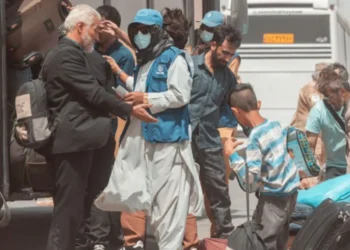

Human Rights Watch has expressed concern over the expulsion of medical students from Pakistan, stating that the country, without any prior warning, has ordered all medical and dental educational institutions to expel Afghanistan students and arrange for their return to Afghanistan. According to this human rights organization, this is the latest measure by Pakistani authorities to immediately expel citizens of Afghanistan from the country.
The organization has added that returning female students to Afghanistan means the loss of their opportunity to become doctors or dentists, since the Taliban have banned women from studying at universities and pursuing medical education.
Human Rights Watch has added that Pakistani medical educational institutions have also stopped accepting new students who are citizens of Afghanistan. King Edward Medical University in Lahore has ordered 20 medical students, including four women and seven final-year students, to report within 24 hours to complete their departure process.
The Human Rights Commission of Pakistan (HRCP), a non-governmental body, has estimated that around 100 medical and dental students in Lahore may be affected by this decision, of whom 20 to 40 are women. A number of these students have approached the commission seeking safe shelter and legal assistance, as they fear their imminent expulsion.
Human Rights Watch has stated that Pakistan, as a state party to the International Covenant on Economic, Social and Cultural Rights (ICESCR), is obligated to guarantee equal access to higher education based on merit and without discrimination. The United Nations committee that oversees the implementation of this covenant has clarified that its protections also extend to non-citizens, and that their immigration status makes no difference in this regard. According to the organization, expelling students who are currently studying, solely because they are Afghan, contradicts these obligations.
Human Rights Watch has previously documented arbitrary detentions and the forced return of hundreds of thousands of citizens of Afghanistan by Pakistani authorities, many of whom had lived in Pakistan for decades.
Pakistan is also required to observe the universal principle of “non-refoulement,” a principle that prohibits the forced return of individuals who face a documented risk of persecution, torture, or other serious harm. Since Afghanistan asylum seekers previously expelled from Pakistan have not been properly screened or assessed, it remains unclear how many of them would face the risk of persecution by the Taliban if they were to return to Afghanistan.
Human Rights Watch has stated that Pakistani authorities should cancel the orders to return these students, reinstate their academic status, revoke the discriminatory ban on the admission of students from Afghanistan, and ensure that students can legally remain in Pakistan to complete their education. The organization has added that the protection needs of each student should be assessed individually, and that safe shelter should be provided for those who need protection, particularly women, who face a greater risk of persecution by the Taliban.
The organization has stated that Pakistan should allow these future doctors and dentists to complete their education, both for their own futures and for the countless lives they may one day save or improve, whether in Pakistan or, once it becomes safe for them to return, in Afghanistan.
You can read the Persian version of this report here:
دیدهبان حقوق بشر: پاکستان خلاف تعهدات حقوق بشری خود با دانشجویان افغانستان برخورد میکند