• 8AM.MEDIA
  • ویب‌سایت فارسی
  • پښتو ویب‌پاڼه
  • اۉزبېکچه ویب‌سایت
  • Podcast
Wednesday, October 14, 2026
Hasht-e Subh
  • Home
  • News
    • Afghanistan News
    • World News
  • Opinion
    • Editorial
    • Analysis
  • Reports
    • Daily Reports
    • Investigative Reports
  • Society
    • The story of people
  • Women’s Word
  • Columns
    • Three Years After Afghanistan’s Fall: The Taliban’s Resurgence
    • Towards Equality
    • The Resurgence of the Taliban: Two Years Since Afghanistan’s Fall
    • Hebatullah Report Special Edition
    • Resistance for Education Special Edition
    • Special Column on Taliban’s Education Curriculum
    • Nawroz
  • Interviews
  • Contact Us
    • About Us
    • 8AM MEDIA Annual Awards
    • Submit an Article to Hasht-e-Subh
  • 8am.mediaBack
Subscribe
No Result
View All Result
  • Home
  • News
    • Afghanistan News
    • World News
  • Opinion
    • Editorial
    • Analysis
  • Reports
    • Daily Reports
    • Investigative Reports
  • Society
    • The story of people
  • Women’s Word
  • Columns
    • Three Years After Afghanistan’s Fall: The Taliban’s Resurgence
    • Towards Equality
    • The Resurgence of the Taliban: Two Years Since Afghanistan’s Fall
    • Hebatullah Report Special Edition
    • Resistance for Education Special Edition
    • Special Column on Taliban’s Education Curriculum
    • Nawroz
  • Interviews
  • Contact Us
    • About Us
    • 8AM MEDIA Annual Awards
    • Submit an Article to Hasht-e-Subh
  • 8am.mediaBack
No Result
View All Result
Hasht-e Subh
No Result
View All Result

Kandahar: Mosque Construction Race Overshadows Growing Public Needs

Translated by Farhad Farhaad | Originally reported in Persian by the Hasht-e Subh Daily, Kandahar

Mohammad Farhaad Mohammad Farhaad
12 September 2026 - Solar Hijri Date: 1405/06/21 [t_time:1789227698]
Newly built mosques with towering minarets stand in Kandahar amid a construction boom among Taliban commanders. (Photo credit: Social Media)

Social Media

Kandahar, in southern Afghanistan, is the capital of the Taliban regime’s rule. Over the past five years, Akhundzada has issued all of his orders from this very city. The face of the city has also changed drastically, with security measures increased and restrictions on women, youth, and media becoming harsher here than anywhere else. Ordinary residents of the city acknowledge that they are compelled to make their appearance resemble that of the Taliban. At the same time, competition among Taliban commanders over mosque construction in this province has been unprecedented over the past five years. Dozens of mosques have been built in the city and various parts of the province, with the cost of construction for most of them covered by traders and local residents.

Several Kandahar residents say the number of mosques in the city and surrounding areas has increased to such an extent that in some areas, another mosque has been built right next to an existing one. According to them, the mosque holds an important place in the religious life of the people, and the construction of places of worship is not inherently a problem, but they stress that this should not come at the expense of people’s more basic needs.

Kandahar residents are also concerned about the future of the youth, saying that religious education alone is not sufficient for their future. Rather, young people also need training in computers, information technology, languages, professional trades, and skills relevant to the job market.

Hazrat Bilal, a resident of Kandahar’s first district, says that four new mosques have been built in his village over the past five years, and villagers who previously prayed at a single mosque are now divided among these four mosques.

He adds that compared to the past, the number of mosques is increasing across nearly the entire province, and that the Taliban have prioritized mosque construction above almost everything else.

Mohammad Afzal, a resident of Kandahar’s Chowk-e-Shahidan area, echoes similar views, saying that mosque construction is currently on the rise in both the provincial center and the districts of Kandahar. He says that if educational and vocational training centers were built alongside mosques, the younger generation could preserve its religious values while also keeping pace with the knowledge and technology of the modern world.

Mohammad Afzal says the Taliban have focused solely on mosque construction, and that millions of Afghanis from the public treasury are being spent on building and rehabilitating these mosques. According to him, under current conditions, there are other, more basic needs alongside mosques that the Taliban should prioritize.

Meanwhile, a reliable source says that in the past year alone, the Taliban have repaired 270 old mosques and built 350 new ones in the provincial center, the city, and the districts. According to the source, these mosques were built using Taliban funds. In addition, dozens of mosques have also been built in various areas by traders and ordinary residents.

A civil society activist in Kandahar, who asked not to be named in this report, says the construction of countless mosques is out of step with the needs of the people. According to him, there are already enough mosques, but the Taliban appear to be competing with one another over mosque construction. In his view, under current conditions, establishing water supply networks, building educational and vocational training centers, setting up computer and technology training centers, and creating job and training opportunities for young people are among the most pressing needs of the community.

The View of Religious Scholars

Some religious scholars in Kandahar also say that instead of excessively increasing the number of mosques, people should be encouraged to provide social services in other areas as well.

Mufti Abdul Razzaq Sehat, a religious scholar in Kandahar, says that building a mosque is a good deed and carries spiritual reward, but building a mosque alone is not what matters most. What matters more is that people actually use it for prayer and worship.

This religious scholar adds: “What need is there for a mosque that a worshipper enters only to steal people’s shoes? A person who commits a crime in the city first turns to crime to fill his stomach, and then goes to pray in a mosque built by the Taliban. The Taliban should first identify the causes of crime and unemployment and feed the hungry stomachs of the people, so that people do not go to worship on an empty stomach and can instead pray in a calm environment. Because worship is possible anywhere, but providing people with work and bread is difficult.”

The Taliban’s Ministry of Hajj and Religious Affairs, the group’s Ministry for the Propagation of Virtue and Prevention of Vice, the Ministry of Public Works, and the Taliban’s Ministry of Urban Development and Housing have, over the past five years, spent millions of Afghanis on building mosques and grand mosques in various parts of Afghanistan.


You can read the Persian version of this report here:

قندهار؛ رقابت بر سر ساخت مساجد در سایه نیازهای فزاینده مردم

ShareTweetSendSendShare

Related Posts

Women’s dresses hang on display in Kandahar amid the Taliban’s ban on men sewing women’s clothing. (Photo credit: Exclusive)
Afghanistan News

Taliban Ban Men from Sewing Women’s Clothing in Kandahar

12 October 2026 [t_time:1791821245]
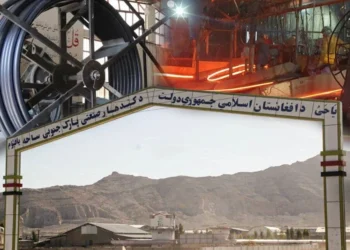
The entrance gate of an industrial park in Kandahar, with steel wire coils and workers at a furnace shown above, as power shortages shut down factories. (Photo credit: Exclusive)
Daily Reports

Power Shortages Shut Down More Than Two Thirds of Factories in Kandahar, Industrialists Say

12 October 2026 [t_time:1791805810]
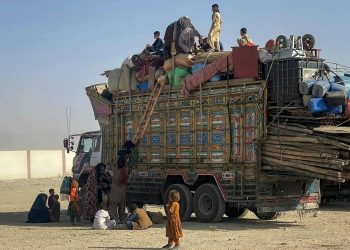
Afghan refugees returned to Afghanistan with their belongings (Photo: Abdul Basil / AFP via Getty Images)
Afghanistan News

More Than 600 Afghan Migrants Return to the Country

12 October 2026 [t_time:1791799317]

Latest

Loading latest news...

Popular stories

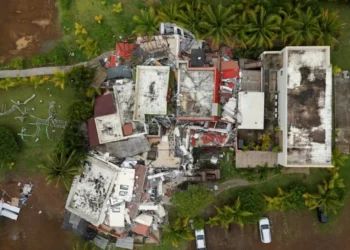
  • An aerial view shows collapsed buildings and widespread damage following an earthquake in Panama (Photo: Reuters)

    More Than 200 Aftershocks Recorded in Panama Since Friday’s Earthquake

    Share
    Share Tweet
  • Axios: Trump Expects Ukraine Not to Attack Russian Oil Refineries

    Share
    Share Tweet
  • UN Report Reveals Shifts in Family Attitudes and Rise in Domestic Violence in Afghanistan

    Share
    Share Tweet
  • The Politics We Inherited: Rethinking Afghanistan’s Political Culture

    Share
    Share Tweet
  • Mujahid: Pakistan Should Address Its Internal Problems Instead of Making Accusations

    Share
    Share Tweet

Podcast

Insights
Insights

Join Lynne O’Donnell for 8AM’s podcast series, Insights.
Lynne talks with generals, diplomats, soldiers, journalists, politicians, activists, people who have front row seats for conflicts around the world, and citizens with a story to tell, happy or sad. For this first series, Afghanistan is the focus. Lynne and her guests talk about the collapse of the republic in August, 2021, and the impact since — for the people of Afghanistan, for the security of the region, for the safety of the world. It’s important, interesting and insightful.

Insights/22: Controlling the Narrative with Mina Sharif
byinsights8am

Controlling the Narrative

Lynne O’Donnell talks with Mina Sharif, author, activist, women’s rights campaigner, educator and mentor. They discuss who controls the narrative and who speaks for Afghanistan’s people when the Taliban appear to have seized control not only of the country but of the message, too.

Have a listen

Insights/22: Controlling the Narrative with Mina Sharif
Episode play icon
Insights/22: Controlling the Narrative with Mina Sharif
Episode Description
Episode play icon
Insights/21: Media Meltdown with Zahra Joya
Episode Description
Episode play icon
Insights/20: Terror Inc with Scott Richards
Episode Description
Episode play icon
Insights/19: Busting Stereotypes with Bushra Gohar
Episode Description
Episode play icon
Insights/18: Media Matters with Waliullah Rahmani
Episode Description
Episode play icon
Insights/17: What Goes Around Comes Around with Sima Samar
Episode Description
Search Results placeholder
Hasht-e Subh

8AM Media, also known as Hasht-e-Subh Daily, stands as Afghanistan's premier independent and non-profit newspaper, resonating as a beacon of journalistic integrity since its establishment in June 2007 by esteemed Afghan journalists and human rights advocates. With a steadfast commitment to citizen journalism and civic education, Hasht-e-Subh Daily has earned its place as the most esteemed publication in the nation.

Publisher: Sanjar Sohail
Email: [email protected]
Executive Director: Parwiz Kawa
Email: [email protected]

Read More

Kenneth Roth: Forced Returns of Afghans from France Increase Risk of Persecution and Torture

The Nightmare of the White-Robed Men: Wounds That Linger in the Minds and Souls of Women in Herat

UN: Cities Must Be at the Center of Planning

Egyptian and Pakistani Foreign Ministers Discuss Regional Issues

Pakistan Route Closure Cripples Trade, Costing Afghanistan’s Traders Millions of Dollars

Editor’s Choice

Every Saturday morning, 8AM MEDIA English Services Department will guide you through the week’s biggest stories from Afghanistan and the international community.

Subscribe

© 2026 - ©Hasht-e Subh Daily

No Result
View All Result
8am.Media
پښتو ویب‌پاڼه
ویب‌سایت فارسی
اۉزبېکچه ویب‌سایت
  • Home
  • News
    • Afghanistan News
    • World News
  • Opinion
    • Editorial
    • Analysis
  • Reports
    • Daily Reports
    • Investigative Reports
  • Society
    • The story of people
  • Women’s Word
  • Columns
    • Three Years After Afghanistan’s Fall: The Taliban’s Resurgence
    • Towards Equality
    • The Resurgence of the Taliban: Two Years Since Afghanistan’s Fall
    • Hebatullah Report Special Edition
    • Resistance for Education Special Edition
    • Special Column on Taliban’s Education Curriculum
    • Nawroz
  • Interviews
  • Contact Us
    • About Us
    • 8AM MEDIA Annual Awards
    • Submit an Article to Hasht-e-Subh
  • 8am.media

© 2026 - ©Hasht-e Subh Daily