• 8AM.MEDIA
  • ویب‌سایت فارسی
  • پښتو ویب‌پاڼه
  • اۉزبېکچه ویب‌سایت
  • Podcast
Sunday, October 11, 2026
Hasht-e Subh
  • Home
  • News
    • Afghanistan News
    • World News
  • Opinion
    • Editorial
    • Analysis
  • Reports
    • Daily Reports
    • Investigative Reports
  • Society
    • The story of people
  • Women’s Word
  • Columns
    • Three Years After Afghanistan’s Fall: The Taliban’s Resurgence
    • Towards Equality
    • The Resurgence of the Taliban: Two Years Since Afghanistan’s Fall
    • Hebatullah Report Special Edition
    • Resistance for Education Special Edition
    • Special Column on Taliban’s Education Curriculum
    • Nawroz
  • Interviews
  • Contact Us
    • About Us
    • 8AM MEDIA Annual Awards
    • Submit an Article to Hasht-e-Subh
  • 8am.mediaBack
Subscribe
No Result
View All Result
  • Home
  • News
    • Afghanistan News
    • World News
  • Opinion
    • Editorial
    • Analysis
  • Reports
    • Daily Reports
    • Investigative Reports
  • Society
    • The story of people
  • Women’s Word
  • Columns
    • Three Years After Afghanistan’s Fall: The Taliban’s Resurgence
    • Towards Equality
    • The Resurgence of the Taliban: Two Years Since Afghanistan’s Fall
    • Hebatullah Report Special Edition
    • Resistance for Education Special Edition
    • Special Column on Taliban’s Education Curriculum
    • Nawroz
  • Interviews
  • Contact Us
    • About Us
    • 8AM MEDIA Annual Awards
    • Submit an Article to Hasht-e-Subh
  • 8am.mediaBack
No Result
View All Result
Hasht-e Subh
No Result
View All Result

World Bank Report on Afghanistan: Decline in Exports and Economic Recession

Moqim mehran Moqim mehran
17 March 2024 - Solar Hijri Date: 1402/12/27 [t_time:1710692862]
World Bank Report on Afghanistan: Decline in Exports and Economic Recession

Over the past two years, the Taliban have consistently claimed to improve Afghanistan’s economic situation and foster investment opportunities. They have sought to minimize the economic crisis among the populace and the global community by disseminating engineered information. However, the World Bank has reported an economic recession in Afghanistan, attributed to reduced economic activities and ongoing inflation. In its report titled “Afghanistan Economic Monitoring,” the bank disclosed that annual inflation in Afghanistan hit -10.2 percent in January 2024. Coal exports, once touted by the Taliban as a symbol of export growth, have plummeted by 87 percent. Nonetheless, economic experts argue that under Taliban rule, Afghanistan has not achieved competitive export levels. They maintain that coal exports to Pakistan, itself engulfed in an economic crisis, cannot alleviate the country’s backwardness, unemployment, and poverty. According to them, resolving the economic recession requires a conducive investment environment, contingent upon a legitimate and authoritative political framework with both domestic and international recognition.

The World Bank stated in its recent report titled “Afghanistan Economic Monitoring” that annual inflation in Afghanistan reached -10.2 percent in January 2024. The report explicitly states that this inflation is due to a sudden decrease in the prices of food (-15.1 percent) and non-food items (-4.8 percent).

The World Bank report notes that a prolonged decrease in inflation can lead to a damaging cycle wherein consumer purchasing power is delayed, businesses reduce investment, economic growth halts, and ultimately poverty increases while job opportunities decrease.

According to this report, Afghanistan’s exports have decreased by 5 percent compared to the same period last year, reaching $140.5 million, whereas last year this figure was $148.1 million.

Based on this report, coal exports have suffered a significant blow, decreasing by 87 percent to $3.9 million. The reason cited for the decline in coal exports to Pakistan is that Pakistan is utilizing its own domestic and cheaper coal.

According to the report, Afghanistan’s imports were $600 million in January of last year, but in January 2024, they reached $830 million, increasing the trade deficit. Experts state that a trade deficit occurs when a country’s imports exceed its exports.

The World Bank has estimated Afghanistan’s annual imports at $5.5 billion, indicating a trade deficit of $3.5 billion. The World Bank report also indicates that Afghanistan’s revenues are lower than what the Taliban had stated.

According to this report, during the 11 months of the past fiscal year, from March 2023 to February 2024, a total of 189 billion Afghanis were collected, which is 2 percent less than the set target. Economic experts say that economic decline occurs when goods are available in the market but people lack purchasing power. This condition is referred to as negative inflation or deflation, which poses a threat to a country’s economy and can result in an economic collapse.

Azarakhsh Hafizi, an economic expert, told the Hasht-e Subh Daily that unfortunately, Afghanistan has not achieved economic stability with strong infrastructure, preferred production, and competitive exports. He adds concern over the decline in coal exports to Pakistan, stating that exporting minerals to a country already in crisis cannot solve Afghanistan’s backwardness, unemployment, and poverty. Mr. Hafizi emphasizes, “The reason for this setback is the lack of an effective economic system and economic advantages in Afghanistan. When Pakistanis don’t need coal, they won’t buy it from Afghanistan, and if they find alternative energy sources [to coal], they will cut off imports from Afghanistan.” According to him, to overcome this crisis, purchasing power must first be increased, which is possible when there is employment, people have incomes, and shopkeepers can sell their goods.

The economic expert states: “One of the economic problems is that [the Taliban], instead of recognizing the problem officially and finding a solution, try to mitigate the disaster in people’s minds through advertising. In the current situation, political relations with Pakistan are not desirable, and they usually have political issues. They take revenge on the economic sectors of Afghanistan. On the other hand, trade with neighboring countries has decreased.”

Mr. Hafizi adds that a significant portion of Afghanistan’s revenues from transit trade between South Asia and Central Asia has decreased due to existing problems and Pakistan’s disinterest in imports from Central Asia through Afghanistan. He emphasizes that sustainable and adequate economic growth requires political stability and legitimacy so that international institutions such as the International Monetary Fund (IMF), World Bank, Asian Development Bank (ADB), and other economic organizations can invest in Afghanistan without legal obstacles.

According to economic experts, as long as Afghanistan remains deprived of direct aid from the world, investment opportunities will not be readily available with an economy reliant on internal resources. They argue that until Afghanistan becomes integrated into the world’s financial policies, investment issues cannot progress through informal channels and equations.

Previously, the Coal Exporters Union in Afghanistan also reported a significant decrease in exports to Pakistan. This union attributed the decline in coal exports to economic and political developments in Pakistan and an increase in customs tariffs by the Taliban.

Afghan traders have repeatedly stated that Afghan coal is sold to Pakistani middlemen in Pakistani currency (rupees), which has significantly lower value compared to other foreign currencies and the currency of Afghanistan.
ShareTweetSendSendShare

Related Posts

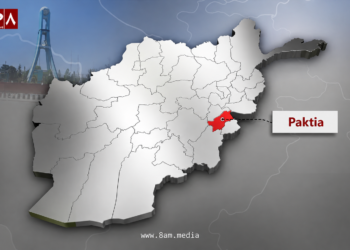
Paktia province highlighted red in Afghanistan map
Afghanistan News

Sources Report Clashes Between Taliban and Pakistani Forces in Paktia

10 October 2026 [t_time:1791658331]
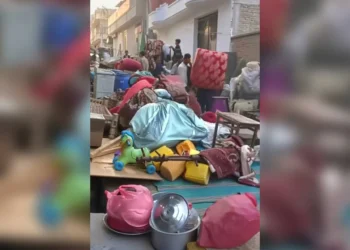
Residents’ belongings lie piled up and scattered outdoors after the forced eviction of families from their homes in Jalalabad, Nangarhar (Photo: Exclusive)
Afghanistan News

Taliban Forcibly Evict Residents from Homes in Nangarhar Despite Legal Documents

10 October 2026 [t_time:1791657234]
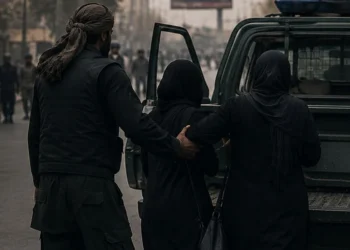
A Taliban member escorts two women toward a vehicle in Afghanistan (Photo: Exclusive)
Afghanistan News

UN Women Expresses Concern Over Taliban Detention and Threats Against Women

10 October 2026 [t_time:1791651292]

Latest

Loading latest news...

Popular stories

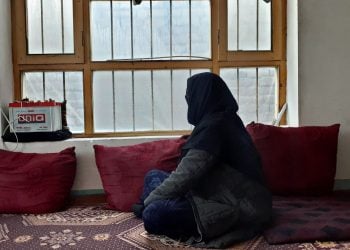
  • An Afghan woman gazes out of her home, reflecting the isolation and challenges faced by women in Afghanistan under Taliban rule. (Photo Credit: 8am.media)

    UN Report Reveals Shifts in Family Attitudes and Rise in Domestic Violence in Afghanistan

    Share
    Share Tweet
  • Iraq Reports Export of Two Million Barrels of Crude Oil Through Strait of Hormuz

    Share
    Share Tweet
  • Pakistan and the Yemen War: Balancing Between Riyadh and Tehran

    Share
    Share Tweet
  • Al-Qaeda Releases Hamza bin Laden Message on 9/11 Anniversary

    Share
    Share Tweet
  • India and Afghanistan: Quiet Diplomacy in the Shadow of the Taliban-Pakistan Tensions

    Share
    Share Tweet

Podcast

Insights
Insights

Join Lynne O’Donnell for 8AM’s podcast series, Insights.
Lynne talks with generals, diplomats, soldiers, journalists, politicians, activists, people who have front row seats for conflicts around the world, and citizens with a story to tell, happy or sad. For this first series, Afghanistan is the focus. Lynne and her guests talk about the collapse of the republic in August, 2021, and the impact since — for the people of Afghanistan, for the security of the region, for the safety of the world. It’s important, interesting and insightful.

Insights/22: Controlling the Narrative with Mina Sharif
byinsights8am

Controlling the Narrative

Lynne O’Donnell talks with Mina Sharif, author, activist, women’s rights campaigner, educator and mentor. They discuss who controls the narrative and who speaks for Afghanistan’s people when the Taliban appear to have seized control not only of the country but of the message, too.

Have a listen

Insights/22: Controlling the Narrative with Mina Sharif
Episode play icon
Insights/22: Controlling the Narrative with Mina Sharif
Episode Description
Episode play icon
Insights/21: Media Meltdown with Zahra Joya
Episode Description
Episode play icon
Insights/20: Terror Inc with Scott Richards
Episode Description
Episode play icon
Insights/19: Busting Stereotypes with Bushra Gohar
Episode Description
Episode play icon
Insights/18: Media Matters with Waliullah Rahmani
Episode Description
Episode play icon
Insights/17: What Goes Around Comes Around with Sima Samar
Episode Description
Search Results placeholder
Hasht-e Subh

8AM Media, also known as Hasht-e-Subh Daily, stands as Afghanistan's premier independent and non-profit newspaper, resonating as a beacon of journalistic integrity since its establishment in June 2007 by esteemed Afghan journalists and human rights advocates. With a steadfast commitment to citizen journalism and civic education, Hasht-e-Subh Daily has earned its place as the most esteemed publication in the nation.

Publisher: Sanjar Sohail
Email: [email protected]
Executive Director: Parwiz Kawa
Email: [email protected]

Read More

Sources Report Clashes Between Taliban and Pakistani Forces in Paktia

Taliban Forcibly Evict Residents from Homes in Nangarhar Despite Legal Documents

Shabana Basij-Rasikh Announces $2.5 Million Scholarship Fund for Afghan Women at Oxford

Volker Turk Calls U.S. Sanctions Against International Criminal Court “Unacceptable”

UN Women Expresses Concern Over Taliban Detention and Threats Against Women

Editor’s Choice

Every Saturday morning, 8AM MEDIA English Services Department will guide you through the week’s biggest stories from Afghanistan and the international community.

Subscribe

© 2026 - ©Hasht-e Subh Daily

No Result
View All Result
8am.Media
پښتو ویب‌پاڼه
ویب‌سایت فارسی
اۉزبېکچه ویب‌سایت
  • Home
  • News
    • Afghanistan News
    • World News
  • Opinion
    • Editorial
    • Analysis
  • Reports
    • Daily Reports
    • Investigative Reports
  • Society
    • The story of people
  • Women’s Word
  • Columns
    • Three Years After Afghanistan’s Fall: The Taliban’s Resurgence
    • Towards Equality
    • The Resurgence of the Taliban: Two Years Since Afghanistan’s Fall
    • Hebatullah Report Special Edition
    • Resistance for Education Special Edition
    • Special Column on Taliban’s Education Curriculum
    • Nawroz
  • Interviews
  • Contact Us
    • About Us
    • 8AM MEDIA Annual Awards
    • Submit an Article to Hasht-e-Subh
  • 8am.media

© 2026 - ©Hasht-e Subh Daily