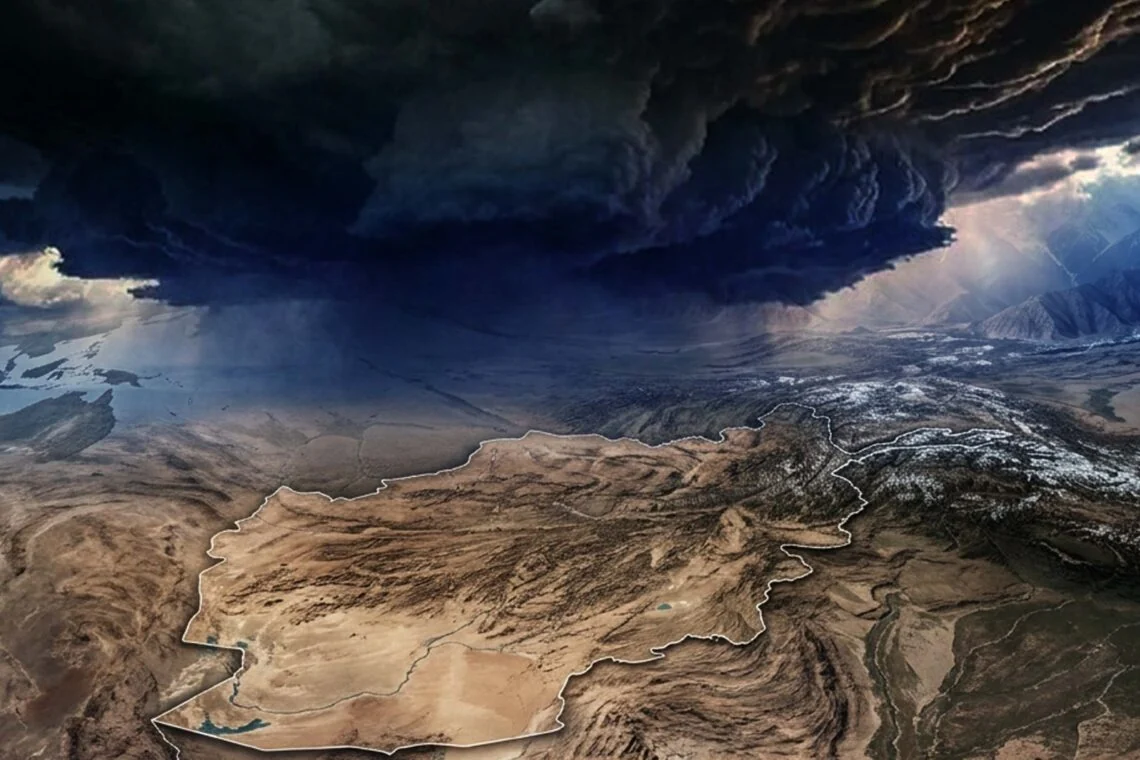
In recent years, the people of Afghanistan have heard the names of two peculiar and influential phenomena more than ever before: El Niño and La Niña. These two phenomena, which begin in the depths of the Pacific Ocean, can transform patterns of rainfall, snow, drought, and even floods in our country. Now, between October and November 2026, Afghanistan has come under the influence of one of the strongest El Niño events in several decades.
This phenomenon has affected not only Iran; its effects are also clearly visible in Afghanistan, and it is forecast to continue in the coming months. The purpose of this article is to explain, in simple but precise language, what El Niño is, why it has become so strong, which regions of Afghanistan it affects most, what opportunities and risks it brings, and how people can benefit from the opportunities it creates or protect themselves against its dangers.
This piece has been prepared for the general public, farmers, livestock herders, teachers, university students, and local decision-makers. An effort has been made to explain scientific concepts in everyday language so that every reader can benefit from it.
1. What Is El Niño and How Does It Work?
The Pacific is the largest ocean on Earth. Under normal conditions, the easterly winds, known as trade winds, push the warm surface waters of the ocean westward, toward Indonesia and Australia. As a result, in the eastern Pacific, near the coasts of Peru and Ecuador, cold water rises from the depths of the ocean to the surface, and the weather becomes drier. This normal situation is called “neutral conditions.”
Sometimes this balance is disrupted. The easterly winds weaken or even change direction. As a result, warm water accumulates in the central and eastern Pacific. This situation is called “El Niño.” When cold water dominates in these areas, it is called “La Niña.” El Niño is not merely a local change in the ocean; this phenomenon affects air currents across vast parts of the world and can change rainfall patterns thousands of kilometers away. Afghanistan is also among the countries indirectly affected by this phenomenon.
For a better understanding, El Niño can be imagined as a “giant climate switch” which, once activated, changes rainfall and temperature patterns across a large part of the world. The intensity of this phenomenon is measured by recording the sea surface temperature in an area called the “Niño 3.4 region” in the central Pacific. If the water temperature in this region is at least half a degree Celsius above the long-term average and this situation continues for several months, conditions are in place for the formation of El Niño.
2. The Current State of El Niño in 2026
According to official reports from the US National Oceanic and Atmospheric Administration (NOAA) and the World Meteorological Organization (WMO), El Niño began in mid-2026 and has rapidly gained strength. In some weeks, the water surface temperature in the main El Niño region has risen to more than three degrees Celsius above the long-term average. This figure is very high and places the phenomenon among the strongest El Niño events since 1950.
Forecasts indicate that this phenomenon will continue until the spring of 2027, roughly from late March to late May, and that it will reach its peak strength between November 22, 2026 and January 20, 2027. After that, it will gradually weaken; however, its effects on rainfall and temperature may remain until spring and even early summer 2027. The probability of this event being recorded as one of the strongest El Niño events in history is estimated at more than 80 percent.
The important point is that El Niño does not act alone. At the same time, another phenomenon, called the “Indian Ocean Dipole,” is also taking shape, which can strengthen or weaken the effects of El Niño in our region. The combination of these two phenomena has made the likelihood of increased rainfall in Afghanistan greater.
3. The Historical Impact of El Niño on Afghanistan
Climate studies show that in El Niño years, Afghanistan usually receives more rainfall than average, particularly in autumn and winter. This situation differs from that of many countries in South and Southeast Asia, which face drought in El Niño years. The reason for this difference is Afghanistan’s geographical location.
Afghanistan lies in a transitional zone between Mediterranean weather systems and monsoon systems. When El Niño is active, the path of precipitation systems moving from the west, that is, the Mediterranean and the Black Sea, shifts eastward, and these systems are diverted more toward Afghanistan and Pakistan. As a result, winter rainfall increases. Of course, this is not an absolute rule. In some El Niño years, the amount of rainfall has been lower than expected; however, statistically, the probability of receiving above-average rainfall increases in El Niño years.
After four consecutive years of drought, from March 2021 to March 2025, farmers and livestock herders in Afghanistan urgently need adequate rainfall. The current El Niño can make up for part of this shortfall, provided that the people and officials are prepared to manage floods and make optimal use of water resources.
4. Which Regions of Afghanistan Are Most Affected?
The impact of El Niño is not the same everywhere in Afghanistan. Based on seasonal forecasts and historical patterns, the following regions may experience a greater increase in rainfall:
Northern and northeastern regions: Badakhshan, Takhar, Baghlan, Samangan, Balkh and Faryab. In these regions, both rainfall and snowfall increase. The highlands of Badakhshan may see significant snow accumulation, which is of great importance for water supply in spring.
Central and mountainous regions: Bamyan, Daikundi, Ghor, Parwan, Panjshir and Maidan Wardak. In the highlands of these regions, snow accumulation increases, and this is the main source of water for rivers in spring and summer.
Eastern regions: Nangarhar, Kunar, Nuristan, Laghman and Kapisa. These regions may also receive more rainfall, and the risk of floods in their narrow valleys is high.
Parts of the west: Herat, Badghis and Farah are also affected to some extent, although the intensity of this effect may be lower than in the northern and central regions. The southern and southwestern regions, such as Helmand, Kandahar and Nimroz, are usually affected less, and rainfall in them is sometimes close to the average or slightly below it.
Table 1: Summary of the expected impact of El Niño on different regions of Afghanistan
| Region | Likelihood of increased precipitation | Dominant type of precipitation | Main risk |
|---|---|---|---|
| North and northeast | High | Rain and snow | Floods and heavy snow |
| Central and mountainous | High | More snow | Landslides |
| East | Moderate to high | Heavy rain | Valley floods |
| West | Moderate | Rain | Local floods |
| South and southwest | Low to moderate | Variable | Lower than in other regions |
This table has been prepared based on historical patterns and seasonal forecasts. It should be noted that climate forecasts are not definitive and may differ from reality. Nevertheless, this information can help with better planning.
5. Opportunities of El Niño for Afghanistan
After several consecutive years of drought, the current El Niño can be an important opportunity for Afghanistan. Its most important potential opportunities are as follows:
Improved winter wheat cultivation: Timely precipitation in autumn and winter helps farmers plant at the right time and harvest more produce. Winter wheat is the most important food crop in Afghanistan, and adequate rainfall between October 23 and March 20 can significantly increase its yield.
Revival of rangelands and pastures: More precipitation provides the ground for rangelands to turn green and improves the living conditions of livestock herders. After years of fodder shortages, this opportunity can help restore herds of livestock.
Increased snow reserves: More snow in the mountains means greater access to water in spring and summer and improved irrigation. Snow reserves play a vital role in supplying water to Afghanistan’s rivers.
Refilling of springs and qanats: After years of groundwater shortages, adequate rainfall can make up for part of this shortage and reduce pressure on surface water resources.
Increased surface water resources: Higher water levels in rivers and dams can help improve irrigated agriculture and supply the water needed by various sectors.
6. Risks and Challenges of El Niño
Every opportunity can also come with risks. Heavy and sudden rainfall may cause serious problems. The most important potential risks are as follows:
Flash floods: This risk is particularly serious in narrow valleys and mountainous areas. Heavy rain can bring a large volume of water into rivers in a short time and cause floods.
Landslides and rockfalls: Loose soil after consecutive rainfall may shift easily. The mountainous areas of the center and east are more exposed to this risk.
Destruction of mud and mud-brick houses: Many rural houses are not resistant to floods and heavy rain. Prolonged rain can weaken mud walls and lead to the collapse of houses.
Increase in diseases: More humidity and contamination of water sources can create conditions for the spread of respiratory diseases and diseases caused by contaminated water. Also, in some eastern regions, increased humidity may create favorable conditions for the spread of plant pests.
Damage to crops: If rain falls at the wrong time, it may damage growing crops. Floods can also submerge fields and destroy agricultural produce.
7. Timeline Forecast of the Impacts
Based on climate models, the probable timeline of El Niño’s impacts on Afghanistan is as follows:
From October 23, 2026 to January 20, 2027: The probability of above-average rainfall increases during this period. This period is of particular importance for winter wheat cultivation and for preparedness against floods.
From January 21 to March 20, 2027: Rainfall continues at lower intensity. The gradual melting of snow at lower elevations also begins.
From March 21 to June 21, 2027: The residual effects of this phenomenon may appear in the form of snowmelt and increased river flow. This period is very important for spring irrigation. After that, El Niño gradually weakens, and there is a possibility of a return to neutral conditions or even the formation of a weak La Niña.
It should be noted that these forecasts have been prepared based on computer models and may differ from the actual situation. Therefore, continuous monitoring of the weather situation by the responsible institutions is essential.
8. Practical Recommendations for the People
So that people can benefit from the potential opportunities of this phenomenon while staying safe from its dangers, it is essential to follow several practical recommendations:
For farmers
Plant wheat on time and, if possible, use more resistant seeds. Clean irrigation canals so that excess water flows well. Avoid cultivating in flood-prone lands and, if possible, create simple drainage systems so that excess water leaves the fields.
For residents of mountainous areas and valleys
Strictly avoid building houses in the path of floods and along riverbanks. Reinforce dilapidated houses with stronger materials and, if necessary, temporarily move to a safer place. Identify emergency escape routes in advance and practice them with family members. Avoid keeping livestock and fodder in low-lying and flood-prone places.
For everyone
Keep important documents, medicines, and dry food in high places protected from water. Pay serious attention to warnings from the Afghanistan Meteorological Department (AMD) and local committees. During heavy rainfall, avoid going near raging rivers. If possible, store some clean water and emergency food. Also coordinate with your neighbors so that you can help one another if needed.
9. Economic and Social Dimensions
El Niño is not only an atmospheric phenomenon; it also has important economic and social dimensions. Increased rainfall can raise agricultural production and improve farmers’ incomes. This, in turn, can help reduce poverty in rural areas. On the other hand, damage caused by floods may impose high costs on families and the government.
From the perspective of environmental economics, adequate rainfall can help restore vegetation cover and reduce soil erosion. However, severe floods may carry pollutants into water sources and endanger the quality of drinking water. Therefore, proper management of this phenomenon requires a comprehensive approach that considers its environmental, economic, and social dimensions at the same time.
The responsible institutions must activate flood preparedness programs from now, increase stocks of relief supplies, and inform farmers and the people through the media and local networks. Investment in small-scale infrastructure, such as protective dams and early warning systems, can significantly reduce potential damage.
Conclusion
The strong El Niño of 2026 to 2027 is both an opportunity and a threat for Afghanistan. This phenomenon can make up for part of the damage caused by past droughts; however, if the people and the responsible institutions lack the necessary preparedness, it may turn into a humanitarian and economic disaster. Awareness, preparedness, and timely action are the three essential factors for taking advantage of the opportunities of this phenomenon and reducing its risks.
Rain is a blessing, but benefiting from it is possible only when we are prepared for its consequences. Afghanistan is a country that has faced climate change for centuries. This time too, by relying on knowledge and solidarity, it is possible to get through this challenge and even use its opportunities for the benefit of the people. What matters is to act from today and not wait for a disaster to happen.
Finally, readers are asked to share this information with those around them. Collective awareness can help save lives and reduce damage.
Sources
- ENSO diagnostic reports of the Climate Prediction Center (CPC) of NOAA, October and November 2026.
- Seasonal climate update of the WMO, October 2026.
- Reports of the Famine Early Warning Systems Network (FEWS NET) on Afghanistan, June to November 2026.
- Seasonal climate and agriculture outlook of the Food and Agriculture Organization of the United Nations (FAO) for Afghanistan, October 2026.
- Analyses of the International Research Institute for Climate and Society (IRI) on the state of ENSO.
- Reports of the AMD under Afghanistan’s Ministry of Transport and Aviation, October and November 2026.
- Historical studies on the relationship between El Niño and rainfall in Central and West Asia (multiple scientific sources).
You can read the Persian version of this article here: