A number of residents of Kabul city have expressed concern over the decline in groundwater levels and the worsening water shortage crisis in the city. They say that in addition to the depletion of water resources, access to safe drinking water has also become one of the serious challenges of their daily lives. They add that the decline in water sources and the unsafe quality of tap water have forced a number of families to turn to private water supply companies to obtain drinking water. According to them, given poverty and unemployment, this situation has imposed greater costs on families. Kabul residents have also expressed concern over the continued construction of high-rise buildings in various parts of the city, saying that the expansion of such construction could put further pressure on limited water resources and aggravate the current water crisis. They are calling for an end to unregulated construction, the strengthening and revival of groundwater resources, and greater public awareness about proper water use and conservation.
Samir Malek, a resident of District 6 of Kabul city, expressed concern over the worsening water crisis in the city. He says his family has access to water only two days a week, and that this water is not only insufficient for daily needs but also not of suitable quality.
This young man says: “What we want is for action to be taken to provide water so that people can have access to clean water. Kabul’s water is not drinkable, and we do not even have enough water for bathing and washing clothes. In winter, families’ need for water and electricity increases, and we face many problems.”
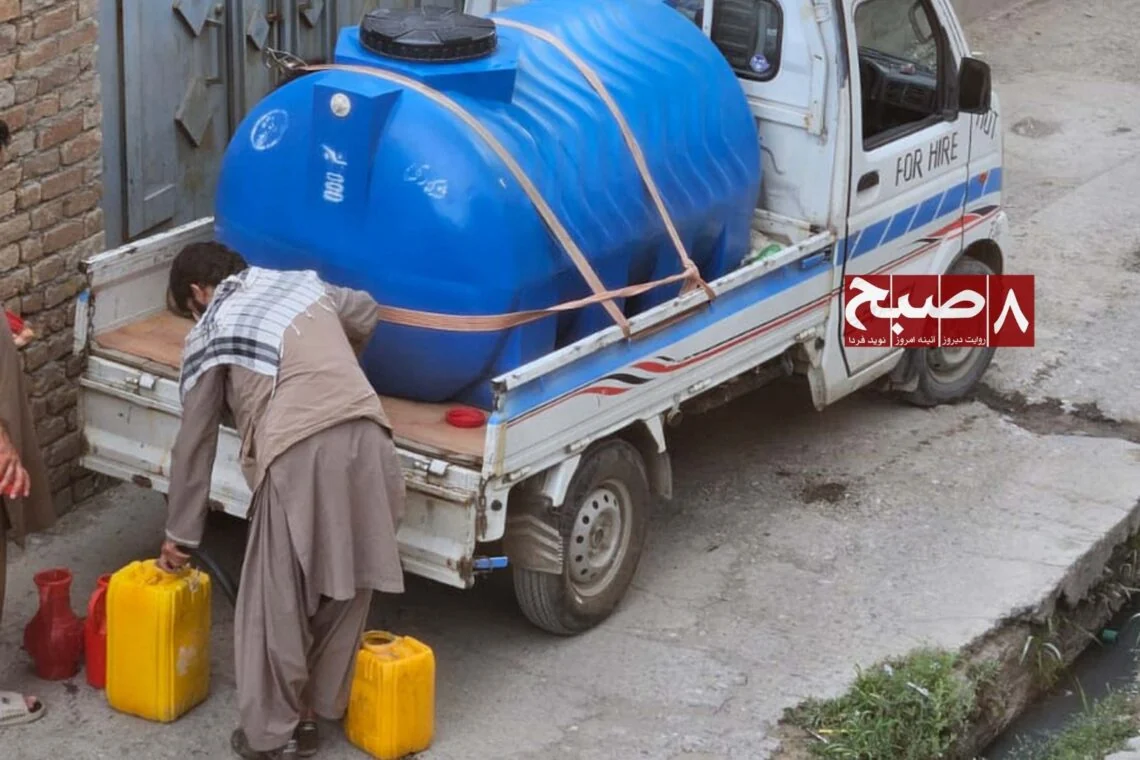
Sedaqat, another resident of Kabul city, says that although the water in their well has not dried up, it is not usable. He adds that to obtain safe drinking water, they have no choice but to buy it from water purification companies.
This Kabul resident says: “We have a water well, but its water is salty, and we cannot use it for drinking and cooking. I have to buy a 20-liter container of water for 20 Afghanis and spend about 60 Afghanis a day on water. Almost everyone in Kabul faces this problem, and the water shortage is getting worse day by day. Our friends behind the Khair Khana Pass also buy a two-thousand-liter tanker of water every week due to the lack of water, so that they can meet their needs.”
Arshia, another resident of Kabul city, says that reduced access to safe drinking water, in conditions of poverty and unemployment, has increased the cost of living for low-income families and made it difficult for them to afford the cost of buying water. He adds that they buy their drinking water from private companies and use tap water for their other daily needs. This man stresses that to contain the water crisis, the construction of high-rise buildings must be stopped, and the necessary measures must be taken to manage water resources and prevent water waste.
Arshia says: “Now we get our drinking water from mobile water companies, and we use tap water for other tasks. This situation has increased our expenses because we pay for both types of water. Tap water is not drinkable, and it used to come every one or two days, but now it does not come even once a week. We spend about 200 Afghanis a day on water. Given unemployment and low incomes, paying this cost is very difficult. A person who earns 400 Afghanis a day has to spend it on water, house rent, and other living needs.”
Sikandar, another resident of Kabul city, disagrees with this view and says that reducing construction and commercial activity cannot be a suitable solution for containing the water crisis in the city. He stresses that the investment capacity of businessmen should be used to secure water resources, and that sustainable solutions should be pursued to deal with the water shortage.
Sikandar says: “Kabul is a city, and construction and commercial activities cannot be stopped. People invest in this city, and these same investors should be charged to pay for providing water. Also, if possible, water should be transferred to Kabul from other provinces, especially from Panjshir. The sewage system must also be managed so that water resources are used properly and sustainably.”
The water shortage crisis in Kabul city is not a new phenomenon, but in recent years, factors such as reduced rainfall, climate change, population growth, an increase in the return of migrants, and the expansion of construction have increased pressure on the city’s limited water resources. The indiscriminate digging of deep wells and the lack of effective management of water resources are also considered among the other factors that have made the water situation in Kabul more difficult.
The United Nations Office for the Coordination of Humanitarian Affairs (OCHA) has warned about the intensification of drought in Afghanistan and announced that reduced rainfall has threatened water resources and agricultural lands.
Also, the International Committee of the Red Cross (ICRC), in a report, announced that about 33 million people in Afghanistan do not have access to sufficient water. According to the committee, four decades of armed conflict and climate change have created serious challenges in terms of access to water.
Meanwhile, Mercy Corps has warned that Afghanistan is on the brink of a nationwide water crisis. The organization has said that the return of migrants from Iran and Pakistan has put additional pressure on water resources and fragile water supply systems. According to the organization’s assessment, Kabul may face severe water shortages by 2030.
In the latest case, the United Nations Children’s Fund (UNICEF), in a report on the impact of attacks and conflicts on water and sanitation infrastructure around the world, has stated that nearly one-third of Afghanistan’s population, including 6.8 million children, do not have access to safe drinking water.
You can read the Persian version of this report here:
بحران آب در کابل؛ مردم از خشکشدن چاهها و افزایش هزینه آب شکایت دارند