Afghanistan has reached a point where slogans, symbolic meetings, and half-formed roadmaps are no longer enough. The Taliban are not only a repressive regime; they are also the most brutal expression of a deeper historical crisis. They represent a recurring logic that has repeatedly pulled Afghanistan away from statehood, citizenship, institutions, modernity, and a shared future: the rule of force over law, monopoly over participation, closed local power over connected society, and domination over human dignity.
For this reason, the central question is not only how the Taliban will leave power. That question matters, but it is not enough. The deeper question is this: if the Taliban disappear, how will Afghanistan be rebuilt? Will a mere change of rulers take the country out of the cycle of collapse, war, corruption, exclusion, and institutional weakness? Is every anti-Taliban force automatically a carrier of the future?
My answer is clear: no.
Afghanistan will not be saved simply by the fall of the Taliban. They must go, but their departure would only be the beginning, not the end of the problem. Afghanistan’s crisis is not only a crisis of government; it is a crisis in the structure of collective life. A country where much of the population lives in scattered, poorly connected, underserved rural communities, where land is both a source of livelihood and conflict; where agriculture often remains at the level of survival; and where millions are deprived of education, literacy, health care, skills, and meaningful citizenship cannot enter a new era simply by replacing those at the top.
This is where many political projects fail. They can describe the destination, but not the road. They speak of a future state, but less of the real society beneath it. They talk about political systems, but rarely about land, villages, schools, clinics, farmers, women denied education, youth without a future, intermediate towns, local markets, or accountable institutions. They speak of resistance, but too often reduce it either to armed struggle or to diplomacy. In reality, any resistance that seeks to build a future must be simultaneously civic, political, cultural, social, and organizational.
Afghanistan needs a new strategic idea: one that is not only anti-Taliban, but capable of imagining a post-Taliban Afghanistan. It must look beyond power and see society. It must not begin only from Kabul or from elite politics, but from the daily lives of the Afghan people. It must understand transition not as a short political event, but as a historical, social, economic, and institutional process.
Regional developments have also changed the position of the Taliban. For some external actors, the Taliban were once treated as a geopolitical reality: sometimes a pressure tool, sometimes a negotiating partner, sometimes a problem to be managed. But it has become increasingly clear that the Taliban are less a strategic asset than a source of instability to be contained. They are not a reliable ally for Iran, not a trusted partner for China, not a durable asset for the West, and not even a trouble-free strategic depth for Pakistan. Their positive geopolitical value has declined, but their negative security value remains: migration, extremism, repression of women, humanitarian crisis, tension with Pakistan, and global distrust.
This creates an opportunity for the opponents of the Taliban, but it is an opportunity that can easily be lost. The weakening of the Taliban does not automatically strengthen their opponents. The erosion of a regime, without an organized alternative, creates a vacuum. In a region like ours, such vacuums are quickly filled by foreign bargaining, proxy conflict, criminal networks, extremist groups, or the return of the same old patterns of domination. Therefore, if resistance wants to become the force of the future, it must move beyond rejection and enter the stage of design.
Where does that design begin?
It begins with a simple truth: Afghanistan cannot be rebuilt from Kabul alone. It must be rebuilt by reconnecting the village, the intermediate town, and the city; through land, agriculture, schools, literacy, health care, justice, institutions, markets, women, youth, a supportive religious language, and the real networks of people’s lives.
I call this idea a “networked transition”: a transition from a fragmented society to a connected one. Afghanistan today remains deeply disconnected at many levels. Villages are isolated from one another. Cities are often cut off from rural realities. Public services are not organized as a network. Education is not continuous. The national market is weak. In many areas, the state has either been absent or experienced as alien. Citizenship has not yet replaced the condition of being ruled over.
A networked transition means that the village must come out of isolation without being destroyed. The city must grow without swallowing the village. The intermediate town must become the bridge: a place for secondary schools, clinics, regional markets, technical education, local administration, storage and processing of agricultural products, literacy programs, cooperatives, and social dialogue. Without such intermediate towns, Afghanistan remains trapped between two dangerous poles: the isolated village and the fragile city.
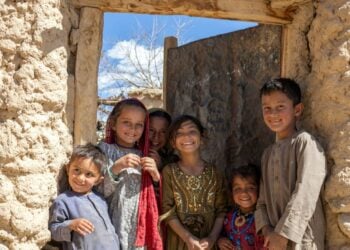
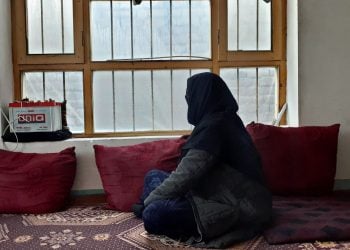
In this vision, the village is not simply a place of backwardness; it is the foundation of life, production, and community. But the village must become connected. It must be linked to education, health care, markets, services, and institutions. The farmer must not remain a raw producer without support. Land must not remain an instrument of force, land-grabbing, and mafia control. A rural child must not be deprived of the future at the first step of life. A rural woman must not be trapped at once by poverty, closed tradition, illiteracy, and political exclusion.
This brings the issue of land to the center. No real transition in Afghanistan is possible without addressing the land. Land is not only property; it is power, bread, conflict, memory, injustice, and sometimes a tool of captivity. Reforming the relationship to land means returning land from the logic of force to the logic of law, production, and justice. This requires registration, transparency, dispute resolution, protection against land-grabbing, support for farmers, and prevention of rent-seeking concentration of land.
Alongside land reform, agriculture must move from survival to production and added value. A country whose villages remain poor and whose agriculture remains exhausted cannot build a strong state, a national market, or stable citizenship. Agriculture must be linked with agricultural training, cooperatives, irrigation, seeds, tools, small loans, transparent subsidies, storage, and processing in intermediate towns. Transition begins when production replaces mere survival.
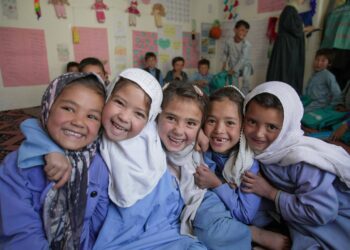
But an economy without empowered people is incomplete. Education is not a secondary issue in this model; it is one of the pillars of transition. Education means building the human being of transition: a person who can read, understand, calculate, choose, work, know his or her rights, participate in society, and move from a closed local horizon into a national one. Children’s education, adult literacy, girls’ education, teacher training, technical education, and digital education under crisis conditions are all part of this project.
Health care and public services are also central to the transition. People trust an order when they can feel it in daily life: clinics, roads, water, registration, complaint mechanisms, accountability, and basic services. A future state that only commands but does not serve will once again become alien to society. The state must be a network-builder, not merely a commander. It must build capacity, not only display authority. It must connect people to public order, not impose itself from above.
Religion must also be approached realistically. In Afghanistan, religion cannot be removed from society, nor should it be ignored. But religion must not be used as a tool of monopoly, fear, misogyny, or historical stagnation. It must return to its ethical and supportive role: in the service of education, justice, dignity, coexistence, work, social peace, and the protection of human beings.
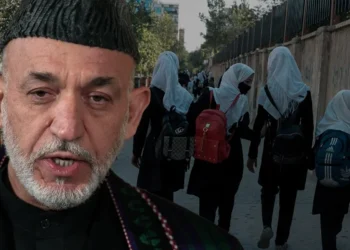
This new way of thinking also redefines resistance. Resistance is not only war, although legitimate defense against repression may be part of reality. It is not only diplomacy, either, although diplomacy is necessary. Resistance means keeping alive the possibility of another Afghanistan: defending girls’ schools, women’s rights, free speech, the memory of victims, human dignity, justice, villages that refuse to remain under the rule of ignorance, and a generation that refuses to have its future held hostage by the Taliban or by old power brokers.
The resistance of the future must understand that the world listens not only to moral legitimacy, but also to political capacity. The region asks about border security, migration, water, terrorism, the economy, transit, and stability. Therefore, an alternative to the Taliban must be just for the Afghan people and understandable to the region. It must show that a citizen-based, connected, productive, and institutional Afghanistan is less dangerous for its neighbors than a Taliban-ruled Afghanistan.
Something is coming. But it must not be another slogan, another paper roadmap, or another performative unity. What must come is a strategic framework for Afghanistan’s transition: an attempt to connect resistance with society, politics with the economy, freedom with institutions, the village with the city, religion with dignity, education with the future, and justice with state-building.
Afghanistan today needs such an idea more than ever. Not only to criticize the Taliban, but to make a post-Taliban Afghanistan possible. Not only to name the pain, but to show a path of healing. Not to leave people waiting for a miracle, but to move society from enduring crisis to organizing its way out of crisis.
We are approaching a moment when we must ask ourselves: do we want once again to witness the collapse of one order and the birth of another incomplete one, or do we want, this time, to design the logic of transition itself?
If Afghanistan has a future, it begins with this question. And this conversation has only just begun.