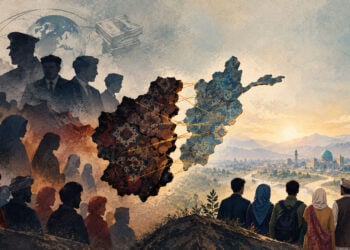

The advent of writing marked a profound milestone in human history. It divided human existence into two distinct realms: the part chronicled by history and the part relegated to obscurity, essentially rendered nonexistent. The inception of writing, although millennia old, has not eradicated the persistent predicament of “illiteracy.” Consequently, September 8th is recognized as International Literacy Day to shed light on this global issue.
Startling statistics concerning illiteracy rates across the world paint a worrisome picture. Afghanistan has unfortunately crossed a critical threshold, ranking among nations grappling with an alarming illiteracy crisis. The resurgence of the Taliban has precipitated a dire educational crisis in the country. Notably, the denial of education to women compounds Afghanistan’s challenges in this regard. In the foreseeable future, Afghanistan is poised to join the ranks of countries where a substantial majority of its female population faces the scourge of illiteracy and a lack of education. While eradicating illiteracy worldwide remains an arduous endeavor, it is evident that regardless of a nation’s illiteracy levels, the impediments to its progress and advancement multiply.
It is imperative to underscore that education is the cornerstone of human development. As individuals avail themselves of educational opportunities, they refine their humanity and unlock their full potential. It is undeniable that the monumental achievements in various fields have been made possible through education. Hence, countries burdened by high illiteracy rates find themselves hindered in their quest for change and unable to shape their desired future. Illiteracy confines individuals, preventing them from harnessing their latent talents and utilizing them to propel society forward.
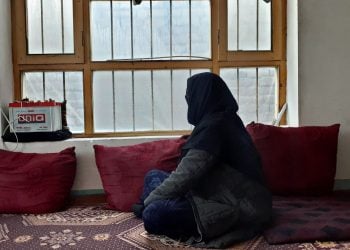
In recent decades, countries around the world have made significant strides in combating illiteracy through rational and comprehensive educational policies, resulting in a substantial reduction in illiteracy rates. Nevertheless, Afghanistan remains ensnared by the persistent and pervasive issue of illiteracy. During the two decades of the republic, despite instances of misappropriation within the education and higher education budgets, commendable efforts were made, culminating in substantial advancements in education and illiteracy eradication. Millions of girls seized the opportunity to attend school and university during this period. If this trajectory had persisted, tangible outcomes would undoubtedly have materialized. Unfortunately, with the return of the Taliban, these efforts were squandered, plunging the country’s education system into disarray. Most distressingly, the resurgence of the Taliban once again barred girls and women from pursuing education, effectively disenfranchising half of society. If this trajectory continues in the coming years, Afghanistan is poised to become an intellectually stagnant, feeble, and immobilized society.
Several factors have contributed to the escalating illiteracy rates in Afghanistan. Notably, poverty emerges as a primary driver. It is imperative to recognize the symbiotic relationship between poverty and illiteracy, as poverty invariably fosters illiteracy, and societies witnessing illiteracy surges are inevitably plagued by poverty. This vicious cycle will endure unless governments formulate comprehensive policies addressing both poverty and illiteracy. Fighting one without addressing the other yields no meaningful progress.
Another factor exacerbating illiteracy in Afghanistan is the emergence of regimes that lacked a coherent vision for development, entangled in ideological fantasies and illusions. The Taliban regime exemplifies one such delusional and ideological government that currently holds sway over the fate of the Afghan people. This regime has inflicted profound damage on the country by imposing its ideological agenda on the education system. Furthermore, by barring girls from accessing education, the Taliban regime has effectively confined half of the country’s population to their homes, depriving them of meaningful and productive pursuits. The consequences of the Taliban’s policies in the realm of education are poised to yield the most detrimental outcomes, and Afghanistan will continue to suffer in this regard for years to come. Unfortunately, the narrow-mindedness and ignorance of the contemporary world’s necessities on the part of Taliban leaders have led to the misery of millions in this land. At present, the Taliban’s primary concern appears to be consolidating their power base, with the apparent belief that keeping the populace illiterate and uninformed serves their interests best.
Another salient issue to consider is that while illiteracy in the past primarily referred to the inability to read and write, its definition has evolved to encompass broader dimensions. Digital illiteracy, for instance, constitutes a distinct form of illiteracy in our modern world. Furthermore, given the global prominence of the English language as the primary key to access the job market and knowledge, neglecting its acquisition is regarded as a form of illiteracy in numerous societies. Even many mainstream professions worldwide necessitate proficiency in correct English. By modern literacy standards, a considerable number of those who have attained basic reading and writing skills may still be considered functionally illiterate.
Modern life is characterized by complexity and constant change. Many concepts inherited from the past undergo semantic evolution, and the notions of literacy and illiteracy are no exceptions. Illiteracy stands as a principal obstacle to a nation’s development, mandating that intellectual and political leaders take up the mantle to combat various forms of illiteracy and dismantle barriers hindering a country’s progress and advancement. There exist several successful models in this endeavor. Notably, Bangladesh, in South Asia, once plagued by myriad challenges and emblematic of an underdeveloped third-world society, made a pivotal decision to alter its destiny. By promoting literacy and education across various strata of society, Bangladesh redirected its trajectory and is now achieving successive milestones of success.
Remarkable efforts have been exerted on the global stage to combat illiteracy, a heartening and commendable endeavor. Regrettably, Afghanistan’s ruling regime stands out as one of the few countries globally lacking a comprehensive and effective strategy to eradicate illiteracy. Instead, by rendering the education system devoid of purpose and steeped in ideology, it actively contributes to the propagation of ignorance and illiteracy. Moreover, by confining women to their homes, this regime has denied them access to education and the benefits of modern life.
International organizations such as UNICEF have devised plans to eradicate illiteracy in Afghanistan. However, the magnitude of the illiteracy problem in Afghanistan surpasses the potential effectiveness of such modest and constrained measures. It is plausible that institutions like UNICEF, given the Taliban’s oversight of their activities, may face obstacles in implementing their illiteracy eradication programs optimally. The costs incurred in this field may not be commensurate with the outcomes achieved. An examination of UNICEF’s track record in Afghanistan reveals that their initiatives aimed at enhancing child literacy have not yielded substantial results, raising legitimate questions about their efficacy.