In the previous article, I explained why I addressed Faiz Muhammad Katib, and there is no need to explain it again here. What remains open to question, however, is how a writer can be linked to a science, without regard for the origins and assumptions of that science, or even its history in a country such as Afghanistan, when in all his works and writings he has never once used that science or its concepts.
The main question is what contribution rereading a writer with such an approach makes to the historical understanding of Afghanistan. The historical falsification, whose roots in the history of Afghanistan are clear and which was largely produced through an ethnocentric state apparatus, is evident. That said, the question that arises is why those who claim neutrality and a scientific view of history and historical figures follow the very tradition they have always criticized.
On this basis, I hypothesize that the ethnic reading of Afghanistan’s history has not remained confined to one particular ethnic group, and this contamination can be traced across all ethnic groups in Afghanistan. In other words, ethnocentric thinking has now become an epidemic of historical readings among Afghanistan’s elites. One example is describing the Hazara writer Faiz Muhammad Katib as a sociologist. What follows is an explanation of this very issue.
Who Is a Sociologist?
The formation of the science of sociology is associated with four classical and prominent sociologists of the world: Karl Marx (1818-1883), Max Weber (1864-1920), Georg Simmel (1858-1918), and Émile Durkheim (1858-1917). Before them, names such as Auguste Comte, Alexis de Tocqueville, Spencer, and others were known as pioneers of sociology. What places these four great names among the classical figures of this science is the difference in their perspectives, differences that led to the formation and development of sociology.
Émile Durkheim formulated the rules of sociological method for this science, and Max Weber explained its methodology in detail. That is, when we speak of the science of sociology, we must clarify its boundaries with other sciences, including history and philosophy, which was done properly in the book The Rules of Sociological Method.
As a modern science, sociology in the nineteenth century was fundamentally concerned with how to understand the crisis of modern society. In a sense, later sociological theories are a continuation of the ideas of the classical sociologists, though with many differences, which is self-evident in any science.
Except Simmel, who by his own account was a sociologist without a legacy, the tradition and outlook of the other three sociologists named above have continued to the present day. Durkheim was reread through Parsons. In the Weberian tradition, Peter Berger is one of the most important figures one can name. The Marxist tradition in sociology was likewise reread and continued through the Frankfurt School and writers such as Louis Althusser, Antonio Gramsci, and others.
This relatively general introduction to the science of sociology is deemed necessary because it helps us understand and determine the place of Katib, or any other writer from Afghanistan’s society, in this science. On this basis, a writer who has a sociological approach to history can be identified by three basic criteria. First, in terms of time, he comes after the classical sociologists and must have read their works, and information about the science of sociology and his views in this field must also be available. Second, his field and discipline of study also help determine the type of his outlook and approach. Third, each writer’s works are the most important document on the basis of which his intellectual domain and method of work can be determined, just as Katib is considered a sociologist on the basis of the books Faizi az Fuyuzat and Tazkirat al-Inqilab.
A Closer Look at Katib’s Life
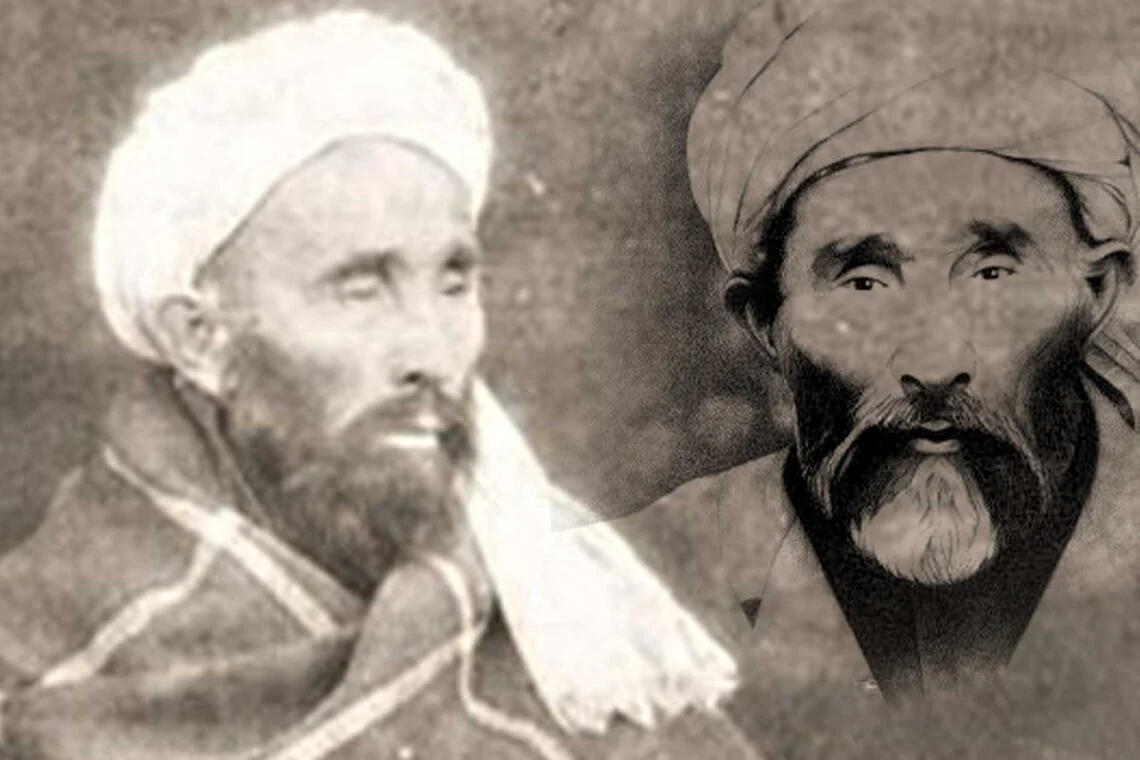
Although many books by Katib have survived, fewer details are available about his personal biography. Katib was born in 1900 in the village of Zardsang in Qarabagh, Ghazni, and died in Kabul in 1929. An important part of Katib’s life was spent at court and in writing about events and incidents that were heavily influenced by the king and the court. Therefore, Katib’s historiography can only be understood within the tradition of court chronicle writing, not as a distinct method in the science of history.
What appears in his biography shows that after completing the primary stage of local education, he went to Najaf an, and after a while left for Lahore. Katib later continued his studies in Kabul and Kandahar. One of the teachers he remembers fondly is Muhammad Sarwar Khan Ishaqzai.
Katib’s educational journey is evidence that he did not study the humanities at any of these centers, and whatever he learned was in religious sciences and other fields. Therefore, it can be said that Katib was not familiar with modern knowledge and the science of sociology. The books Katib studied with his teacher, Sarwar Khan Ishaqzai, include Tahrir of Euclid, Khulasat al-Hisab, and Sharh al-Chaghmini. Therefore, if we consider Katib’s educational journey and these books in order to understand his social knowledge, the truth of the claim that he was a sociologist becomes clear.
Katib’s Historiography
In the eighteenth century, the tradition of history writing in its classical Western form had almost come to an end. In this regard, one can refer to the views of Carl Becker in The Heavenly City of the Eighteenth-Century Philosophers. He believes that the history written in the eighteenth century should be called “new history.” Gary G. Hamilton, in the article “The New History in Sociology,” points precisely to the fact that this history was written by philosophers, not historians. Hamilton writes: “They were reluctant to describe events, and they shunned those who regarded history as mere chronology or, as one of my friends put it, as one damned thing after another. Their history is the new history.”
Two centuries later, in the twentieth century, Faiz Muhammad Katib engaged in chronicling events in Afghanistan, a method that was viewed with reluctance in the Western historiographical tradition in the eighteenth century. In this respect, Katib and his works must be viewed in the historical context of Afghanistan and the rule of the court, not from the perspective of modern historiography. It is within this framework that Katib’s works are understood, not within the tradition of Bayhaqi and Ata-Malik Juvayni or under historical sociology. This by no means implies ignoring Katib’s work or belittling his place in the history of Afghanistan, but he cannot be linked to modern historiography and especially to the science of sociology.
Here, it is better to cite examples of Shafaq Khawati’s claims in order to clarify Katib’s relationship with the science of sociology. At the end of the first part of his article, he wrote: “In the continuation, and in the two or three articles that will follow, we will address three topics related to Katib Beyond the Siraj: 1. Katib as a political philosopher, 2. Katib as a sociologist and historian, and 3. Katib as a jurist and theologian.”
Since this article addresses only Katib the Hazara, we will review the relevant examples:
“In Faizi az Fuyuzat and Tazkirat al-Inqilab, Katib appears as a sociologist and analytical historian. He sets out principles and rules that explain to us the secret of the stagnation of history, or even the regressive course, of Afghanistan’s society under tribal political reason. In this brief piece, we will refer only to the content of that part of Faizi az Fuyuzat that is now available in other sources.”
Khawati’s reference here is to an article by Jalaluddin Siddiqi titled “Reflection of Analytical Historiography in Katib’s Book Faizi az Fuyuzat,” which was published earlier. In this writing, Siddiqi links Katib and sociology without any logical argument, and it is this article that Khawati used as a source. In other words, everything in the third part of Khawati’s articles rests on that single sentence of Siddiqi, and nothing more.
But regarding Tazkirat al-Inqilab, he makes the claim more explicitly: “In this work, in the guise of an expert sociologist, Katib extends his critical outlook from the base of the pyramid to the apex and the middle of the social pyramid. After criticizing the apex of the social pyramid (the monarchy and political agents), he turns to criticizing the base of the social pyramid (society, its characteristics, temperaments, and the rules governing social relations and the relationship between society and government), and then moves on to criticizing the clergy and the intermediate forces of the social pyramid. The book begins with an analysis of the factors of social disorder and political turmoil in the era of Amanullah, and its first heading is The Causes of the Afghanistan Revolution, which refers to this same political disarray and, in his own words, political rebellion and misguidance. He begins the first line of this book with criticism of the political agents and Amanullah himself and his approach to governance.”
These explanations show that the author is either not very familiar with the fundamentals of sociology or has paid little attention to the responsibility of authorship.
As Ali Amiri notes in the introduction to this book, Tazkirat al-Inqilab is a narrative of one period of Afghanistan’s history. No method or theory has been applied in it, or at least no theory emerges from it that would prove its claim to being sociological. Therefore, it cannot be examined outside the tradition of chronicle writing in history. There is no doubt that this book is one of the important texts for understanding the era of Amanullah Khan and the rise of Habibullah Kalakani, but this is far from establishing that Katib’s outlook was sociological or that he was a sociologist.
Conclusion
Norbert Elias (1897-1990), the German-British sociologist, points to important matters about the task of the sociologist in his book What Is Sociology? He writes: “The point is not that we ask the sociologist to voice his convictions and beliefs about how a society ought to develop. Rather, sociologists must free themselves from the notion that the society they are trying to study, whether in its present state or in its process, must necessarily conform to their social convictions, wishes, hopes, and moral expectations. They must also free themselves from the notion of what is just and humane (Elias, 2013: 242).
The most important sociological approach is that, when dealing with social phenomena, subjective assumptions and personal judgments are set aside. In Tazkirat al-Inqilab, Katib, rather than analyzing or examining a historical period, paid attention to recording events in his daily notes, events that, more than anything, reflect his personal lived experience. Throughout this book, no trace can be found of sociological concepts that would bring him closer to this science. Moreover, if such signs existed in his work, they should have helped the formation of the science of sociology in Afghanistan, a science that, a hundred years after Katib, is still very poor in Afghanistan.
References
- Katib, Mulla Faiz Muhammad (2013). Tazkirat al-Inqilab, Kaveh Publications, Cologne, Germany.
- Elias, Norbert (2013). What Is Sociology? Translated by Gholamreza Khadivi. Tehran.
- Hamilton, Gary G. and others (2016). Historiography and Historical Sociology. Translated by Hashem Aqajari, Tehran: Kavir Publishing.
- Abrams, Philip (2016). Historical Sociology. Translated by Mansoureh Lolaavar and Gholamreza Jamshidi. Tehran: University of Tehran Press.
- Yasna, Mohammad Yaqub (2008). “The Life and Works of Faiz Muhammad Katib.” Khorasan Zamin website.
- Siddiqi, Jalaluddin. “Reflection of Analytical Historiography in the Book Faizi az Fuyuzat.”
You can read the Persian version of this article here: