• 8AM.MEDIA
  • ویب‌سایت فارسی
  • پښتو ویب‌پاڼه
  • اۉزبېکچه ویب‌سایت
  • Podcast
Saturday, October 24, 2026
Hasht-e Subh
  • Home
  • News
    • Afghanistan News
    • World News
  • Opinion
    • Editorial
    • Analysis
  • Reports
    • Daily Reports
    • Investigative Reports
  • Society
    • The story of people
  • Women’s Word
  • Columns
    • Three Years After Afghanistan’s Fall: The Taliban’s Resurgence
    • Towards Equality
    • The Resurgence of the Taliban: Two Years Since Afghanistan’s Fall
    • Hebatullah Report Special Edition
    • Resistance for Education Special Edition
    • Special Column on Taliban’s Education Curriculum
    • Nawroz
  • Interviews
  • Contact Us
    • About Us
    • 8AM MEDIA Annual Awards
    • Submit an Article to Hasht-e-Subh
  • 8am.mediaBack
Subscribe
No Result
View All Result
  • Home
  • News
    • Afghanistan News
    • World News
  • Opinion
    • Editorial
    • Analysis
  • Reports
    • Daily Reports
    • Investigative Reports
  • Society
    • The story of people
  • Women’s Word
  • Columns
    • Three Years After Afghanistan’s Fall: The Taliban’s Resurgence
    • Towards Equality
    • The Resurgence of the Taliban: Two Years Since Afghanistan’s Fall
    • Hebatullah Report Special Edition
    • Resistance for Education Special Edition
    • Special Column on Taliban’s Education Curriculum
    • Nawroz
  • Interviews
  • Contact Us
    • About Us
    • 8AM MEDIA Annual Awards
    • Submit an Article to Hasht-e-Subh
  • 8am.mediaBack
No Result
View All Result
Hasht-e Subh
No Result
View All Result

Electronic Waste Is Rising in Afghanistan as the Lack of Standard Recycling Raises Alarm

Translated by Farhad Farhaad | Originally reported in Persian by Ilya

Mohammad Farhaad Mohammad Farhaad
24 October 2026 - Solar Hijri Date: 1405/08/02 [t_time:1792852512]
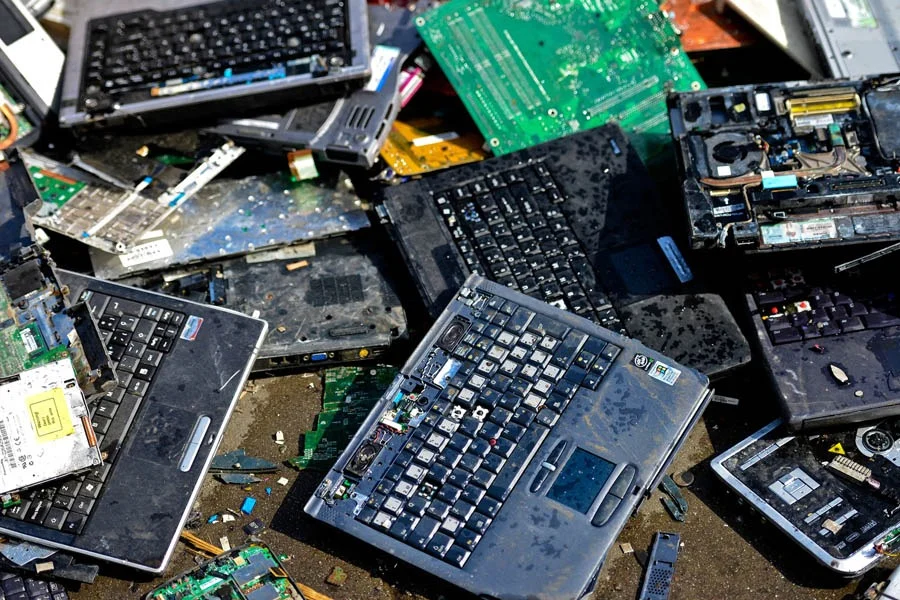
Discarded laptops and broken circuit boards lie piled together as experts warn about the growing volume of electronic waste in Afghanistan. (Photo credit: Social Media)

Social Media

A number of environmental experts say the absence of a clear plan for collecting, sorting, and recycling electronic waste in Afghanistan has put human health and the environment at risk. According to them, the import of second-hand electronic devices, together with the lack of a clear plan for managing these devices once they wear out, has increased the volume of electronic waste. They add that, without standard methods for disposing of this waste, burning worn-out devices and discarding them in the environment can pollute the air, soil and water.

These experts consider the lack of official statistics, standard recycling centers, and effective electronic waste management programs to be the main challenges in this area. They stress the need for an effective collection and recycling system, greater public awareness, and the inclusion of lessons on waste sorting and the dangers of improper disposal in school curricula. In their view, addressing this problem is essential for reducing health risks and preventing the spread of environmental pollution.

Sayed Mohammad Sulaimankhil, an environmental expert, says electronic waste, alongside other environmental challenges, has become one of the concerns in Afghanistan. According to him, Afghanistan has become a market for second-hand electronic devices from developed countries, yet there is no clear plan for reusing these devices or for collecting and disposing of them according to standards.

The expert adds: “Unfortunately, we have no clear and effective program for managing electronic waste in Afghanistan. Because of the economic situation, people mostly use second-hand electronic devices, but when these devices wear out, they do not know the proper way to reuse or dispose of them. In many cases, they burn these devices, which pollutes the air, soil, and water and increases environmental and health risks.”

According to Sulaimankhil, the lack of official statistics on the volume of electronic waste and the shortage of recycling programs have made managing this waste difficult. He warns that if the situation continues, the volume of used electronic devices will grow and managing them will become even harder.

Mr. Sulaimankhil stresses: “We cannot ignore people’s need for second-hand electronic devices, because the country’s economic situation has left many citizens unable to afford new ones. Nevertheless, we must review our environmental programs, raise public awareness, and establish standard equipment and centers for collecting, recycling, and disposing of these devices, so that burning and improper disposal can be prevented.”

Kazem Homayoun, another environmental expert, says electronic waste falls into the category of special waste because it contains hazardous materials, and its improper management can have harmful consequences for human health and the environment. Homayoun adds that in Afghanistan, electronic and clinical waste is not sorted according to standards and is often thrown away together with ordinary waste. According to him, the improper burning of electronic devices can release hazardous substances into the air and put human health at risk.

This environmental expert adds: “Everywhere in the world, waste sorting is a basic principle. Waste is not divided only into solid and liquid. There is also special waste, which, if spread in the environment, has a negative impact on soil, water, air and living organisms. Electronic waste, nuclear waste and some construction waste fall into this category because of the hazardous materials they contain.”

He stresses the need for education and awareness about waste sorting, and says that including this subject in the curricula of schools and universities, along with establishing standard recycling centers, could help reduce pollution and create job opportunities.

Mr. Homayoun says: “Because of widespread poverty in Afghanistan, some people may burn electronic waste, which releases toxic substances into the air and poses serious risks to human health. Exposure to these substances can increase the risk of certain cancers, affect the health of pregnant women, and cause miscarriage. These substances can also negatively affect the growth and health of children, especially at young ages.”

Electronic waste refers to worn-out, broken, or discarded electrical and electronic devices that can no longer be used or have reached the end of their useful life. Computers, mobile phones, televisions and other electronic devices are among this waste. Some of these devices contain hazardous materials that, if improperly disposed of, can pollute soil, water and air and endanger human health.

The United Nations Human Settlements Programme (UN-Habitat) has warned about the problems of waste management in Afghanistan. The United Nations (UN) has also stressed the rise of electronic waste worldwide and the dangers arising from its improper disposal.

The volume of electronic waste produced in Afghanistan is unknown, and no official statistics are available in this area. Likewise, there is no precise information about the consequences of the improper disposal of this waste or the health and environmental risks it has caused so far.


You can read the Persian version of this report here:

افزایش زباله‌های الکترونیکی در افغانستان؛ نبود سیستم معیاری بازیافت نگران‌کننده است

ShareTweetSendSendShare

Related Posts

National Resistance Front of Afghanistan official emblem displayed on a dark background. (Photo credit: NRF)
Afghanistan News

National Resistance Front Reports Killing of Two Taliban Fighters in Herat

24 October 2026 [t_time:1792848209]
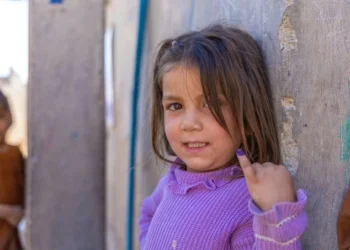
A young girl stands beside a wall in Afghanistan as UNICEF highlights every child’s right to grow up healthy and free from polio. (Photo credit: @UNICEFAfg)
Afghanistan News

UNICEF: Every Child Has the Right to Grow Up Healthy and Polio-Free

24 October 2026 [t_time:1792848122]
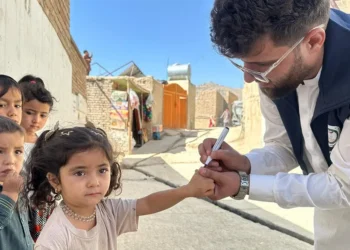
A health worker marks a young girl’s finger during a vaccination campaign to help protect children against polio. (Photo credit: WHO)
World News

Challenges to Polio Eradication: UNICEF Says Thousands of Children Lack Access to Vaccines

24 October 2026 [t_time:1792845703]

Latest

Loading latest news...

Popular stories

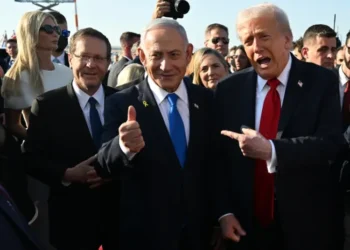
  • Donald Trump – U.S. President with Benjamin Netanyahu – Israeli Prime Minister in a gathering of people (Photo: Getty Images) Donald Trump – U.S. President with Benjamin Netanyahu – Israeli Prime Minister in a gathering of people (Photo: Getty Images)

    US Senator Criticizes Netanyahu’s Remarks Justifying War Against Iran

    Share
    Share Tweet
  • Iran’s Revolutionary Guards Say They Are Preparing to Unveil “Father of All Bombs”

    Share
    Share Tweet
  • US Defense Secretary Warns Iran of “Destruction”

    Share
    Share Tweet
  • UN Report Reveals Shifts in Family Attitudes and Rise in Domestic Violence in Afghanistan

    Share
    Share Tweet
  • Trump Calls Iran’s Hope of War Lasting Beyond US Midterm Elections a “Dream”

    Share
    Share Tweet

Podcast

Insights
Insights

Join Lynne O’Donnell for 8AM’s podcast series, Insights.
Lynne talks with generals, diplomats, soldiers, journalists, politicians, activists, people who have front row seats for conflicts around the world, and citizens with a story to tell, happy or sad. For this first series, Afghanistan is the focus. Lynne and her guests talk about the collapse of the republic in August, 2021, and the impact since — for the people of Afghanistan, for the security of the region, for the safety of the world. It’s important, interesting and insightful.

Insights/22: Controlling the Narrative with Mina Sharif
byinsights8am

Controlling the Narrative

Lynne O’Donnell talks with Mina Sharif, author, activist, women’s rights campaigner, educator and mentor. They discuss who controls the narrative and who speaks for Afghanistan’s people when the Taliban appear to have seized control not only of the country but of the message, too.

Have a listen

Insights/22: Controlling the Narrative with Mina Sharif
Episode play icon
Insights/22: Controlling the Narrative with Mina Sharif
Episode Description
Episode play icon
Insights/21: Media Meltdown with Zahra Joya
Episode Description
Episode play icon
Insights/20: Terror Inc with Scott Richards
Episode Description
Episode play icon
Insights/19: Busting Stereotypes with Bushra Gohar
Episode Description
Episode play icon
Insights/18: Media Matters with Waliullah Rahmani
Episode Description
Episode play icon
Insights/17: What Goes Around Comes Around with Sima Samar
Episode Description
Search Results placeholder
Hasht-e Subh

8AM Media, also known as Hasht-e-Subh Daily, stands as Afghanistan's premier independent and non-profit newspaper, resonating as a beacon of journalistic integrity since its establishment in June 2007 by esteemed Afghan journalists and human rights advocates. With a steadfast commitment to citizen journalism and civic education, Hasht-e-Subh Daily has earned its place as the most esteemed publication in the nation.

Publisher: Sanjar Sohail
Email: [email protected]
Executive Director: Parwiz Kawa
Email: [email protected]

Read More

Electronic Waste Is Rising in Afghanistan as the Lack of Standard Recycling Raises Alarm

Sources: Pakistani Forces Kill Two Drivers on Chaman-Spin Boldak Route

National Resistance Front Reports Killing of Two Taliban Fighters in Herat

UNICEF: Every Child Has the Right to Grow Up Healthy and Polio-Free

Russia Says More Than 1,000 Ukrainian Drones Shot Down in 24 Hours

Editor’s Choice

Every Saturday morning, 8AM MEDIA English Services Department will guide you through the week’s biggest stories from Afghanistan and the international community.

Subscribe

© 2026 - ©Hasht-e Subh Daily

No Result
View All Result
8am.Media
پښتو ویب‌پاڼه
ویب‌سایت فارسی
اۉزبېکچه ویب‌سایت
  • Home
  • News
    • Afghanistan News
    • World News
  • Opinion
    • Editorial
    • Analysis
  • Reports
    • Daily Reports
    • Investigative Reports
  • Society
    • The story of people
  • Women’s Word
  • Columns
    • Three Years After Afghanistan’s Fall: The Taliban’s Resurgence
    • Towards Equality
    • The Resurgence of the Taliban: Two Years Since Afghanistan’s Fall
    • Hebatullah Report Special Edition
    • Resistance for Education Special Edition
    • Special Column on Taliban’s Education Curriculum
    • Nawroz
  • Interviews
  • Contact Us
    • About Us
    • 8AM MEDIA Annual Awards
    • Submit an Article to Hasht-e-Subh
  • 8am.media

© 2026 - ©Hasht-e Subh Daily