
In contemporary Afghan history, few events have remained as deeply embedded in the collective memory of the people as the successive collapse of districts in the summer of 1400 (2021). In those days, many citizens watched with concern as districts fell one after another, a process that ultimately led to the collapse of the republican system and the Taliban’s entry into Kabul. This historical experience has meant that every security or political development, particularly in the provinces, is quickly compared to those days.
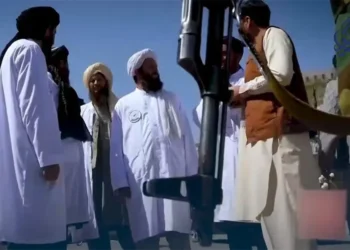
In recent days, news of a several-hour takeover of Yaftal district in Badakhshan province by a front calling itself “Sepahian-e Mihan” (Soldiers of the Homeland) has once again raised the question among many citizens as to whether Afghanistan stands on the verge of repeating a similar experience, or whether this event is merely a declaration of existence by a movement. The reaction to this news on social media showed that part of society, particularly young people, did not view the event as a mere declaration of existence. Among some users, phrases such as “this is only the beginning” or “the journey continues” were common; statements that reflect less a military reality than the hope or expectation of part of society for a change in the current situation. Others, however, caution that broad political or military conclusions should not be drawn from a limited event.
What distinguishes this incident from many past conflicts is not only its military dimension, but also the reaction of public opinion and the psychological atmosphere of society. Afghanistan today differs from what it was five years ago. During this period, many citizens have grappled with economic hardship, social restrictions, rising unemployment, diminishing educational opportunities, and widespread emigration. These conditions have caused any news related to armed resistance or opposition to attract greater attention.
Alongside economic difficulties, restrictions on education have become one of society’s most pressing concerns. Thousands of girls from Afghanistan remain barred from continuing their education at the secondary and university levels. Families who had spent years striving to educate their children now face an uncertain future. Many young people, lacking employment and educational opportunities, have either left the country or are waiting for a chance to emigrate. This situation has deepened feelings of hopelessness and distrust toward the future among parts of society.
At the same time, economic pressures have affected the lives of millions of citizens. Rising poverty, declining household incomes, the dependence of a large portion of the population on humanitarian aid, and a stagnant labor market are among the challenges repeatedly highlighted by international organizations in recent years. In such an environment, it is natural for any political or security development to draw greater public attention than before.
Another notable point is the shift in how part of society views political movements opposed to the Taliban. After the collapse of the republican system, many citizens hoped that well-known political and military leaders and figures could form a unified front and play an effective role in Afghanistan’s future. But nearly five years on, this expectation has largely faded. A significant portion of today’s younger generation no longer holds the same trust in traditional leaders and old political movements. Many believe that internal divisions, the absence of a clear plan, and the distance of some leaders from the everyday realities of people’s lives have prevented these movements from maintaining their former standing. In public discourse, the question is also raised as to whether the opposition abroad has managed to offer a practical plan for Afghanistan’s future beyond media statements.
Meanwhile, a new generation of activists, journalists, writers, and educated young people is shaping a different kind of demand for accountability. Rather than hoping for the return of old power figures, they emphasize the need for new, accountable structures built on the participation of all citizens. This generation believes that Afghanistan’s future should not simply repeat the rivalry among traditional actors, but should instead be built on the will of the people, the rule of law, and genuine public participation.
Even so, a distinction must be made between an isolated event and a broad political transformation. The experience of 1400 (2021) showed that the collapse of the republican system was the result of a combination of political, military, economic, and international factors, and did not begin merely with the fall of a few districts. It cannot, therefore, be concluded solely on the basis of the Yaftal incident that a similar process is now underway.
Nevertheless, the event carries an important message: that part of society remains dissatisfied with the current situation, and that any security development can trigger a broad reaction in public opinion. The public response also shows that the core issue is not merely control over a single district but the sense of political, economic, and social deadlock that many citizens are experiencing.
Today, Afghanistan needs stability, dialogue, political participation,n and hope for its younger generation more than ever. The continuation of the economic crisis, restrictions on education, rising emigration, shrinking job opportunities, and the lack of a clear outlook could fuel growing social discontent, discontent that does not necessarily manifest itself solely on the battlefield, but is also visible in migration, despair, the flight of human capital, and declining public trust.
Ultimately, the central question remains: does the Yaftal incident in Badakhshan signal the beginning of a larger transformation, or is it merely an isolated event? A definitive answer to this question is not possible under current conditions. What does seem clear, however, is that Afghan society continues to face unanswered questions, deep challenges,s and an uncertain future. History may bear similarities to the past, but its exact repetition is never guaranteed. What will shape Afghanistan’s future will not be military developments alone, but also how the demands of the people are addressed, the state of the economy, educational opportunities, and the extent of citizens’ genuine participation in determining the country’s fate.
You can read the Persian version of this analysis article here: