
The relationship between Afghanistan and Pakistan over the past few decades has been defined by a complex paradox: The two countries share more than a border. They share histories, tribes, languages, refugee movements, trade routes, economic interests, religious networks, and security anxieties. Yet this deep social and geographic proximity has repeatedly failed to produce strategic trust.
While the withdrawal of Western forces in 2021 initially raised expectations in Islamabad for an aligned, cooperative partnership, the years that followed took a different course. Instead, relations between Kabul and Islamabad have moved through cycles of tactical cooperation, accusation, border closure, militant violence,e and military escalation.
The latest tensions of 2025 and 2026 have shown that the crisis is not merely a temporary disagreement between two countries. It is rooted in older structural disputes: the Durand Line, competing security perceptions, the use or alleged tolerance of non-state armed groups, economic dependence, refugee politics, and regional competition.
An objective analysis shows that the bilateral dynamic is anchored by four traditional pillars: history and borders, security, economics, and regional hegemony. These are now being shaped by two additional factors: refugee politics and third-party regional mediation, including China, Qatar, Turkey, Saudi Arabia, and other regional actors.
Historical Roots of the Dispute: The Durand Line
At the centre of the structural discord is the Durand Line, the 2,640-kilometre frontier drawn in 1893 between Afghanistan and British India by Sir Mortimer Durand and Amir Abdul Rahman Khan. The line fundamentally altered the political geography of the region by cutting through the Pashtun tribal heartland. The Durand Line has never been officially recognised by any Kabul government since the establishment of Pakistan in August 1947, and it divides Pashtun communities with shared family, religious and cultural ties.
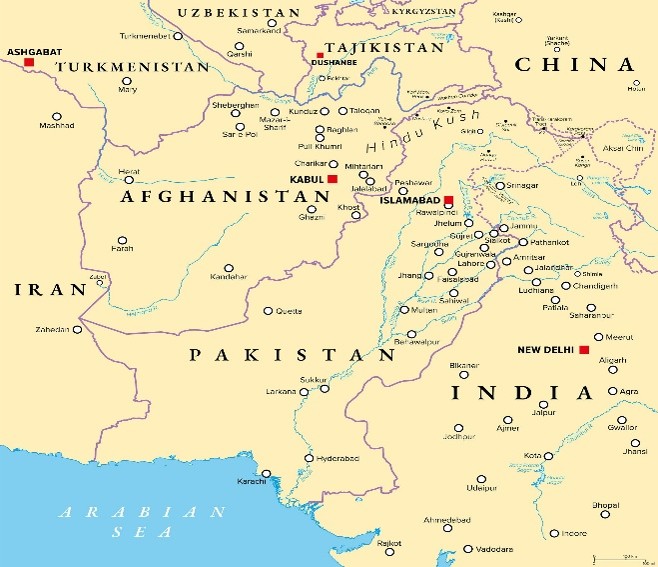
The Afghanistan Standpoint: Historically, no political authority in Kabul, whether the monarchy, the communist regimes, the Western-backed republics, or the Taliban, has formally recognised the Durand Line as a permanent international border. From the perspective of Afghanistan, the line is often viewed as an artificial colonial construct that divided an indigenous population and weakened the country’s natural social and geographic space.
For many people of Afghanistan, the issue is not only legal or territorial; it is also emotional and historical. The border cuts through communities that once moved across the area for trade, family, livestock, work,k and tribal obligations. Pakistan’s fencing of the border has therefore transformed an already disputed frontier into a physical symbol of separation.
The Pakistan Standpoint: Islamabad views the Durand Line as a legally binding international border inherited after the creation of Pakistan in 1947. For Pakistan, securing this frontier is a matter of territorial integrity and national security. Any refusal by Kabul to recognise the border is seen as a direct challenge to Pakistan’s sovereignty and as a possible encouragement to Pashtun ethno-nationalist movements inside Pakistan.
This difference in perception creates a permanent structural tension. Kabul sees the Durand Line as a colonial wound; Islamabad sees it as a settled border. Because neither side can easily compromise without domestic political cost, the border remains not only a line on the map but a recurring source of diplomatic and military crisis.
Security Breakdown: Tehrik-i-Taliban Pakistan (TTP) and the Distorted Security Dilemma
The most immediate driver of recent Afghanistan–Pakistan tensions is the security dispute surrounding Tehrik-i-Taliban Pakistan (TTP). For decades, both countries have accused one another of using non-state armed groups as tools of influence. In the current phase, Islamabad accuses the Taliban authorities in Kabul of allowing TTP-linked networks, including Indian-backed militia, to operate from Afghan territory, while Kabul rejects the accusation and argues that militancy inside Pakistan is primarily Islamabad’s internal security failure.
The roots of this dilemma go deeper than the TTP itself. Pakistan’s involvement with Afghan Islamist factions began before the Soviet invasion, especially after Sardar Mohammad Daoud Khan’s return to power in 1973 and his revival of the Pashtunistan issue. Afghan Islamist figures later found sanctuary and support in Pakistan, while Islamabad sought to counter Kabul’s pressure over Pakistan’s Pashtun territories. This policy expanded during the anti-Soviet jihad, when Pakistani intelligence developed deep operational relationships with Afghan Mujahideen factions from different ethnic and political backgrounds.
These networks reshaped the Afghanistan–Pakistan borderland. The Durand Line was already disputed, but decades of war, refugee flows, madrassa networks, tribal mobility, ty and militant infrastructure made it even more complex. Millions of people from Afghanistan built lives in Pakistan, including through family and marriage ties with local tribal communities. At the same time, militant groups operating across the frontier developed overlapping ideological, tribal, and logistical relationships.
This is where the question of allegiance became important. Several militant groups and commanders operating in the Afghanistan–Pakistan border region, including elements linked to al-Qaeda, TTP, Jaish-e-Mohammed, Lashkar-e-Jhangvi and other jihadist networks, historically expressed allegiance, or bay’ah, to Mullah Mohammad Omar, recognising him as Amir al-Mu’minin, or Commander of the Faithful. This ideological legacy helped create a wider militant ecosystem in which the Afghan Taliban, al-Qaeda-linked actors and Pakistani Taliban factions were not identical organisations, but were connected through shared religious authority, battlefield history and cross-border sanctuary.
After 9/11, Pakistan became a key U.S. partner in the war on terrorism and received major security and financial support. Yet Islamabad also feared a long-term U.S. presence in Afghanistan and the rise of a strong Kabul government that could revive the Durand Line and Pashtunistan question, as Daoud Khan had done in the 1970s. This produced Pakistan’s double dilemma: publicly supporting the U.S.-led coalition while maintaining influence over the Afghan Taliban as a strategic asset.
That strategy appeared to reach its peak in 2021, when the Taliban returned to power, and many in Pakistan expected a more compliant government in Kabul. Instead, the Taliban authorities pursued their own interests. They resisted direct Pakistani pressure, opened channels with the United States and other international actors, and preferred mediation, persuasion,n and internal balancing over a direct military crackdown on the TTP. As a result, Pakistan’s former asset became a difficult neighbour, and the TTP issue turned from a security problem into a strategic embarrassment for Islamabad.
Ideology vs Statehood
The Taliban authorities in Kabul now face a dilemma between ideological loyalty and state responsibility. If they act forcefully against the TTP, they risk alienating militant networks that once supported them. If they do not act, they risk confrontation with Pakistan and further international isolation.
Pakistan faces its own dilemma. It sees TTP violence as an existential internal security threat, yet unilateral airstrikes inside Afghanistan deepen resentment among the population, strengthen anti-Pakistan narratives, and risk pushing Kabul further away from Islamabad.
Moving Escalation
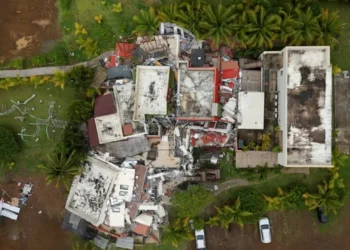
The impasse has led directly to military escalation. In February and June 2026, Pakistan launched airstrikes inside Afghanistan, saying it was targeting militant positions. Pakistani security sources claimed the strikes killed militants, while the United Nations reported civilian casualties. Local media also reported that the attack threatened a fragile ceasefire after earlier border clashes that had already killed dozens. The UNAMA said at least 28 civilians were killed and 49 injured in Pakistani air operations near the Afghan border in June 2026, while Pakistan said it had targeted militant camps in Paktia, Paktika and Kunar. The Afghan Taliban said the attacks killed civilians and warned of retaliation. They later carried out a drone strike of their own, though the damage it caused was smaller and not comparable in scale.
These incidents show a dangerous shift in Afghanistan–Pakistan relations: the crisis has moved beyond accusations and diplomatic protests into direct cross-border military confrontation. This is why the current phase is more serious than previous tensions. It combines unresolved history, militant violence, state sovereignty claims, and military retaliation. This is especially the case at a time when the Pakistani military establishment, under the leadership of Asim Munir, has adopted a proactive policy and, according to the author, pays millions of dollars to Washington lobbyists to build a close relationship with the White House.
Economic Pressure and Strategic Realignment
For decades, Pakistan was Afghanistan’s primary trading partner and its most important gateway to global maritime commerce through Karachi Port. For landlocked Afghanistan, Pakistani territory offered the quickest and cheapest route to the sea. For Pakistan, Afghan trade created transit revenue, market access,s and political leverage.
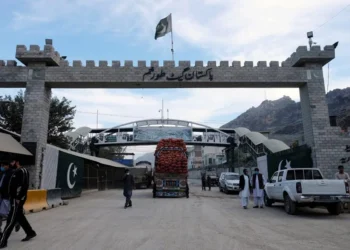
However, the economic relationship has increasingly been disrupted by political and security tensions. Border closures at Torkham, Chaman and Spin Boldak have repeatedly stranded traders, trucks, perishable goods and ordinary travellers. Trade has therefore become both a casualty of conflict and a tool of pressure.
Data shows bilateral trade declined sharply between 2024 and 2025. It is estimated to have fallen from $2.461bn in 2024 to $1.766bn in 2025. This represents a decline of roughly 28 percent overall, while Pakistan’s central bank reportedly referred to a steeper fall of around 60 percent over a shorter seven-month period.
The Great Economic Interest: Corridors, Central Asia and Pakistan’s Fear of Being Bypassed
Behind the visible security tension between Afghanistan and Pakistan lies a deeper economic and geopolitical competition: control over regional connectivity. Pakistan’s long-term strategic interest is to secure access to Central Asia, especially through Afghanistan. Because Pakistan has no direct land border with Central Asia, Afghanistan remains the natural land bridge between Pakistan and markets such as Tajikistan, Uzbekistan, and Turkmenistan.
This is why routes through northern Afghanistan, including Badakhshan and the Wakhan corridor area, carry strategic importance. For Islamabad, such routes could connect Pakistan to Central Asian trade and energy networks. But the same geography also creates anxiety. If Afghanistan develops independent routes through Iran, Central Asia or China-linked corridors, Pakistan’s economic leverage over Kabul will decline.
This competition is also visible in major regional projects such as TAPI, the pipeline designed to carry Turkmen gas through Afghanistan and Pakistan to India. Pakistan could benefit from energy access and transit fees, but the project also raises strategic concerns because it would connect India to Central Asian gas. Continued instability in Afghanistan, border tensions and regional mistrust have therefore repeatedly delayed such projects and prevented Afghanistan from becoming a stable energy corridor.
China’s wider Belt and Road ambitions add another layer. Beijing may see Afghanistan as a potential route linking China, Central Asia, Iran, and the Middle East. Such a historical corridor could reduce reliance on Pakistan’s CPEC and Gwadar route, which Pakistan views as central to its economic future. Therefore, Islamabad fears that alternative Afghanistan–Iran or Afghanistan–Central Asia routes could economically isolate Pakistan.
In this sense, the recent tensions are not only about the TTP, the Durand Line, or border security. They are also about corridor politics. Pakistan wants Afghanistan to connect it with Central Asia, but it does not want Afghanistan to become independent enough to bypass Pakistan. Afghanistan, meanwhile, is trying to reduce dependence on Pakistani routes by expanding trade through Iran, Central Asia, and alternative regional corridors.
Refugees as a Political Pressure Point
Refugee politics has become another major layer of the crisis. For more than forty years, Pakistan hosted millions of people from Afghanistan fleeing the Soviet invasion, civil war, Taliban rule, the post-2001 conflict and the Taliban’s return to power in 2021. This gave Pakistan humanitarian credibility and social influence within the society of Afghanistan.
However, refugee policy has increasingly shifted from humanitarian accommodation to political pressure. Pakistan’s deportation and repatriation campaigns have pushed more than 3.1 million citizens of Afghanistan back across the border. UNHCR and IOM expressed concern in 2025 about arrests, deportations and relocation directives affecting citizens of Afghanistan in Islamabad and Rawalpindi, while also noting that UNHCR’s non-return advisory for Afghanistan has remained in place since 2021.
By June 2026, UNHCR-IOM reporting stated that since 1 April 2025, more than 2.6 million nationals of Afghanistan had returned from Pakistan, with more than 500,000 recorded as deported.
For Pakistan, the policy is presented as a matter of law, documentation, and national security. Islamabad argues that undocumented foreigners must regularise their status and that Pakistan cannot carry the social and economic burden indefinitely. For Afghanistan, however, mass returns place enormous pressure on an already fragile economy, weak public services, limited employment opportunities,s and a humanitarian system under strain.
The political impact may last longer than the immediate humanitarian crisis. Families forced to leave Pakistan after decades of residence may carry resentment into public opinion in Afghanistan. This makes future reconciliation harder and turns refugee policy into another memory of coercion in Afghanistan–Pakistan relations.
Regional Mediation and Pakistan’s Power-Centric Turn
Regional mediation has so far produced only temporary pauses, not a durable settlement. Qatar, Turkey and Saudi Arabia helped calm earlier rounds of fighting between Pakistan and the Taliban authorities, but their role has not resolved the deeper dispute over the TTP, border sovereignty and Pakistan’s wider strategic ambitions. The Doha and Istanbul tracks showed that mediation could stop immediate escalation, but not change the behaviour of either side.
Pakistan now appears less interested in relying on regional mediators and more focused on demonstrating direct power over Kabul. This shift is linked to the latest India-Pakistan clash and a relative Pakistani Air Force superiority, as well as to Islamabad’s renewed confidence after closer engagement with Washington and its high-profile role in mediating between Iran and the United States during the 2026 regional crisis.
In this context, Pakistan’s approach toward Afghanistan has become more power-centric. After the US strikes on Iran, Islamabad seemed to calculate that military pressure could be used to show Washington and regional actors that Pakistan remains capable of managing the Taliban and enforcing its own security priorities. Rather than accepting Qatar, Turkey, or Saudi Arabia as central mediators, Pakistan has tried to project itself as the stronger state actor: one that can negotiate when useful, but strike when necessary, similar to recent United States war policy.
The crisis is no longer only about ceasefires; it is about Pakistan’s desire to reassert hegemony over Afghanistan’s security behaviour. Kabul, meanwhile, sees this as a violation of sovereignty. As long as Pakistan treats military pressure as more effective than diplomacy, external mediation will remain symbolic rather than transformative.
A Security-First Future?
The future of Afghanistan–Pakistan relations is unlikely to be a complete rupture because geography still forces both sides to deal with each other. But the relationship is becoming less trusting, less interdependent, and more security-driven.
The Durand Line remains unrecognised by Kabul and non-negotiable for Islamabad. Pakistan continues to view Afghanistan through the lens of TTP militancy and border security, while Kabul sees Pakistani pressure as interference, coercion and a violation of sovereignty, and views ISIS-K elements as historical competitors to the Taliban’s Ideology. At the same time, Afghanistan’s own unresolved political question, the absence of a fully sovereign, inclusive and nationally recognised government, leaves the country more vulnerable to external pressure and internal fragmentation.
Unless both sides develop a credible mechanism for border management, militant activity, trade continuity, and refugee protection, the relationship will remain trapped in a cycle of temporary calm followed by sudden escalation. The frontier is fragile not only because it is disputed, but because it carries the weight of history, identity, security, economics, and regional rivalry, and every unresolved issue eventually returns, increasingly through violence.
About the Author:
Yama Babakarkhail is an Afghan researcher, writer and regional affairs analyst with more than 14 years of experience across government, academia, the United Nations and the humanitarian sector. He is the author of four books and a regular columnist for 8am/Hasht-e Subh Daily. His work focuses on Afghanistan’s foreign policy, regional security, extremism, governance, and migration.
London, United Kingdom