
Several tailors and managers of clothing design and sewing workshops say that the prolonged closure of Afghanistan’s transit routes with Pakistan, along with disruptions in imports from Iran, has confronted the country’s tailoring industry with serious problems. They say the prices of fabric, thread, decorative trim, beads, glass ornaments, and other raw sewing materials have risen noticeably in recent months, and many of these items are also difficult to find in the market. According to them, rising production costs have made sewing many garments no longer economically viable, forcing many workshops to reduce their activities or temporarily halt operations.
These tailors and workshop managers, speaking with the Hasht-e Subh Daily, warn that the continuation of this situation will pose a serious threat to the clothing industry and the job opportunities of dozens of women and men working in this sector. They call on the Taliban to prevent further damage to this industry by creating alternative trade routes, facilitating the import of raw materials, and supporting investment in domestic production. In their view, establishing factories to produce fabric, thread, decorative trim, and other raw materials could, in addition to creating job opportunities, reduce Afghanistan’s dependence on imports and pave the way for growth in the country’s clothing industry.
Arzoo Mitra, the manager of an embroidery workshop in Ghazni province, says that the closure of trade routes with Pakistan has created serious problems in accessing the raw materials her workshop needs. According to her, since trade with Pakistan stopped, finding fabric, decorative trim, and a number of other sewing materials has become difficult, and the prices of these items have also increased several times over. She adds that as a result of rising costs and a shortage of raw materials, she has had to gradually scale back her workshop’s activities and reduce the number of her employees.
Mitra says: “For about five months now, procuring raw materials has become more difficult by the day. Customers complain about the rising prices of clothing, but we have no choice either. When the price of all materials has gone up, we are forced to sell garments at higher prices. Before, raw materials were both cheap and easy to find, but now we have to pay much more for decorative trim, mirror ornaments, thread, ready-made collars, and many other supplies. Many of these materials are either hard to find or no longer of the same quality as before. We also don’t receive enough of what we need from Iran and India.”
She adds: “The materials that used to be imported from Pakistan have now become very scarce and expensive. For example, we used to buy a carton of glass ornaments for 80 Afghanis, but now we have to pay 200 Afghanis for the same item. The price per meter of fabric has also risen from about 200 to 250 Afghanis to nearly 450 Afghanis. Even the price of ordinary thread has increased significantly.”
According to Mitra, rising production costs have made sewing some garments no longer economically viable. She warns that if this situation continues, her workshop will face greater losses and a decline in customers.
Marina Gul, another manager of a tailoring workshop in Kabul, says that previously, alongside sewing women’s clothing, she also produced uniforms and hijabs, but now, due to the rising price of fabric and other raw materials, the number of her orders has dropped significantly. She adds that the absence of factories producing fabric, thread, and other raw materials inside Afghanistan has made the country’s tailoring industry dependent on imports, and for this reason, any disruption in trade with neighboring countries, particularly Pakistan, directly affects the Afghan market.
Marina Gul says: “Previously, fabric was imported from Pakistan and its price was reasonable. We used to source all the materials we needed, including lining fabric, ribbon, and other sewing supplies, from the Kandahari market. Ribbons that we used to buy for three to five Afghanis per meter are now hard to find even at 90 Afghanis. Some Pakistani fabrics were both good quality and suitable for clothing design, but now the same fabrics are imported from India and are so expensive that shopkeepers can’t afford to buy them, nor is producing them economically viable for us.”
According to her, if the trend of rising prices and import problems continues, the tailoring industry and businesses that had flourished in recent years will once again face serious decline.
Shahpour, another tailor in Kabul, says that with the closure of trade routes with Pakistan, not only have the prices of sewing supplies risen, but the quality and volume of imports of these materials have also decreased significantly. According to him, rising prices and declining quality of raw materials have increased production costs and made it more difficult for tailors to continue their work.
This young man says: “Items such as decorative trim, thread, snap fasteners, and other sewing supplies that used to be imported from Pakistan were both of better quality and available in sufficient quantity in the market. But now most of these goods are imported from India and some other countries, which have neither the quality of Pakistani products nor arrive in the Afghan market in the same quantities. For example, a box of 10 snap fasteners that we used to buy for 250 Afghanis now costs 300 Afghanis. The prices of thread, decorative trim, and other sewing supplies have also increased significantly.”
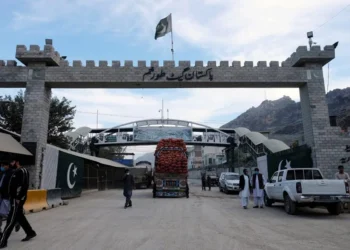
As a landlocked country, Afghanistan imports most of the goods it needs through the transit routes of neighboring countries. However, in recent months, the closure of border crossings with Pakistan and disruptions in import routes from Iran have created widespread problems in the trade and import of raw materials.
Following border clashes between the Taliban and Pakistan, Pakistani authorities closed transit routes along the Durand Line starting October 10, 2025, a measure that restricted Afghan traders’ access to one of their most important import routes.
Additionally, following the clashes between the United States and Israel with Iran, thousands of containers belonging to Afghan traders were held up at Jebel Ali Port in the United Arab Emirates and Chabahar Port in Iran. According to traders, goods now entering Afghanistan through alternative routes, including Hairatan Port, reach importers at several times the previous cost.
You can read the Persian version of this report here:
بسته شدن مسیرهای ترانزیتی؛ صنعت خیاطی افغانستان در تنگنای کمبود مواد اولیه