• 8AM.MEDIA
  • ویب‌سایت فارسی
  • پښتو ویب‌پاڼه
  • اۉزبېکچه ویب‌سایت
  • Podcast
Tuesday, September 15, 2026
Hasht-e Subh
  • Home
  • News
    • Afghanistan News
    • World News
  • Opinion
    • Editorial
    • Analysis
  • Reports
    • Daily Reports
    • Investigative Reports
  • Society
    • The story of people
  • Women’s Word
  • Columns
    • Three Years After Afghanistan’s Fall: The Taliban’s Resurgence
    • Towards Equality
    • The Resurgence of the Taliban: Two Years Since Afghanistan’s Fall
    • Hebatullah Report Special Edition
    • Resistance for Education Special Edition
    • Special Column on Taliban’s Education Curriculum
    • Nawroz
  • Interviews
  • Contact Us
    • About Us
    • 8AM MEDIA Annual Awards
    • Submit an Article to Hasht-e-Subh
  • 8am.mediaBack
Subscribe
No Result
View All Result
  • Home
  • News
    • Afghanistan News
    • World News
  • Opinion
    • Editorial
    • Analysis
  • Reports
    • Daily Reports
    • Investigative Reports
  • Society
    • The story of people
  • Women’s Word
  • Columns
    • Three Years After Afghanistan’s Fall: The Taliban’s Resurgence
    • Towards Equality
    • The Resurgence of the Taliban: Two Years Since Afghanistan’s Fall
    • Hebatullah Report Special Edition
    • Resistance for Education Special Edition
    • Special Column on Taliban’s Education Curriculum
    • Nawroz
  • Interviews
  • Contact Us
    • About Us
    • 8AM MEDIA Annual Awards
    • Submit an Article to Hasht-e-Subh
  • 8am.mediaBack
No Result
View All Result
Hasht-e Subh
No Result
View All Result

Afghanistan’s Traders, Locked Out of Pakistan, Now Face New Bottleneck in Iran

Translated by Farhad Farhaad | Originally reported in Persian by Ilya

Mohammad Farhaad Mohammad Farhaad
1 August 2026 - Solar Hijri Date: 1405/05/10 [t_time:1785588045]
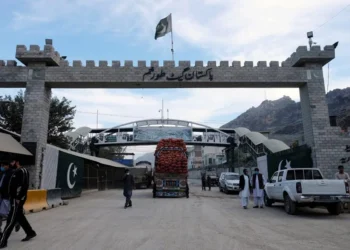
Cargo trucks queue at the Rimdan border terminal between Iran and Pakistan, a key route for Afghanistan's traders after Pakistan crossings closed. (Photo credit: tinn.ir)

tinn.ir

Gholam Yahya Meshkwani, one of Afghanistan’s dried fruit traders, complains about rising transit costs and delays in moving goods through Iran’s Chabahar and Bandar Abbas ports. He says this situation has created serious challenges for the country’s traders, and in some cases, the high cost of transit has risen so much that the revenue from selling goods does not even cover the cost of transporting them. According to him, Afghanistan’s traders currently lack access to safe, fast, and low-cost transit routes, and this has created serious problems for the export process.

Meshkwani says: “Previously, most of Afghanistan’s exports were carried out through the Torkham and Spin Boldak routes, but after these routes were closed, traders were forced to use the Chabahar and Bandar Abbas ports. In the past, transporting one container cost around five thousand dollars, but now that figure has reached around 40,000 dollars. Previously, a shipment would arrive at its destination in about 40 days, but now its transport takes four to six months, and sometimes even the arrival time is not clear.” He adds that the cost of transporting goods by air cargo has also been steadily rising.

Ghulam Muhammad Kohdamani, one of Afghanistan’s fresh fruit and vegetable traders, also complains about rising transit costs and delays in transporting goods through the Iran route. He says Afghanistan’s commercial shipments sometimes remain stalled at routes and ports for weeks, a situation that causes part of the produce, particularly fresh fruit and vegetables, to spoil and inflicts heavy losses on traders. According to Kohdamani, in the process of transporting goods through Iran, Iranian shipments are given priority over Afghanistan’s goods, and this has caused further delays in the transport of Afghanistan’s commercial goods.

This trader says: “The rental cost of cargo trucks has nearly doubled, and finding a truck to transport fruit and vegetables has also become very difficult. The rental cost of refrigerated trucks has reached around 120,000 Afghanis, and Iranian trucks charge between 280 and 300 million Iranian tomans to transport goods from the Rimdan border to Pakistan. These costs have placed heavy pressure on Afghanistan’s traders. Cargo trucks also wait between eight and 10 days for clearance due to congestion at the Rimdan border. In this process, Iranian shipments are given priority, and Afghanistan’s goods are transported with delay. In addition, each truck is charged between five and 10,000 afghanis per day under the name of ‘sleep money’ due to the stop at the border.”

Kohdamani adds that the collection of additional fees under the name of “overnight stay” from cargo trucks has further increased the cost of transporting goods. He also says that due to security concerns and attacks on cargo trucks along the Mirjaveh route, Afghanistan’s traders are unable to use this crossing, and most of Afghanistan’s goods are now transported through the Rimdan route.

Kohdamani says: “Most of our goods are transited through Iran, but the Mirjaveh crossing on the Iran border and Taftan on the Pakistan border are practically unusable due to insecurity and attacks by armed Baloch individuals on cargo trucks. Now most goods are transported through the Rimdan route, but congestion at this crossing has caused shipments to wait for long periods. A large portion of traders’ goods is at risk of spoiling along this route. The grape harvest season in Kapisa and Parwan has now also arrived, but due to export problems, part of the produce is being sold in domestic markets at low prices, and there is no suitable way to transport it to foreign markets.”

Asad (pseudonym), one of Afghanistan’s dried fruit traders, calls on the Taliban and Iranian officials to take practical measures to reduce transit costs and facilitate the transport of commercial goods. He says that at the same time as the agricultural harvest season, reducing transport costs could benefit farmers and traders and create the conditions for the timely export of Afghanistan’s produce. According to him, rising transit costs have caused a number of traders to export Afghanistan’s produce to foreign markets at a loss.

This trader says: “Transit fares have increased several times over, and this issue requires serious attention. Currently, the cost of transporting air cargo shipments has also risen significantly, and traders are practically operating at a loss. Despite this, we are trying to get Afghanistan’s produce to foreign markets during the harvest season so that the market for these products can be preserved.” He also criticized the difficulty of obtaining United Arab Emirates (UAE) visas for Afghanistan’s traders, saying that easing the visa issuance process could help expand the commercial activities of traders.

Following border clashes between the Taliban and Pakistan, Islamabad closed its border crossings with Afghanistan to the transit of goods and the movement of passengers on October 11, 2025. Currently, all crossings between Afghanistan and Pakistan remain closed to transit and trade, and on some routes only Afghanistan’s migrant families are allowed to enter the country from Pakistan. Following these restrictions, Afghanistan’s traders have increasingly turned to using Iran’s routes, particularly the Chabahar and Bandar Abbas ports, to transport commercial goods, routes that, while providing an alternative option, have come with challenges such as rising costs, delays in transport, and transit problems.

According to statistics from the Taliban’s Ministry of Industry and Commerce, the volume of trade between Afghanistan and Iran rose by 6.7 percent last year to reach three billion, 632 million dollars. Of this, only 72 million dollars was related to Afghanistan’s exports to Iran.

Following the decline in Afghanistan’s trade relations with Pakistan, Iran continues to be one of Afghanistan’s largest trading partners, but the trade balance between the two countries remains in Iran’s favor, and Afghanistan’s share of exports to Iran, compared to imports, remains very small.


You can read the Persian version of this report here:

تجارت افغانستان در سایه انسداد مرزها؛ مسیر ایران هم به چالش بزرگ بازرگانان بدل شد
ShareTweetSendSendShare

Related Posts

An aerial illustration maps the proposed trade corridor linking Iran, Afghanistan, and Tajikistan, with trucks shown moving along the route. (Photo credit: AI)
Analysis

The Trilateral Transit Corridor: Opportunity, Risk, and Regional Rivalry

27 August 2026 [t_time:1787852290]
A tailor works at her sewing machine in a Kabul workshop as raw material shortages disrupt Afghanistan's clothing industry. (Photo credit: 8am.media)
Daily Reports

Transit Routes Closure Leaves Afghanistan’s Tailoring Industry Struggling with Raw Material Shortages

4 August 2026 [t_time:1785847884]
A distant view of a plume of smoke rising into the night sky following reports of explosions in southern Iran (Photo: Farsnews)
World News

Multiple Explosions Reported Across Southern Iran

9 July 2026 [t_time:1783572711]

Latest

Loading latest news...

Popular stories

  • Hamza bin Laden - the son of Osama bin Laden (Photo: Social Media)

    Al-Qaeda Releases Hamza bin Laden Message on 9/11 Anniversary

    Share
    Share Tweet
  • Sajjad Haider Khan: Those with Valid Visas Will Continue Their Studies in Pakistan

    Share
    Share Tweet
  • Scholarship to Deportation: Pakistan Orders Mass Expulsion of Afghanistan Citizen Medical Students

    Share
    Share Tweet
  • UN Report Reveals Shifts in Family Attitudes and Rise in Domestic Violence in Afghanistan

    Share
    Share Tweet
  • Taliban Shoot Young Man from Herat After Torturing Him with Hands Tied

    Share
    Share Tweet

Podcast

Insights
Insights

Join Lynne O’Donnell for 8AM’s podcast series, Insights.
Lynne talks with generals, diplomats, soldiers, journalists, politicians, activists, people who have front row seats for conflicts around the world, and citizens with a story to tell, happy or sad. For this first series, Afghanistan is the focus. Lynne and her guests talk about the collapse of the republic in August, 2021, and the impact since — for the people of Afghanistan, for the security of the region, for the safety of the world. It’s important, interesting and insightful.

Insights/22: Controlling the Narrative with Mina Sharif
byinsights8am

Controlling the Narrative

Lynne O’Donnell talks with Mina Sharif, author, activist, women’s rights campaigner, educator and mentor. They discuss who controls the narrative and who speaks for Afghanistan’s people when the Taliban appear to have seized control not only of the country but of the message, too.

Have a listen

Insights/22: Controlling the Narrative with Mina Sharif
Episode play icon
Insights/22: Controlling the Narrative with Mina Sharif
Episode Description
Episode play icon
Insights/21: Media Meltdown with Zahra Joya
Episode Description
Episode play icon
Insights/20: Terror Inc with Scott Richards
Episode Description
Episode play icon
Insights/19: Busting Stereotypes with Bushra Gohar
Episode Description
Episode play icon
Insights/18: Media Matters with Waliullah Rahmani
Episode Description
Episode play icon
Insights/17: What Goes Around Comes Around with Sima Samar
Episode Description
Search Results placeholder
Hasht-e Subh

8AM Media, also known as Hasht-e-Subh Daily, stands as Afghanistan's premier independent and non-profit newspaper, resonating as a beacon of journalistic integrity since its establishment in June 2007 by esteemed Afghan journalists and human rights advocates. With a steadfast commitment to citizen journalism and civic education, Hasht-e-Subh Daily has earned its place as the most esteemed publication in the nation.

Publisher: Sanjar Sohail
Email: [email protected]
Executive Director: Parwiz Kawa
Email: [email protected]

Read More

NATO Fighter Jet Shoots Down Drone in Eastern Europe

17 Afghan Citizens Die of Thirst in Saravan

FAO: Eating Eggs Reduces Risk of Acute Malnutrition in Children

Fitrat: More Than 100 Migrant Families Return to Afghanistan

Iranian Official Insists on No Talks with US Without Tehran’s Conditions Being Met

Editor’s Choice

Every Saturday morning, 8AM MEDIA English Services Department will guide you through the week’s biggest stories from Afghanistan and the international community.

Subscribe

© 2026 - ©Hasht-e Subh Daily

No Result
View All Result
8am.Media
پښتو ویب‌پاڼه
ویب‌سایت فارسی
اۉزبېکچه ویب‌سایت
  • Home
  • News
    • Afghanistan News
    • World News
  • Opinion
    • Editorial
    • Analysis
  • Reports
    • Daily Reports
    • Investigative Reports
  • Society
    • The story of people
  • Women’s Word
  • Columns
    • Three Years After Afghanistan’s Fall: The Taliban’s Resurgence
    • Towards Equality
    • The Resurgence of the Taliban: Two Years Since Afghanistan’s Fall
    • Hebatullah Report Special Edition
    • Resistance for Education Special Edition
    • Special Column on Taliban’s Education Curriculum
    • Nawroz
  • Interviews
  • Contact Us
    • About Us
    • 8AM MEDIA Annual Awards
    • Submit an Article to Hasht-e-Subh
  • 8am.media

© 2026 - ©Hasht-e Subh Daily