Afghanistan has entered the fifth year of Taliban rule. Throughout this period, public discontent and various forms of resistance to Taliban policies and practices have persisted across social, political, cultural, and economic spheres, and have intensified in some areas. The central question of this article is why, despite the passage of time, the grounds for discontent and resistance toward the Taliban have remained in place and even expanded in certain domains, and what consequences the continuation of the Taliban’s current approaches and practices will have for political stability, social cohesion, and the future of conflict in Afghanistan.
To analyze the situation in Afghanistan under Taliban rule and answer this question, this article draws on the theoretical framework of “Horizontal Inequalities as a Cause of Conflict,” a framework developed in the work of Frances Stewart and the research of the Centre for Research on Inequality, Human Security and Ethnicity (CRISE) at Oxford University. The significance of this approach lies in the fact that it does not reduce the explanation of conflict merely to “ethnic diversity” or “general poverty,” but instead focuses on how resources, opportunities, political power, and social and cultural status are distributed unequally among groups with distinct identities.
Under this framework, Afghanistan’s multi-ethnic and multi-religious character is not, in itself, a cause of conflict, instability, or sustained violence. Unlike perspectives that treat war as the result of “ancient ethnic hatreds” or a kind of “clash of civilizations,” horizontal inequality theory argues that the risk of conflict increases when identity divisions align with structural economic, social, political, and cultural inequalities. In other words, the issue is not simply the existence of differences among groups, but whether one group, because of its identity, consistently enjoys greater access to resources, opportunities, power, and status while another group is structurally deprived of them.
Frances Stewart identifies four main dimensions of horizontal inequality:
- Economic inequality: unequal access to assets, financial and human capital, land and natural resources, income and employment opportunities.
- Social inequality: unequal access to services and welfare opportunities, including education, health, housing and other public services, as well as differences in educational and health outcomes.
- Political inequality: the unequal distribution of power and opportunities for political participation, including access to the head of government, cabinet, parliament, security forces, local administrations and other decision-making institutions.
- Cultural status inequality: differences in the degree of recognition and equal status afforded to the language, religion, customs, symbols, traditions and cultural identities of different groups.
From the perspective of this theory, when these inequalities take shape simultaneously across several domains and along identity lines, a condition of “cumulative horizontal inequality” emerges. Under such conditions, individual discontent can turn into a sense of group grievance; group identity becomes more salient; and, given the opportunity and capacity for political organization, this discontent can lead to collective mobilization and, in certain circumstances, to political resistance and violence.
Economic Inequality
Economic inequality in Afghanistan under Taliban rule cannot be reduced simply to differences in household income. Within the framework of horizontal inequalities, the more important issue is the access different groups have to public resources, capital, assets, employment opportunities, and the ability to participate in economic decision-making.
Since 2021, the Taliban have financed a significant portion of government expenditures through domestic sources, including taxes, customs revenue, and non-tax revenue. According to World Bank data, in fiscal year 2024 Afghanistan’s total domestic revenue reached approximately 241.3 billion afghanis, comprising around 93 billion afghanis in tax revenue, 63.8 billion afghanis in customs revenue, and 83.7 billion afghanis in non-tax revenue. Non-tax revenue has largely come from sources such as mining, road tolls, transport services, passports, overflight fees, railways, and telecommunications.
From the perspective of horizontal inequality theory, the issue is not merely the level of government revenue, but also how these resources are distributed, prioritized, and overseen in their use. Under the current system, unlike a system with elected institutions and mechanisms of public accountability, citizens have no institutionalized or effective role in setting budget priorities, determining how revenue is allocated, or independently overseeing public expenditure. At the same time, a considerable share of government spending goes toward salaries and current expenditures, while the share of public and capital investment remains limited. World Bank estimates for 2025 indicate that approximately 10.1 percent of gross domestic product was spent on wages and salaries, while about 1.7 percent went toward capital expenditure.
From this perspective, the issue is not only how much tax and duties citizens pay, but also whether there is a fair and accountable relationship between the payment of public resources and access to services, investment, and economic opportunities. When citizens, particularly disadvantaged groups, lack an effective means of participating in decisions about how public resources are used, the gap between “those who provide resources” and “those who decide how they are allocated” can become one of the key dimensions of economic and political deprivation.
Limited access to financial capital, land, property, natural resources, and the labor market can also intensify these inequalities. Afghanistan’s banking system remains fragile, and according to World Bank reports, private sector credit stands at a very low level. Such conditions create additional constraints, ts particularly for small businesses, entrepreneurs, and groups that lack collateral, initial capital, or the necessary economic connections.
The extensive restrictions on women’s economic activity are a clearer example of this issue. Women have not only been excluded from a significant share of employment and economic opportunities, but their access to financing, markets, and business creation and development has also been restricted. Women’s economic deprivation can therefore be analyzed simultaneously within the frameworks of social, economic, and political inequality, since restrictions on employment and income, combined with exclusion from public and political life, reinforce one another.
In the area of land and property as well, the concentration of administrative and political power in resolving property disputes and land claims, in the absence of independent and transparent mechanisms, can favor groups with greater access to the structure of power. Under such conditions, individuals lacking political power or sufficient financial resources have a more limited capacity to defend their property and economic rights.
The same issue arises with respect to mining and natural resource extraction. Increased revenue from natural resources does not, in itself, mean a fair distribution of benefits. When public participation, contract transparency, independent oversight and clear mechanisms for distributing local benefits are limited, natural resources can, instead of contributing to inclusive development, lead to a further concentration of economic resources and power in the hands of a limited number of groups.
Therefore, from the perspective of Stewart’s theory, the central issue is not “poverty” alone, but who has access to resources, who is excluded from them, and whether this pattern of access aligns with identity, political, and regional lines.
Social Inequality
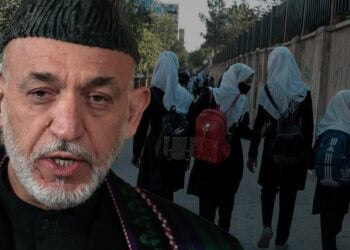
During the period of Taliban rule, inequality in access to social services, particularly in the field of education, has been one of the most important dimensions of structural deprivation in Afghanistan. The most prominent example is the ban on secondary, high school, and university education for girls, which has made Afghanistan the only country in the world where girls’ and women’s access to secondary, high school, and university education has been systematically banned.
This policy is not merely an educational restriction; its consequences extend into economic, social, and political domains as well. Depriving girls of education reduces human capital, limits future employment opportunities, diminishes economic independence, and restricts their ability to participate in public life. As a result, a single educational policy can generate and reproduce inequality across multiple domains.
The issue of education is also linked to regional and group differences in the quality of and access to educational services. Changes to curricula, the increase in ideological content, and restrictions on access to modern, quality education, if they affect different regions and groups unevenly, can deepen social and identity-based divisions. From this perspective, the issue is not merely the number of schools, but also the quality of education, its content, and the equal access of different groups to it.
In the field of health as well, the uneven distribution of infrastructure, medical services, medicine, and skilled personnel, particularly in remote areas, can intensify existing gaps. Restrictions on women’s employment and education also carry compounded consequences in this area, since Afghanistan’s health system is heavily dependent on the presence of female staff in fields such as nursing, midwifery, and women’s health services. Any restriction on their presence can reduce women’s and children’s access to health services.
In the area of housing and basic welfare as well, reports of forced displacement and the destruction or seizure of homes and land in certain regions, including areas with a particular ethnic composition, indicate that social deprivation can become intertwined with issues of property, forced displacement and human security. If such policies disproportionately affect particular groups, social inequality moves beyond the individual level and becomes a group-level issue.
Therefore, within Stewart’s theoretical framework, social deprivation takes on particular significance when specific groups are persistently excluded from education, health, employment and other public services. Such conditions can reinforce a sense of injustice and create the conditions for discontent to shift from the individual to the collective level.
Political Inequality
Among the four dimensions of horizontal inequality, political inequality holds particular significance in Afghanistan under Taliban rule, since, according to Stewart’s theory, political exclusion can both increase elites’ incentive to mobilize and reduce the possibility of peacefully addressing other inequalities.
Following the Taliban’s return to power in 2021, the previous structures of the republic, parliament, political parties, and electoral mechanisms were dismantled, and a new structure based on the Islamic Emirate took shape. Women have also been excluded from participation in the political structure and many public institutions. As a result, a large portion of society lacks formal, effective mechanisms for participating in political decision-making.
Data on the ethnic composition of the power structure also points to a significant concentration of power among Pashtuns, and particularly among networks close to the Taliban’s core leadership. In scientific analysis, however, a distinction must be drawn between the symbolic presence of a group within the structure of government and that group’s actual access to decision-making power. The mere presence of a non-Pashtun official within an institution does not amount to equal political participation, just as the limited presence of members of various groups within the state structure does not necessarily indicate a genuine distribution of power.
From this perspective, the central question is which groups have an effective presence in the main decision-making, security, judicial, economic, and administrative institutions, and which groups have been excluded from decisions on the country’s fundamental issues. If political power is concentrated within a limited ethnic, regional, ideological, or organizational network, political inequality can become a form of structural exclusion.
This issue is even more apparent in the case of women. The exclusion of women from a large part of the state structure and the restriction of their presence in public life effectively deprives half the country’s population of effective participation in political decision-making. At the same time, the elimination or restriction of political parties, electoral institutions, and many civic mechanisms has diminished society’s capacity to peacefully channel demands and resolve disputes through political bargaining.
Within Stewart’s framework, the significance of this situation lies in the fact that political inequality is not only a source of grievance in itself, but can also obstruct the reform of other inequalities. A group excluded from political power has fewer tools to change economic, social, and cultural policies. As a result, different forms of inequality can reproduce one another.
For this reason, the continuation of political exclusion, particularly when combined with economic and social deprivation, can increase the incentive among excluded groups to seek avenues outside formal mechanisms. This does not necessarily mean that rebellion or violence will inevitably occur, but from the perspective of horizontal inequality theory, it creates structural conditions more conducive to political mobilization and, given other contributing factors, to violent mobilization.
Cultural Status Inequality
The fourth dimension of horizontal inequality is inequality in cultural status. This dimension holds particular significance in a society such as Afghanistan, which is linguistically, ethnically, religiously, and culturally diverse.
Cultural status does not merely refer to the formal banning of a language or religion; the way languages, religions, symbols, rituals, and various traditions are present in, or absent from, public life can also affect citizens’ sense of belonging and equality.
In the area of language, any reduction in the presence or official status of the Persian/Dari language in government offices, education, public signage and official institutions, if carried out unevenly and without regard to the language’s historical and social standing, can create among Persian speakers a sense of weakened identity and cultural exclusion. Such policies, if applied consistently and structurally, can widen the gap between the official identity of the government and the identity of parts of society.
In the area of religion, the recognition and status of religious groups is also significant. Afghanistan is a society with religious diversity, and Shias form an important part of that diversity. Any restriction on the performance of religious rites, the elimination or weakening of the standing of the jurisprudence and traditions of a particular group, or restrictions imposed on its symbols and rituals, can heighten a sense of cultural and religious deprivation.
In this context, policies related to Shia religious rites, educational content concerning different religions, and the treatment of historical and cultural symbols and celebrations should be examined not only from the standpoint of cultural rights, but also in terms of their effect on social cohesion and relations among groups.
From Stewart’s perspective, cultural status carries particular importance because culture and identity can sharpen the boundary between “us” and “them.” If a group feels that its language, religion, history, or symbols hold a lower status within the country’s official structure, cultural inequality can become a collective grievance.
Under such conditions, even a seemingly symbolic policy may carry a deep political message. For example, removing a language from an official institution or restricting a religious rite may have limited material impact, yet may carry great significance in terms of recognition and dignity for members of that group.
The Accumulation of Inequalities and the Rising Risk of Conflict
If the four dimensions above are examined separately, each can be an important issue on its own; but the central significance of Frances Stewart’s theory lies in examining their overlap and accumulation.
If a group simultaneously:
- has a limited share of political power;
- has weaker access to economic resources;
- faces greater deprivation in education and social services;
- and feels that its language, religion or cultural identity does not hold equal status within the official structure,
then we are faced with a condition that can be called cumulative horizontal inequality.
Under such conditions, scattered forms of discontent can converge into a shared narrative of deprivation. An individual may initially be dissatisfied with unemployment, poverty, lack of education, or cultural restriction; but when these experiences become bound up with group identity, this discontent may shift from the individual to the collective level.
The theoretical process can be summarized as follows:
Structural inequality leads to a perception of injustice, which reinforces group identity, which drives social and political mobilization, which erodes trust in official institutions, which increases the likelihood of resistance and, under favorable conditions, political violence.
This chain, however, is not a mechanical or deterministic relationship. Horizontal inequality does not, in itself, mean that war will occur. The existence of dispute resolution institutions, opportunities for political participation, state capacity, social cohesion, elite behavior, and the presence or absence of armed organizations also play an important role in determining the outcome.
Nevertheless, the more economic, social, political, and cultural inequalities align with one anothe,r and the more the possibility of peacefully expressing demands diminishes at the same time, the greater the likelihood that scattered discontent will turn into group mobilization.
Conclusion
Based on Frances Stewart’s theoretical framework of horizontal inequalities, the situation in Afghanistan cannot be explained solely through concepts such as “ethnic conflict,” “extremism,” “poverty,” or “state weakness.” The more fundamental issue is how power, resources, opportunities,s and status are distributed among the different groups of society.
In Afghanistan under Taliban rule, the available evidence points to inequalities and deprivations across four domains: economic, social, political, and cultural. More important than the existence of any single one of these inequalities is their overlap and the potential for them to become a shared experience of group deprivation.
If a political system, instead of creating inclusive mechanisms for participation and the distribution of power, moves further toward the concentration of power, the restriction of political participation, the exclusion of parts of society from education and employment, and the weakening of the status of certain cultural and religious identities, it may, rather than reducing the grounds for conflict, deepen existing divisions.
From this perspective, the persistence of resistance to the Taliban cannot be attributed solely to ideological opposition to the group; part of it must also be examined within the broader framework of deprivation, political exclusion, social and economic inequality, and the question of the recognition of different identities.
At the same time, it should not be concluded from this argument that increasing inequalities will necessarily and linearly lead to civil war. Between inequality and violence lie important intervening variables, such as organizational capacity, elite behavior, group cohesion, the strength or weakness of state institutions, external support, and access to resources and political opportunities.
But if the current trajectory continues, and economic, social, political, and cultural divisions continue to be reproduced simultaneously and along identity lines, the risk that scattered discontent will turn into organized group deprivation and political mobilization will increase. At a later stage, if peaceful avenues for expressing demands and reforming policies remain blocked, the likelihood that some actors will turn toward more radical forms of resistance may also increase.
Therefore, from the perspective of horizontal inequality theory, the central question about Afghanistan’s future is not simply “can the Taliban govern?” but rather whether they can build a political and social structure in which the country’s different groups feel they have a fair and acceptable share of power, resources, opportunities and cultural status.
If the answer is no, the concentration of power may lead to political control in the short term, but in the long term it could contribute to a deepening of social divisions and an accumulation of grievance. In other words, stability built solely on control and political exclusion does not necessarily amount to lasting peace; lasting peace becomes more attainable when structural inequalities and the sense of group deprivation are also reduced.
Research Sources:
- Stewart, F. (2010). Horizontal Inequalities as a Cause of Conflict: A Review of CRISE Findings. Background Paper for the World Development Report 2011. World Bank.
- Stewart, F. (Ed.). (2008). Horizontal Inequalities and Conflict: Understanding Group Violence in Multiethnic Societies. Palgrave Macmillan.
- Cederman, L.-E., Gleditsch, K. S., & Weidmann, N. B. (2011). Horizontal inequalities and ethno-nationalist civil war: A global comparison. American Political Science Review, 105(3), 478-495.
- Wimmer, A., Cederman, L.-E., & Min, B. (2009). Ethnic politics and armed conflict: A configurational analysis of a new global dataset. American Sociological Review, 74(2), 316-337.
- Fearon, J. D., & Laitin, D. D. (2003). Ethnicity, insurgency, and civil war. American Political Science Review, 97(1), 75-90.
- Collier, P., & Hoeffler, A. (2004). Greed and grievance in civil war. Oxford Economic Papers, 56(4), 563-595.
- Østby, G. (2008). Inequalities, the political environment and civil conflict: Evidence from 55 developing countries. In F. Stewart (Ed.), Horizontal Inequalities and Conflict: Understanding Group Violence in Multiethnic Societies. Palgrave Macmillan.
- United Nations Assistance Mission in Afghanistan (UNAMA). (2025). Human Rights Situation in Afghanistan: January-March 2025 Update, and other periodic Afghanistan human rights reports.
- UNESCO. (2025). Banned from Education: A Review of the Right to Education in Afghanistan. UNESCO.
- World Bank. (2025). Afghanistan Development Update. World Bank.
- UN Women. (2025). State of Women’s Rights in Afghanistan. United Nations Women.
You can read the Persian version of this analysis article here:
نابرابریهای افقی و خطر تشدید منازعه در افغانستان تحت حاکمیت طالبان