
Residents in Maimana, the center of Faryab province, are sounding the alarm about falling groundwater levels and a worsening drinking water shortage in the city. They point to population growth and the digging of deep wells upstream as the main causes. Videos from villages in Takhar province paint an equally grim picture: some have been abandoned entirely for lack of water, while residents elsewhere still lack access to safe drinking water. The footage offers a stark and painful glimpse into daily life in these communities.
Some Faryab residents and social media users warn that thousands of lives are at risk, with Maimana and its surrounding areas facing a severe drinking water shortage. They have called on the Taliban to build the Dahan-e Dara dam and a water diversion dam in Almar district to ease the crisis. “Why isn’t work on these projects moving forward seriously and practically?” they have asked online. “Where is the real problem, and when will people see these projects actually begin or continue?”
One Maimana resident described the scale of the problem: “Maimana city is facing serious water shortages. Most wells have dried up, and the water table has dropped. The streams and small lakes that once flowed down from the highlands toward Maimana have also dried up. More deep wells and the use of diesel pumps to irrigate land that used to depend on rainfall have kept water from reaching the city.”
Another resident criticized the poor management of water resources, saying aid projects billed as water management initiatives in Faryab have been weak and have never been seriously implemented. “The deepest well in Maimana used to be 20 meters,” he said. “Now people are digging to 80 or 90 meters. Our well is 70 meters deep, but it only produces water for half an hour before running dry.”
A third resident, from the city’s first district, said: “Wells that used to be 80 meters deep have dried up, and now people are drilling to 120 meters. With the right equipment, they might reach 160. It’s not clear how long this can go on.”
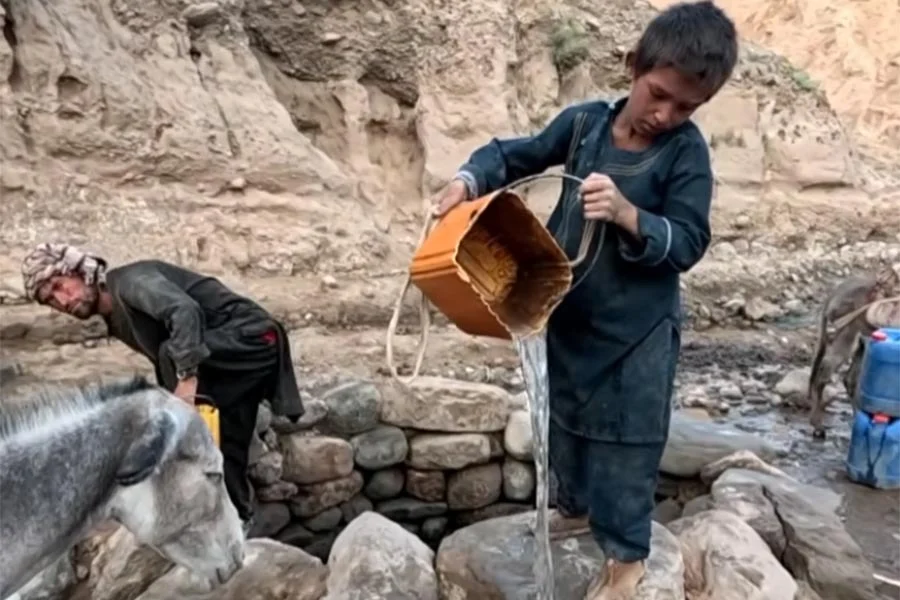
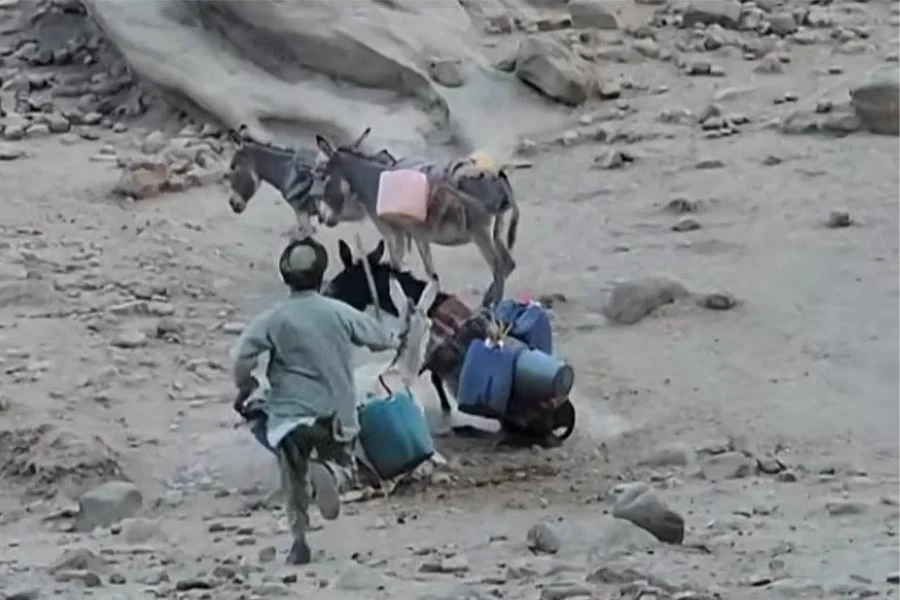
Meanwhile, the channel “Our Village,” which documents conditions in underserved villages in Takhar province, recently released a video capturing a bleak picture of daily life there. The footage shows children in one village leaving home at night with empty jerry cans instead of sleeping, walking toward the only source their families have for drinking water. In the dark, they navigate rocky, difficult paths and wait for their containers to fill before carrying the water home.
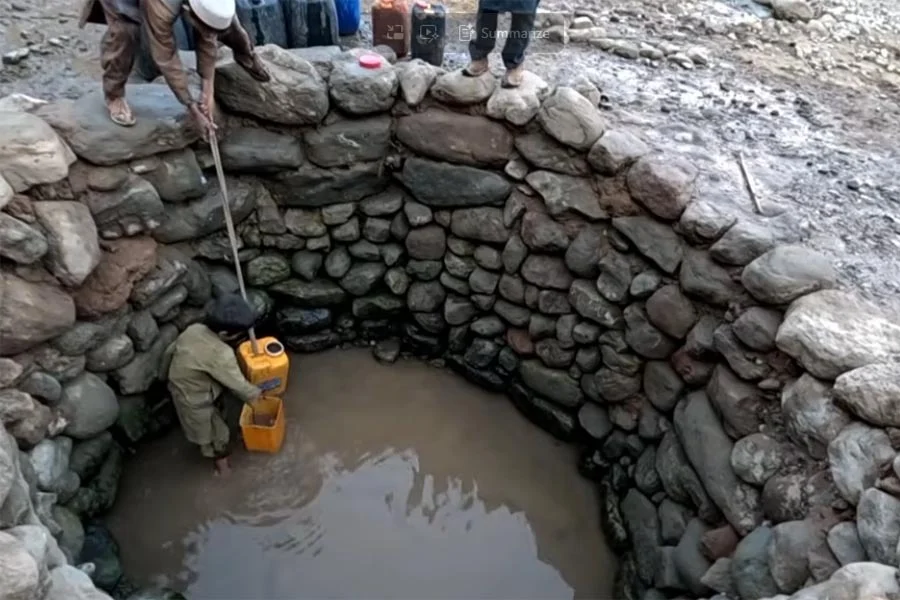
The video shows that the water available isn’t enough for everyone. Those who arrive late are often forced to fill their containers with mud rather than return home empty-handed. Over time, the reservoir where the water collects runs dry, leaving only mud behind, mud that may be useless to most people but is, for thirsty families, still better than nothing.
A resident said the villages of Qarah Bulaq, Pistah Mazar, Khojwan, Panganai and Khwaja Khairha are all struggling with water scarcity. The despair visible in residents’ voices and expressions suggests that poverty and hardship have left them with little hope of accessing safe drinking water. They are appealing to aid groups and donors to help fund deep wells in the area.
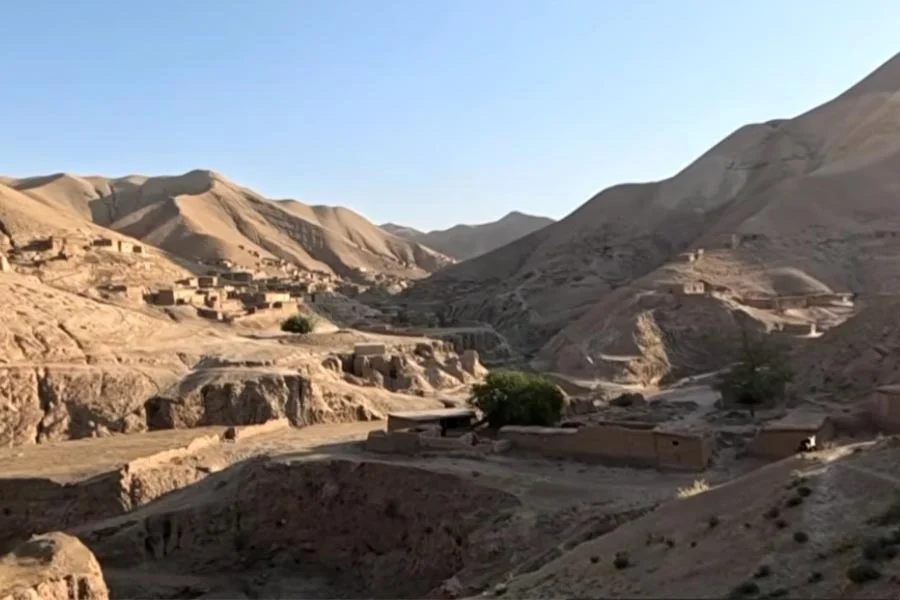
Separately, water expert Najibullah Sadid wrote on Facebook that the people shown in the video are residents of Qarah Bulagh village in Takhar’s Rustaq district, who have been forced to rely on contaminated water after years of neglect. “These are the very people who own the region’s gold mines, yet they live in such degradation,” he wrote. “Every government Afghanistan has had shares one trait: none of them has treated the people as their own. I’m astonished that officials can sleep at night while their nation lives in conditions unfit for human beings.”
International organizations have documented Afghanistan’s water crisis in numerous reports. UNICEF has said that repeated droughts and other climate shocks have made safe drinking water increasingly difficult to access. According to the 2025 Whole of Afghanistan Assessment, more than 67 percent of families have faced drought and water shortages, and a quarter have had access only to unsafe or unimproved water sources.
The World Bank, in its Afghanistan Water Emergency Response Project, has said that 16 drought-affected provinces, spanning roughly 120 districts, face severe restrictions in access to safe drinking water and sanitation services. The project aims to improve access to drinking water and irrigation water for 1.2 million people in rural areas.
You can read the Persian version of this report here: