• 8AM.MEDIA
  • ویب‌سایت فارسی
  • پښتو ویب‌پاڼه
  • اۉزبېکچه ویب‌سایت
  • Podcast
Sunday, October 11, 2026
Hasht-e Subh
  • Home
  • News
    • Afghanistan News
    • World News
  • Opinion
    • Editorial
    • Analysis
  • Reports
    • Daily Reports
    • Investigative Reports
  • Society
    • The story of people
  • Women’s Word
  • Columns
    • Three Years After Afghanistan’s Fall: The Taliban’s Resurgence
    • Towards Equality
    • The Resurgence of the Taliban: Two Years Since Afghanistan’s Fall
    • Hebatullah Report Special Edition
    • Resistance for Education Special Edition
    • Special Column on Taliban’s Education Curriculum
    • Nawroz
  • Interviews
  • Contact Us
    • About Us
    • 8AM MEDIA Annual Awards
    • Submit an Article to Hasht-e-Subh
  • 8am.mediaBack
Subscribe
No Result
View All Result
  • Home
  • News
    • Afghanistan News
    • World News
  • Opinion
    • Editorial
    • Analysis
  • Reports
    • Daily Reports
    • Investigative Reports
  • Society
    • The story of people
  • Women’s Word
  • Columns
    • Three Years After Afghanistan’s Fall: The Taliban’s Resurgence
    • Towards Equality
    • The Resurgence of the Taliban: Two Years Since Afghanistan’s Fall
    • Hebatullah Report Special Edition
    • Resistance for Education Special Edition
    • Special Column on Taliban’s Education Curriculum
    • Nawroz
  • Interviews
  • Contact Us
    • About Us
    • 8AM MEDIA Annual Awards
    • Submit an Article to Hasht-e-Subh
  • 8am.mediaBack
No Result
View All Result
Hasht-e Subh
No Result
View All Result

Al-Qaeda and Panjshir: The New Haven for Transnational Terrorism

Abdul Nasir Noorzad Abdul Nasir Noorzad
12 August 2025 - Solar Hijri Date: 1404/05/22 [t_time:1755061265]
Armed militants in a mountainous region, showcasing the rugged terrain used as a strategic base. (Photo Credit: MIE)

MIE

Since the Taliban’s return to power, Afghanistan has once again become a haven for multinational and transnational terrorist groups, including al-Qaeda and ISIS. Growing warnings from certain powers about the strengthening of these groups in various parts of the country have deepened concerns over escalating regional security threats. Among these, the expanding activities of ISIS-Khorasan and al-Qaeda have increasingly dominated security assessments.

Reports indicate that al-Qaeda is rebuilding its operational capacity inside Afghanistan. While the Taliban and even many global powers deliberately downplay the network’s presence, the reality is that al-Qaeda, working in close coordination with the Taliban, is establishing new bases in strategic and mountainous regions, particularly in Panjshir Province. These developments point to covert security strategies aimed at drawing Asian powers into a new kind of multinational terrorism.

Local sources in Panjshir report that al-Qaeda has trained roughly 500 newly recruited fighters, mostly from Arab countries, with some from Somalia, in both military tactics and ideological indoctrination. These recruits speak Arabic and English, and dedicated terrorist training camps have been established for them.

Today, al-Qaeda has reached its peak not only in military capacity but also in psychological and media warfare. The group is even training both male and female propaganda teams to maintain the morale of Taliban fighters. Many Taliban members and allied extremist groups oppose the Taliban’s policy of engagement with the international community. Sensing this discontent, al-Qaeda uses religious propaganda and psychological operations to prevent fractures within extremist ranks, much as it did during the Doha negotiations. Its tactics include using Quranic verses to shape narratives, promoting “strategic patience,” and deploying online bots to manipulate public opinion and mislead foreign intelligence services.

The key question is: why have the Taliban and al-Qaeda chosen Panjshir, historically a stronghold of anti-terrorist resistance, as their new base of operations? The answer lies in a combination of geographic, security, and strategic factors. Panjshir’s mountainous terrain, with its deep and inaccessible valleys, provides a natural and secure refuge against both ground and air assaults. Its difficult-to-reach interior allows for the construction of tunnels and fortified defensive positions, while its rugged landscape offers natural cover from drone and missile strikes, turning the province into an impregnable stronghold.

The historical legacy of resistance against both the Soviet Army and the Taliban has fostered a deeply ingrained defensive culture and a strong capacity for local mobilization in Panjshir. Its proximity to Afghanistan’s northern borders and rugged mountain passes offers al-Qaeda potential escape routes and supply lines, while the province’s insular social structure makes intelligence penetration exceedingly difficult. The presence of weapon stockpiles left over from the jihad era, established smuggling routes for arming militant groups, its strategic location near Badakhshan, Salang, Nuristan, and Parwan, as well as its capacity to block the formation of resistance fronts through the construction of camps and safe havens, all contribute to Panjshir’s significance for both the Taliban and al-Qaeda.

Selecting Panjshir is not merely tactical; it serves two primary strategic objectives. First, a destabilization strategy aimed at empowering terrorist networks and their transnational sponsors. Second, a “rebalancing” strategy is designed to exert pressure on regional powers such as Russia and China by positioning forces at the closest possible proximity to their spheres of influence. This approach employs deceptive and engagement-based tactics in northern Afghanistan to draw the attention of extra-regional powers in Southeast Asia, Eastern Europe, and the Middle East.

From a geopolitical perspective, Taliban–al-Qaeda operations in Panjshir could trigger greater foreign intervention or pressure from key players such as Iran, Russia, and China. From the standpoint of information warfare, al-Qaeda’s use of Panjshir’s enclosed geography to test new methods of concealment and cyberwarfare offers a fresh illustration of hybrid warfare tactics employed by non-state actors.

On the domestic front, the Taliban’s growing concern over the resurgence of opposition forces has prompted them to embed al-Qaeda in Panjshir to safeguard the strategic security of Kabul and the Salang Pass against any potential resistance movement.

Thus, Panjshir has transformed from a symbol of defiance into a complex geopolitical chessboard, one where the Taliban, al-Qaeda, and their international partners not only exploit its geography but also convert it into both a shield and a launching pad for achieving their strategic objectives.


You can read the Persian version of this analysis here:
القاعده و پنجشیر؛ پناهگاه جدید تروریسم فراملی

ShareTweetSendSendShare

Related Posts

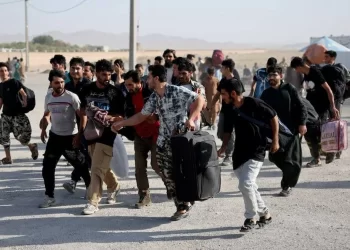
Afghan refugees carry their belongings as they move through a border crossing (Photo: REUTERS)
Afghanistan News

Taliban: More Than 100 Afghan Migrant Families Return to the Country

11 October 2026 [t_time:1791709281]
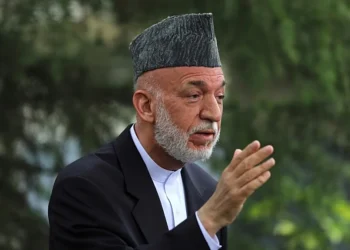
Hamid Karzai – Former President of Afghanistan (Photo: AP)
Afghanistan News

International Day of the Girl: Karzai Calls for Schools and Universities to Reopen to Girls

11 October 2026 [t_time:1791708573]
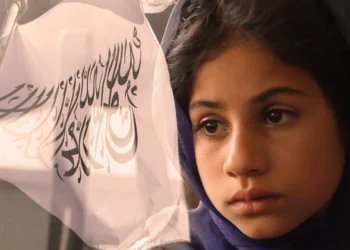
A young Afghan girl looks on with a serious expression, with the Taliban flag visible beside her (Photo: CNN)
Afghanistan News

International Day of the Girl: Millions of Girls Under Taliban Rule Deprived of Their Fundamental Rights

11 October 2026 [t_time:1791701671]

Latest

Loading latest news...

Popular stories

  • An Afghan woman gazes out of her home, reflecting the isolation and challenges faced by women in Afghanistan under Taliban rule. (Photo Credit: 8am.media)

    UN Report Reveals Shifts in Family Attitudes and Rise in Domestic Violence in Afghanistan

    Share
    Share Tweet
  • Pakistan and the Yemen War: Balancing Between Riyadh and Tehran

    Share
    Share Tweet
  • Iraq Reports Export of Two Million Barrels of Crude Oil Through Strait of Hormuz

    Share
    Share Tweet
  • Al-Qaeda Releases Hamza bin Laden Message on 9/11 Anniversary

    Share
    Share Tweet
  • Taliban Shoot Young Man from Herat After Torturing Him with Hands Tied

    Share
    Share Tweet

Podcast

Insights
Insights

Join Lynne O’Donnell for 8AM’s podcast series, Insights.
Lynne talks with generals, diplomats, soldiers, journalists, politicians, activists, people who have front row seats for conflicts around the world, and citizens with a story to tell, happy or sad. For this first series, Afghanistan is the focus. Lynne and her guests talk about the collapse of the republic in August, 2021, and the impact since — for the people of Afghanistan, for the security of the region, for the safety of the world. It’s important, interesting and insightful.

Insights/22: Controlling the Narrative with Mina Sharif
byinsights8am

Controlling the Narrative

Lynne O’Donnell talks with Mina Sharif, author, activist, women’s rights campaigner, educator and mentor. They discuss who controls the narrative and who speaks for Afghanistan’s people when the Taliban appear to have seized control not only of the country but of the message, too.

Have a listen

Insights/22: Controlling the Narrative with Mina Sharif
Episode play icon
Insights/22: Controlling the Narrative with Mina Sharif
Episode Description
Episode play icon
Insights/21: Media Meltdown with Zahra Joya
Episode Description
Episode play icon
Insights/20: Terror Inc with Scott Richards
Episode Description
Episode play icon
Insights/19: Busting Stereotypes with Bushra Gohar
Episode Description
Episode play icon
Insights/18: Media Matters with Waliullah Rahmani
Episode Description
Episode play icon
Insights/17: What Goes Around Comes Around with Sima Samar
Episode Description
Search Results placeholder
Hasht-e Subh

8AM Media, also known as Hasht-e-Subh Daily, stands as Afghanistan's premier independent and non-profit newspaper, resonating as a beacon of journalistic integrity since its establishment in June 2007 by esteemed Afghan journalists and human rights advocates. With a steadfast commitment to citizen journalism and civic education, Hasht-e-Subh Daily has earned its place as the most esteemed publication in the nation.

Publisher: Sanjar Sohail
Email: [email protected]
Executive Director: Parwiz Kawa
Email: [email protected]

Read More

Pakistan’s President Suspends Imran Khan’s Party-Led Provincial Government

Republican Lawmakers Seek to Challenge Trump’s Oil Deal with Putin

UN Emphasizes Girls’ Role in Afghanistan’s Future

Taliban: More Than 100 Afghan Migrant Families Return to the Country

International Day of the Girl: Karzai Calls for Schools and Universities to Reopen to Girls

Editor’s Choice

Every Saturday morning, 8AM MEDIA English Services Department will guide you through the week’s biggest stories from Afghanistan and the international community.

Subscribe

© 2026 - ©Hasht-e Subh Daily

No Result
View All Result
8am.Media
پښتو ویب‌پاڼه
ویب‌سایت فارسی
اۉزبېکچه ویب‌سایت
  • Home
  • News
    • Afghanistan News
    • World News
  • Opinion
    • Editorial
    • Analysis
  • Reports
    • Daily Reports
    • Investigative Reports
  • Society
    • The story of people
  • Women’s Word
  • Columns
    • Three Years After Afghanistan’s Fall: The Taliban’s Resurgence
    • Towards Equality
    • The Resurgence of the Taliban: Two Years Since Afghanistan’s Fall
    • Hebatullah Report Special Edition
    • Resistance for Education Special Edition
    • Special Column on Taliban’s Education Curriculum
    • Nawroz
  • Interviews
  • Contact Us
    • About Us
    • 8AM MEDIA Annual Awards
    • Submit an Article to Hasht-e-Subh
  • 8am.media

© 2026 - ©Hasht-e Subh Daily