• 8AM.MEDIA
  • ویب‌سایت فارسی
  • پښتو ویب‌پاڼه
  • اۉزبېکچه ویب‌سایت
  • Podcast
Tuesday, November 10, 2026
Hasht-e Subh
  • Home
  • News
    • Afghanistan News
    • World News
  • Opinion
    • Editorial
    • Analysis
  • Reports
    • Daily Reports
    • Investigative Reports
  • Society
    • The story of people
  • Women’s Word
  • Columns
    • Three Years After Afghanistan’s Fall: The Taliban’s Resurgence
    • Towards Equality
    • The Resurgence of the Taliban: Two Years Since Afghanistan’s Fall
    • Hebatullah Report Special Edition
    • Resistance for Education Special Edition
    • Special Column on Taliban’s Education Curriculum
    • Nawroz
  • Interviews
  • Contact Us
    • About Us
    • 8AM MEDIA Annual Awards
    • Submit an Article to Hasht-e-Subh
  • 8am.mediaBack
Subscribe
No Result
View All Result
  • Home
  • News
    • Afghanistan News
    • World News
  • Opinion
    • Editorial
    • Analysis
  • Reports
    • Daily Reports
    • Investigative Reports
  • Society
    • The story of people
  • Women’s Word
  • Columns
    • Three Years After Afghanistan’s Fall: The Taliban’s Resurgence
    • Towards Equality
    • The Resurgence of the Taliban: Two Years Since Afghanistan’s Fall
    • Hebatullah Report Special Edition
    • Resistance for Education Special Edition
    • Special Column on Taliban’s Education Curriculum
    • Nawroz
  • Interviews
  • Contact Us
    • About Us
    • 8AM MEDIA Annual Awards
    • Submit an Article to Hasht-e-Subh
  • 8am.mediaBack
No Result
View All Result
Hasht-e Subh
No Result
View All Result

No Towers, Weak Internet: Badakhshan’s Border Residents Deprived of Basic Communication

Translated by Farhad Farhaad | Originally reported in Persian by Adrina Behzad

Mohammad Farhaad Mohammad Farhaad
10 November 2026 - Solar Hijri Date: 1405/08/19 [t_time:1794297019]
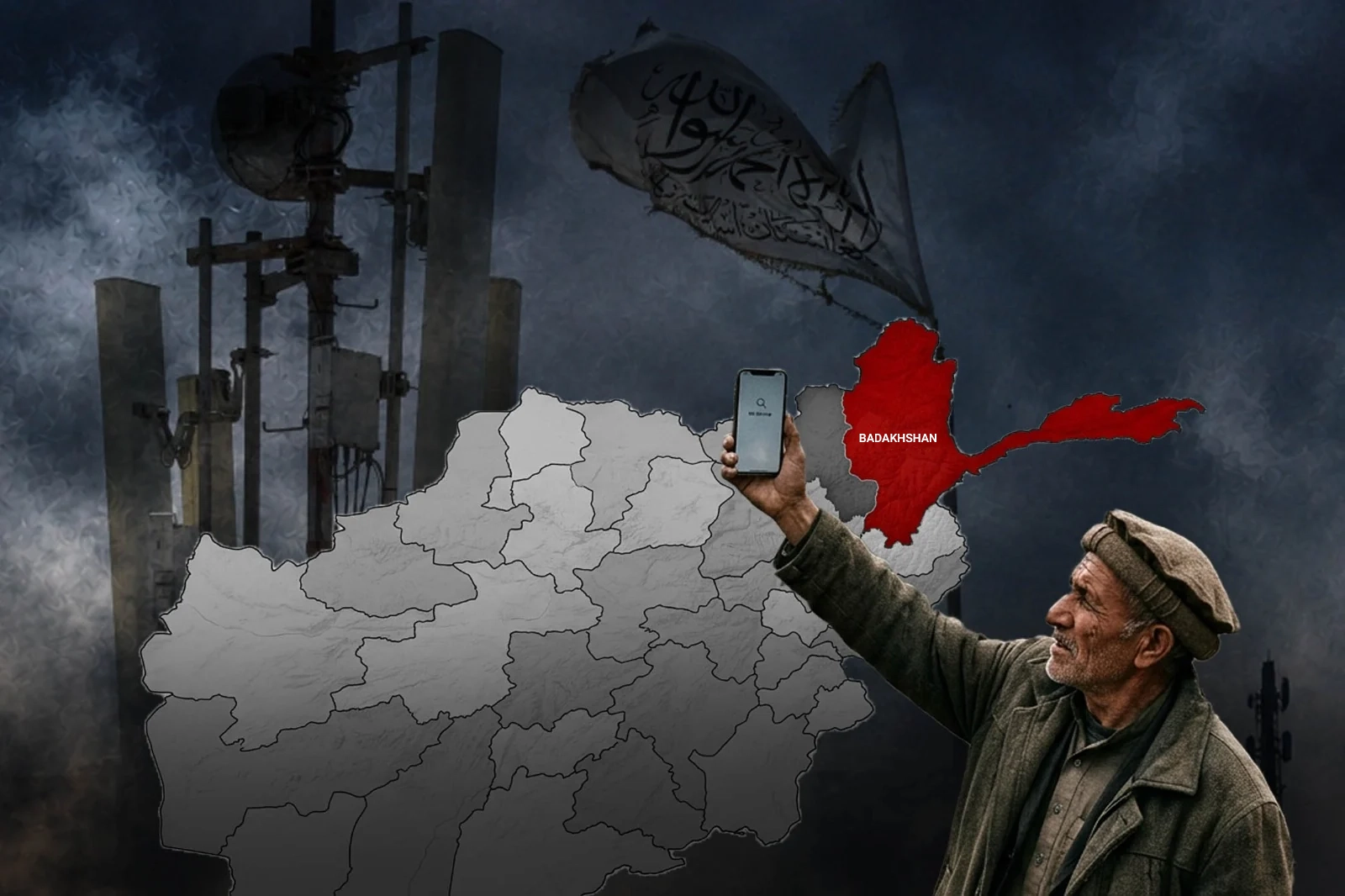
A man holds up his phone in search of a signal beside a map of Badakhshan, with a telecom tower and a Taliban flag in the background, as border residents struggle with weak internet. (Photo credit: AFP + AI + Magnific)

AFP + AI + Magnific

A number of residents of Badakhshan Province have complained about poor internet services and disruptions to telecommunications SIM cards in several of the province’s districts. They say that limited and irregular access to the internet and telecommunications services has created serious difficulties for people’s daily lives and economic activities.

Speaking to the Hasht-e Subh Daily, the residents say that telecommunications problems, particularly in the remote districts of Badakhshan, have affected the lives of employed people, traders, and others, making daily communication and the conduct of their work difficult.

According to them, residents of the five districts of Darwaz have been forced, due to a lack of access to telecommunications services, to buy Tajikistani SIM cards at very high prices, even up to 20,000 Afghanis. They add that the internet packages for these SIM cards are also very expensive, placing a greater financial burden on families and traders.

Nawid (pseudonym), a resident of Badakhshan Province, complains about the sluggishness of telecommunications services. He says that even in the provincial capital, the internet and the services of telecommunications companies do not function properly, and that residents of many districts of Badakhshan face serious problems in accessing the internet and telecommunications services. According to him, residents of the province cannot easily communicate with friends and family members abroad, and they are forced to travel long routes for hours to reach the city, the hills, or the mountains, from where they can contact their families.

This Badakhshan resident says: “Residents of the five districts of Darwaz buy Tajikistani SIM cards from the joint market at an extremely exorbitant price, around 15,000 to 20,000 Afghanis, and use the internet of that country. Besides buying the SIM cards at a high price, the internet packages are also very costly for them.”

Nawid adds: “Even in the center of Badakhshan, the internet and telecommunications SIM cards do not work properly most of the time. Even when the internet is active, it can only be used for WhatsApp and Facebook. But for other tasks, such as setting up and filling out forms, uploading files, downloading software, searching on Google, downloading videos, and using YouTube, the internet is practically unresponsive. Our request to the Taliban officials is to resolve the problems with the internet and SIM card services so that this fundamental problem of the people is solved.”

Taqwa (pseudonym), another resident of Badakhshan Province, says that weak internet and the inefficiency of telecommunications services, particularly in remote areas of the province, are considered one of the serious problems facing the residents of Badakhshan. According to him, in some cases the internet speed drops so low that even opening a simple web page is difficult. Likewise, in a number of areas, phone calls do not connect properly, and residents have to try repeatedly to make a call lasting just a few minutes.

This Badakhshan resident says: “Unfortunately, the residents of several areas in Badakhshan are still deprived of the most basic telecommunications services. It is truly regrettable that in the age of technology and the ever-growing expansion of communications, a young person in Badakhshan should be deprived of educational opportunities, access to information, and equal chances for advancement because of the lack of quality internet. The people of Badakhshan are not demanding a special privilege. They only want to have access to quality internet and standard telecommunications services like other citizens of the country. This demand is not an extra privilege, but a fundamental right of the residents of this province.”

Jawid (pseudonym), a resident of Raghistan District in Badakhshan Province, also complains about widespread telecommunications problems and poor internet services in this district. According to him, currently only the Afghan Wireless Communication Company (AWCC) network is active in this district, but even this network is cut off most of the time, for no clear reason, for long periods, even three to four consecutive days. This situation has created serious problems for residents, particularly for employed people and traders, and has disrupted their economic activities and daily communications.

This Badakhshan resident says: “It has been about three years since I have been working as a money exchanger in Raghistan District of Badakhshan, and during this time I have constantly faced serious telecommunications and internet problems. In this district, only the AWCC network SIM card is usable, but even this network is sometimes cut off for three to four consecutive days without any clear reason. This situation has created many problems for me and disrupts my communications and my commercial and economic activities. On the other hand, the internet speed is also very low and is practically unusable for most of the day.”

Yasir (pseudonym), a resident of Badakhshan Province and a student at Kabul University, says that whenever he returns to Badakhshan during winter vacations or other holidays, he cannot even communicate properly with his classmates and university friends because of the lack of internet and disruptions in the telecommunications network, which has made following his coursework and exchanging information difficult for him.

This student says: “Despite several telecommunications networks operating in the country, only one network is usable in the area where we live, and even that one, most of the time, is unable to provide services and make calls due to technical problems. In several areas of Badakhshan, none of the telecommunications networks have coverage, and the residents of these areas face serious problems in establishing communication and accessing the internet.”

This student calls on telecommunications companies and the relevant Taliban officials to take action to expand network coverage and provide quality internet in the deprived areas of Badakhshan.

This comes as a number of residents of Kabul city had recently also complained about the poor quality of internet services in the city. They had said that they use the internet services of Afghan Telecom, but the internet speed is very low and the connection drops and reconnects more than ten times within an hour. According to them, this situation has slowed down and reduced the quality of their online work, and the pressure and stress resulting from it have made their lives more difficult.

Last year, on the order of Hibatullah Akhundzada, the group’s supreme leader, the Taliban cut off fiber-optic internet and claimed that the move was carried out “to prevent moral corruption.” Under this order, all telecommunications services in Afghanistan had been completely shut down for 48 hours.


You can read the Persian version of this report here:
انترنت ضعیف و نبود پایه‌های مخابراتی؛ باشنده‌گان مناطق مرزی بدخشان از ابتدایی‌ترین خدمات ارتباطی محرومند

ShareTweetSendSendShare

Related Posts

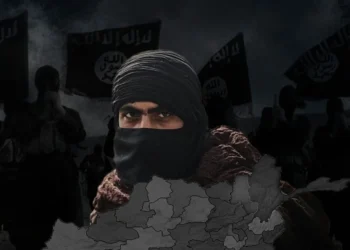
A masked militant stands before black ISIS flags and a map of Afghanistan in an illustration on the ISIS-Khorasan threat. (Photo credit: Social Media
Analysis

ISIS-Khorasan: A Real Threat to the People of Afghanistan and a Political Opportunity for the Taliban

10 November 2026 [t_time:1794292718]
Takhar province highlighted red in Afghanistan map
Afghanistan News

Explosion of Unexploded Ordnance in Takhar Kills One and Injures Another

9 November 2026 [t_time:1794248248]
Children participate in an educational and recreational activity at a child-friendly learning center supported by UNICEF and ADWSO (Photo: UNICEF)
Afghanistan News

UNICEF: Child-Friendly Spaces Help Children Learn and Develop

9 November 2026 [t_time:1794241247]

Latest

Loading latest news...

Popular stories

  • Iranian Foreign Minister Seyed Abbas Araghchi speaks during a public appearance (Photo: Farsnews)

    Araghchi Warns: US Must Choose Between Accepting Iran’s Proposal and Continuing the War

    Share
    Share Tweet
  • Obama After Democratic Gains: Americans Want an End to Division

    Share
    Share Tweet
  • Trump Says He Is Ready to Be “Mr. Veto” if Democrats Win Congress

    Share
    Share Tweet
  • UN Report Reveals Shifts in Family Attitudes and Rise in Domestic Violence in Afghanistan

    Share
    Share Tweet
  • UAE Official: Risk of War Between US and Iran Remains

    Share
    Share Tweet

Podcast

Insights
Insights

Join Lynne O’Donnell for 8AM’s podcast series, Insights.
Lynne talks with generals, diplomats, soldiers, journalists, politicians, activists, people who have front row seats for conflicts around the world, and citizens with a story to tell, happy or sad. For this first series, Afghanistan is the focus. Lynne and her guests talk about the collapse of the republic in August, 2021, and the impact since — for the people of Afghanistan, for the security of the region, for the safety of the world. It’s important, interesting and insightful.

Insights/22: Controlling the Narrative with Mina Sharif
byinsights8am

Controlling the Narrative

Lynne O’Donnell talks with Mina Sharif, author, activist, women’s rights campaigner, educator and mentor. They discuss who controls the narrative and who speaks for Afghanistan’s people when the Taliban appear to have seized control not only of the country but of the message, too.

Have a listen

Insights/22: Controlling the Narrative with Mina Sharif
Episode play icon
Insights/22: Controlling the Narrative with Mina Sharif
Episode Description
Episode play icon
Insights/21: Media Meltdown with Zahra Joya
Episode Description
Episode play icon
Insights/20: Terror Inc with Scott Richards
Episode Description
Episode play icon
Insights/19: Busting Stereotypes with Bushra Gohar
Episode Description
Episode play icon
Insights/18: Media Matters with Waliullah Rahmani
Episode Description
Episode play icon
Insights/17: What Goes Around Comes Around with Sima Samar
Episode Description
Search Results placeholder
Hasht-e Subh

8AM Media, also known as Hasht-e-Subh Daily, stands as Afghanistan's premier independent and non-profit newspaper, resonating as a beacon of journalistic integrity since its establishment in June 2007 by esteemed Afghan journalists and human rights advocates. With a steadfast commitment to citizen journalism and civic education, Hasht-e-Subh Daily has earned its place as the most esteemed publication in the nation.

Publisher: Sanjar Sohail
Email: [email protected]
Executive Director: Parwiz Kawa
Email: [email protected]

Read More

No Towers, Weak Internet: Badakhshan’s Border Residents Deprived of Basic Communication

US Withdraws Military Aircraft from UK Following Iran Threat

ISIS-Khorasan: A Real Threat to the People of Afghanistan and a Political Opportunity for the Taliban

Germany Condemns Cyberattacks Attributed to Iran in France

Closure of 700 Health Centers in Afghanistan Leaves People Stranded Between Illness and No Care

Editor’s Choice

Every Saturday morning, 8AM MEDIA English Services Department will guide you through the week’s biggest stories from Afghanistan and the international community.

Subscribe

© 2026 - ©Hasht-e Subh Daily

No Result
View All Result
8am.Media
پښتو ویب‌پاڼه
ویب‌سایت فارسی
اۉزبېکچه ویب‌سایت
  • Home
  • News
    • Afghanistan News
    • World News
  • Opinion
    • Editorial
    • Analysis
  • Reports
    • Daily Reports
    • Investigative Reports
  • Society
    • The story of people
  • Women’s Word
  • Columns
    • Three Years After Afghanistan’s Fall: The Taliban’s Resurgence
    • Towards Equality
    • The Resurgence of the Taliban: Two Years Since Afghanistan’s Fall
    • Hebatullah Report Special Edition
    • Resistance for Education Special Edition
    • Special Column on Taliban’s Education Curriculum
    • Nawroz
  • Interviews
  • Contact Us
    • About Us
    • 8AM MEDIA Annual Awards
    • Submit an Article to Hasht-e-Subh
  • 8am.media

© 2026 - ©Hasht-e Subh Daily