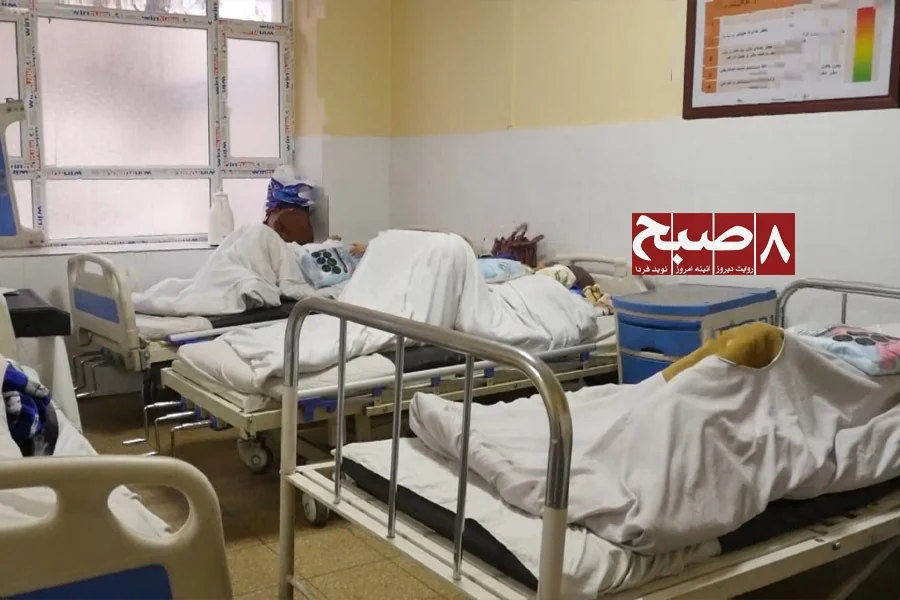
Following the announcement by the United Nations that more than 700 health centers in Afghanistan have been closed, concerns have grown over the impact on people’s access to medical services. Several citizens say the health centers still operating also face shortages of medicine, doctors, and treatment facilities. They add that in many areas, these centers are the only option people have for receiving health services. They say the closure of these centers makes it harder for low-income families to access medical care and forces patients to travel to farther centers for treatment.
Citizens are calling on the responsible institutions and aid organizations to consider an urgent solution to prevent the suspension of medical services in different areas.
Shakib, a resident of Ghazni, says the closure of health centers in the country is worrying. He says that even now, many families cannot afford treatment at private hospitals and depend on centers near their homes for common illnesses and children’s vaccinations. According to Shakib, the closure of these centers further limits access to health services for low-income families, particularly pregnant women, children, the elderly, and patients who need regular treatment.
Shakib says: “If the health center near our home is closed, we will have to travel to farther areas for treatment and pay for car fares. Sometimes a patient needs urgent treatment, and transferring them to a more distant center takes a lot of time. On the other hand, paying for transport, examinations, and medicine is difficult for families with low incomes. For this reason, some families may delay seeing a doctor because they have no money.”
Omar, a resident of Ghor, says that in many villages of the province, people depend on a limited number of health centers for medical services. He warns that closing these centers would deprive patients of access to medical care and make it difficult to attend to those who need urgent treatment.
This young man from Ghor says: “I am very worried, because most people cannot afford the cost of travel and treatment at distant centers. If the health centers are closed, many patients will not be able to see a doctor in time and may be left without treatment. This situation is especially dangerous for women, children, the elderly, and patients who need continuous treatment, and it can even endanger patients’ lives.”
Eshwa, a resident of Panjshir, says that the health center near their home is the only option for receiving medical services, despite a lack of equipment and diagnostic facilities. She adds that going to more distant health centers imposes transport and medicine costs on families.
This young woman says: “We have many problems in the health sector, and our only hope is this health center near our village. Although this center does not have sufficient facilities, including an ultrasound machine, we can at least go there for common illnesses. Just yesterday, my mother, my cousin, and I were sick and went to Rokha for a checkup. The transport fare for just my cousin and me came to 800 Afghanis, and we spent about 1,000 Afghanis on medicine. The road was also very long, and we got tired. If the health center in our village is also closed, we will no longer have access to medical services.”
Najib, a resident of Kabul, says that the closure of health centers on the eve of winter limits patients’ access to medical services at a time when people’s need for these services increases. He adds that as the weather gets colder, seasonal illnesses increase and the elderly need more health care. According to Najib, the shutdown of health centers under such conditions makes it harder to attend to patients and may delay the treatment of some of them.
This Kabul resident says: “This news is very worrying, because people across Afghanistan, especially in remote areas, need health centers. In many areas, the number of these centers is small, and even the existing centers do not have enough medicine. As winter approaches, seasonal illnesses increase, and the elderly are more exposed to disease. Every year, several people, especially the elderly, lose their lives due to winter illnesses. If the existing health centers are also closed, people’s problems will increase.”
Meanwhile, several doctors say that the closure of more than 700 health centers in Afghanistan has serious consequences for public health and limits access to medical services for people, particularly pregnant women, children, the elderly, and patients with chronic diseases. They warn that the suspension of these centers’ activities could disrupt children’s vaccination programs and prenatal care, and hinder the timely diagnosis and treatment of diseases.
Hamed Wardak, a doctor in the country, says that the closure of health centers limits access to basic medical services for millions of people and leads to higher treatment costs, delays in diagnosing diseases, and late arrival of patients at hospitals. He adds that pregnant women, children, the elderly, and patients with chronic diseases are among the groups most harmed by the closure of these centers.
Mr. Wardak says: “The closure of these centers does not only mean limiting people’s access to medical services; it can also put the public health of society at serious risk. Women who need prenatal care and emergency obstetric services, children who need vaccination, and elderly people living with chronic diseases are among the groups that will be harmed the most. Especially in remote areas, long distances and travel costs can prevent patients from seeking timely care.”
The doctor adds: “With the closure of these centers, children’s vaccination may decline, and the diagnosis and treatment of diseases such as measles, tuberculosis, malaria, and malnutrition may be delayed. Likewise, complications of pregnancy and childbirth that require urgent attention may not be diagnosed and treated in time. For this reason, the possibility of an increase in maternal and child deaths is serious, and action must be taken to secure financial resources, reopen the centers, and support health workers.”
These concerns are being raised as Bruno Lemarquis, Deputy Special Representative of the UN Secretary-General in Afghanistan, had earlier announced that more than 700 health centers in Afghanistan were closed in 2025 and 2026 due to a decline in international aid.
Similarly, Hanan Balkhy, Regional Director of the World Health Organization (WHO), has announced that since the beginning of 2026, about 150 health centers in Afghanistan have been shut down or had their activities suspended due to a lack of funding.
You can read the Persian version of this report here:
بستهشدن ۷۰۰ مرکز صحی؛ مردم میان بیماری و بیدرمانی درماندهاند