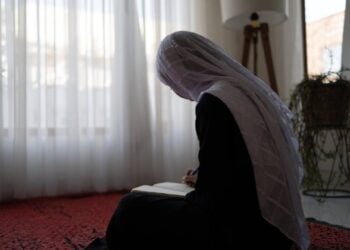
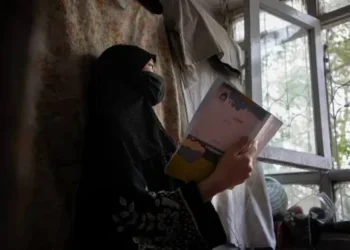
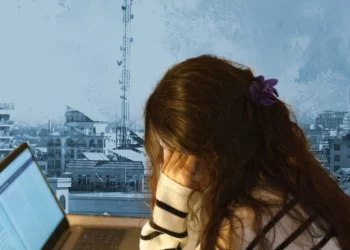
Girls in Kabul who have been denied education say they have turned to learning English to circumvent the Taliban’s restrictions, hoping to find a way to continue their studies abroad. They state that they no longer have hope for the reopening of schools and universities and view learning English as an effort to fill the educational void imposed by the Taliban. According to these girls, online education, while the only remaining option, comes with challenges such as high internet costs, poor service quality, and expensive course fees.
Some girls say that in the current situation, they have no choice but to focus on learning English. They believe that if the Taliban had any intention of reopening schools and universities, there has been ample time to do so over the past nearly four years. These girls emphasize that if suitable educational opportunities become available in neighboring countries, they would leave Afghanistan without hesitation to pursue their studies.
Mahtab Hussaini, a 20-year-old who is now preparing for the TOEFL exam, was previously a political science student. After universities were closed, she was confined to her home, but has not lost her spirit. With hopes of studying abroad, she has turned to learning English. She says, “At first, everything seemed bleak. But when I saw a few close friends studying English, I thought to myself: maybe this is the only way out. Now, English feels like a ladder I want to climb to overcome these restrictions.”
Mahtab adds that she pays for her online language course with money earned from home-based tailoring. Alongside learning English, she studies social sciences and international relations through YouTube channels and platforms like Coursera and EdX.
Sadaf Taheri, another girl denied education, says the Taliban’s restrictions have forced her to learn English to pursue her studies. She adds, “When I saw people traveling abroad for medical treatment, I became interested in studying medicine, but with the Taliban’s takeover of Afghanistan, that dream was taken from me.”
Sadaf considers online education the only lifeline for girls deprived of their right to education. She says, “Although online education wasn’t my choice, it’s the only option that can bring me closer to my dreams. My main goal in learning English is to continue my education in the future and perhaps leave Afghanistan one day. I dream of studying at an international university and advancing.”
Sutoda, who has been unable to continue her education beyond the tenth grade due to the Taliban’s ban, sees online education as the only way to continue learning and build a brighter future for herself and other girls. She says online education has become a beacon of hope for her, a path that can partially fill the gap left by schools and universities and bring her closer to her aspirations.
Sutoda says, “Online education is a valuable opportunity for girls in Afghanistan. When we can’t go to school or university, this method allows us to study from home, progress, and move toward independence and literacy.”
With restrictions imposed on girls’ education, several institutions and educational centers have launched online learning programs for girls barred from attending school. These programs aim to fill the educational gap and provide opportunities for girls to continue learning from home.
The European Organization is one such institution, offering online language courses in 12 different languages to 1,000 to 1,500 women in Afghanistan who have been denied education due to Taliban restrictions. In collaboration with international partners, these courses are designed to empower women and equip them with the skills and knowledge needed for a better future.
The “Victory Afghanistan” organization, founded in 2023 by four women in Chicago, provides English language education at five different levels to over 1,000 women and girls in Afghanistan. This organization aims to create equal educational opportunities and uses online platforms to bypass the Taliban’s restrictions, fostering growth and empowerment for women.
The closure of schools to girls has now reached its 1,363rd day.
According to a UNESCO report, Afghanistan is among the top 10 countries with the highest number of girls deprived of education, with approximately 75 percent of girls in the country unable to access schooling.
The United Nations Children’s Fund (UNICEF) has warned in a report that around 400,000 additional girls in Afghanistan have been deprived of their right to education. According to the agency’s statistics, the total number of girls unable to attend school due to restrictions has now exceeded 2.2 million.
UNICEF stated that currently, one in three children in Afghanistan is denied access to school, with 60 percent of these children being girls.
You can read the Persian version of this report here:
نردبان زبان؛ امیدی که دختران را از دیوار ممنوعیت بالا میبرد