
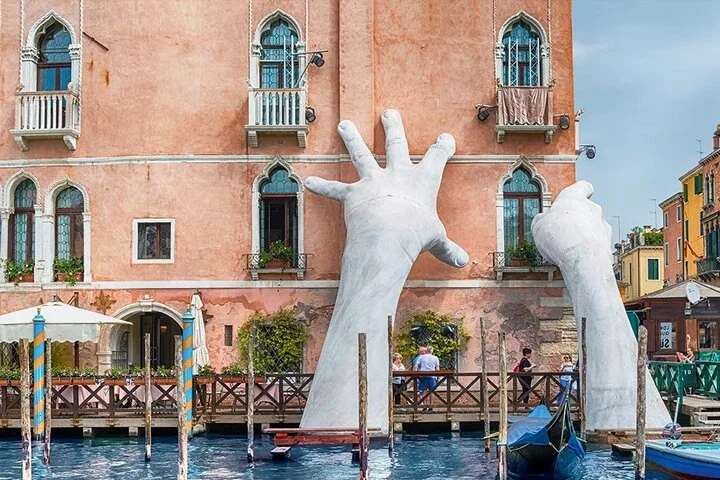
The Artistic Freedom Initiative (AFI) and the Initiative for Artistic Freedom (ILA) have announced that they will launch a campaign to establish the “Afghanistan Pavilion 2028” at the Venice Biennale, an initiative aimed at creating an opportunity for the participation and representation of artists from Afghanistan at the major international art event.
According to a statement by the organizations, the campaign will be officially launched on Friday, October 9, in Venice, Italy, with the participation of a number of artists from Afghanistan, as well as cultural and human rights activists.
The statement said the pavilion is intended to be organized by artists and Afghanistan’s cultural community rather than being represented by a government institution. It will include artists from Afghanistan living abroad and, where possible, artists inside Afghanistan as well.
The initiative has been developed in response to increasing restrictions on artists from Afghanistan.
According to the organizers, artists from Afghanistan under Taliban rule face restrictions, harassment and displacement, and there is no legitimate state institution to represent the country’s independent artistic community.
The October 9 meeting is expected to mark the beginning of a two-year process to establish the structure, define the artistic vision and mobilize support for Afghanistan’s participation in the 2028 Venice Biennale.
The program will be attended by several cultural and human rights figures, including Lisa Ahmadi, curator, writer and director of the Association of Contemporary Art of Asia; Richard Bennett, United Nations Special Rapporteur on the situation of human rights in Afghanistan; Jano Ghousi, a visual artist from Afghanistan; Yama Rahimi, an artist from Afghanistan; the curator and executive director of the Boom-e Azadi initiative; and Jonathan Watkins, an independent curator and writer.
The Venice Biennale, or Biennale di Venezia, is an exhibition of contemporary art held every two years in Venice, Italy.
The Venice Biennale was established in 1895 to present new art from around the world. Over time, the idea developed that each country could express its artistic identity by establishing a dedicated pavilion.