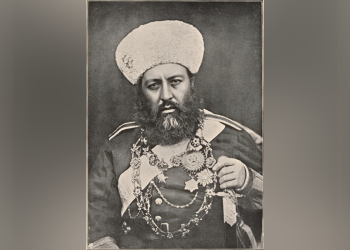
The culture of cronyism in Afghanistan’s bureaucracy has a long history. One of the challenges of governance in Afghanistan at various times has been cronyism as part of the political culture. This situation has caused government offices, even at the lowest levels, to change in sync with changes at the top of the government. In Afghanistan, what is called the culture of “rotating kings” has often led to changes in the regime, not just the government. Especially after the reign of Mohammad Zahir Shah, the fall of a government has often meant the fall of the regime, with few exceptions. Whenever a new regime comes to power, the new rulers try to place more of their cronies and friends in government offices to gain their support for the stability and consolidation of their rule. They have even made changes in very small administrative units to place their cronies, though this ultimately led to the downfall of their governments, as the rulers lost public support in their quest to gain the backing of their cronies and eventually faced the wrath of society. During the presidency of Mohammad Ashraf Ghani, certain individuals, including the President himself, the head of the Presidential Administration, and his National Security Advisors in both terms, were accused of cronyism. This improper culture has existed in various political systems in Afghanistan, though not always at the same level. The Taliban, in their two periods of rule, have shown that cronyism has become the dominant and ruling culture in their governance. No system has been as committed to cronyism as the Taliban’s regime. In this respect, the Taliban’s “Emirate” has imposed the worst conditions on government offices.
Cronyism in the Taliban’s regime is openly practiced. When hiring, it has become a principle that the Taliban prioritize a Taliban member or their “crony” among the candidates for an administrative post. Within the Taliban group itself, cronyism among different factions maintains their relationships and determines their level of interaction. Even if someone is transferred from one post to another within the same faction, they gather their cronies from the previous office and take them to the new one. The person replacing them also brings their cronies to the office. This situation, due to the frequent transfers in the Taliban regime, is a significant obstacle to providing services and advancing routine administrative matters. In the Taliban regime, professional qualifications and expertise do not matter, and it is easy for a war commander to be appointed as the Minister of Public Health, as recently, Mullah Hibatullah appointed his deputy from the Ministry of Interior as the Minister of Public Health.
In these transfers and the movement of cronies, bureaucracy is severely damaged, and the process of providing services is disrupted. Whoever has the power to move cronies to a new office certainly heads that office and holds significant authority. Their associates and cronies also gain authority alongside them. This is even though they may not only lack the relevant education and training for those administrative positions but also have no practical experience. For instance, if the Taliban’s Deputy Minister of Interior is appointed as the Minister of Public Health, he will take his cronies to the Ministry of Public Health and give them authority. These individuals, who know nothing about the services of the new office and due to their compound ignorance, prevent the distribution of authority to others, are unable to provide services and maintain the bureaucratic cycle. In such a situation, even the already disorderly service provision is completely halted or disrupted. Let’s look at Mullah Hibatullah’s decrees regarding the transfer of the group’s officials. We notice that in most cases, an official is removed from one post and appointed to another, and their place is filled by someone transferred from another post; meaning each of them has their cronies in the office they work in and takes them along during transfers.
Since the primary principle in the Taliban’s hiring process is the culture of cronyism, offices gradually turn into the domains of a single official’s cronies. While they have eliminated the process of taking exams and holding competitions for government posts, they have free rein to appoint their friends through decrees. This issue is so acute that even Taliban leaders have repeatedly urged their officials to avoid cronyism in hiring, a plea that has never been taken seriously by the group’s officials. For instance, Mullah Hibatullah Akhundzada, the Taliban leader, issued a decree on March 18, 2023, instructing Taliban officials to refrain from hiring their relatives and friends in the offices under their control and to dismiss the sons of officials who had been appointed in the offices managed by their fathers. However, reports indicate that this decree was not implemented by the group’s ministers and other officials. A year after the issuance of Mullah Hibatullah’s decree, the media published a list of family members of Taliban officials hired in the offices under their management. According to media reports, for example, Sirajuddin Haqqani has his uncle as the Minister of Refugees, his other uncle as the Deputy Minister of Defense, his brother Anas Haqqani as a member of the Commission for Contact with Afghan Personalities, and his other brother Hafiz Aziz Haqqani as his special secretary in the Ministry of Interior. Similarly, Amir Khan Muttaqi appointed his brother Mohammad Nabi Muttaqi as his special secretary in the Ministry of Foreign Affairs. His other brothers and relatives are also appointed to various posts outside the Ministry of Foreign Affairs. For instance, Ahmadullah Muttaqi, his brother, is the head of the Taliban’s Information and Culture in Herat, Amanullah Afghan, his other brother, is a member of the Taliban’s Cultural Commission, and Abdullah Muttaqi, his fourth brother, is the head of the Riyaz-ul-Uloom Madrasa in Shash Darak, Kabul. The list published by the media shows that this situation prevails in all offices under Taliban control, and the group’s officials have hired all their male relatives and given them high and important positions.
The vast majority of these individuals lack proper education and academic qualifications. Even if a small percentage of them are educated, their professional qualifications and fields of study are not considered during their hiring and transfer. This situation, as it previously caused instability in the bureaucracy and disruption in service provision, now disrupts service delivery even more severely. It should also be noted that the Taliban do not initially consider service provision as an obligation of the ruling apparatus, and if they provide services someday, they offer it as a favor to the people.
You can read the Persian version of this analysis here:
اندیوالسالاری؛ فرهنگ مسلط بر حکومتداری طالبانی | روزنامه ۸صبح