The International Crisis Group, in its latest report, has expressed concern over the reduction of humanitarian aid to Afghanistan. According to the report, the United States and other major donors are scaling back their support to the country. It warns that the decline in international funding will have severe consequences for the most vulnerable segments of society, particularly women and girls. The report further cautions that the withdrawal of humanitarian organizations could increase the risk of greater instability in the region. The ongoing economic recession may also force many citizens of Afghanistan to migrate, including to Europe. The organization notes that the reduction in international aid and the indifference of global powers toward Afghanistan’s situation heighten the risks of terrorism and migration waves.
The International Crisis Group released its new report on Thursday, October 2, 2025. The report expresses concern over the growing poverty and economic crisis in Afghanistan and stresses that the Taliban have failed to manage these crises.
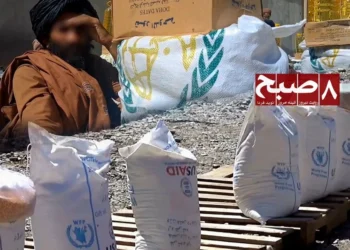
According to the report, Afghanistan is sinking deeper into poverty due to the reduction of humanitarian assistance from major donors, especially the United States. The organization recalled that emergency aid peaked at $3.8 billion in 2022, playing a critical role in stabilizing the national currency and preventing famine.
However, donor fatigue has caused these supports to decline — a reduction that intensified following Donald Trump’s decision to halt U.S. aid programs in early 2025. As a result, the financial pressure on humanitarian organizations has grown, and the provision of necessities for the people of Afghanistan now faces serious challenges.
The report also emphasizes that European and neighboring countries of Afghanistan should seek strategies to reduce the country’s dependency on foreign aid and help strengthen domestic capacities to achieve self-reliance.
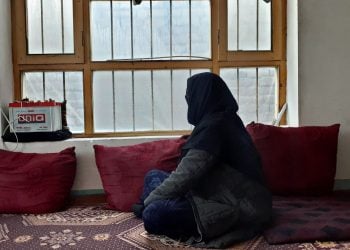
According to the report, the decrease in global aid and the departure of international relief institutions have placed a heavy burden on vulnerable citizens, especially women and girls. The International Crisis Group stresses that as long as the Taliban do not show flexibility on issues such as women’s rights, Afghanistan’s economic situation will continue to deteriorate.
The report adds that after the Taliban failed to fulfill their promise to reopen girls’ schools in 2022, the international community adopted a tougher stance toward the group, which negatively affected the flow of international assistance.
The organization also referred to reports of “aid diversion,” noting that Western countries are suspicious of those receiving aid inside Afghanistan. In private meetings, some donors have accused UN and NGO staff of “sympathizing with the Taliban,” which has undermined confidence in the aid distribution process.
The report further reveals a lack of transparency in the Taliban’s budget, emphasizing that there is no reliable information about their sources of income or how funds are allocated. The International Crisis Group adds that Taliban officials in Kabul are facing serious difficulties in designing and implementing economic programs due to the complete revision of laws and regulations from previous governments by religious scholars to align them with Islamic principles.
According to the report, foreign donors view the lack of transparency and accountability as one of the main obstacles to cooperation with the Taliban. Nevertheless, the Taliban have mocked international requests for reforms and shown no willingness to alter their policies or practices.
The report also discloses that in late 2024, the Taliban seriously considered expelling all foreign non-governmental organizations from Afghanistan. This decision followed an increase in critical reports from the United Nations Assistance Mission in Afghanistan (UNAMA), and the Taliban even questioned the legitimacy of this international body’s role.
The Doha Process
Led by the United Nations, this process began after the UN Security Council adopted a resolution in March 2023 calling for a review of international engagement with Afghanistan, with a focus on economic growth and poverty reduction.
Subsequently, Feridun Sinirlioğlu, the UN Special Coordinator, released a report in November 2023 emphasizing the need to shift from purely political assistance to development-oriented aid. He called for the resumption of infrastructure projects, the reconstruction of Afghanistan’s central bank, and a focus on sustainable development.
However, despite persistent demands from international donors for changes in the Taliban’s policies regarding women’s rights, the Doha Process talks in 2024 and 2025 ended without a joint statement due to deep disagreements between the parties. This stalemate has further clouded and complicated international engagement with the Taliban.
Taliban’s Response
According to the International Crisis Group’s report, the Taliban claim they have a five-year development plan aimed at improving living standards and expanding economic relations with other countries. However, key sections of this plan — such as its emphasis on preserving religious values and enforcing Islamic rulings — appear more ideological than practical or economic.
The ambiguity of laws, lack of transparency, and unpredictable decision-making processes — largely influenced by the review of laws by Taliban clerics and sudden decrees from the group’s supreme leader in Kandahar — have created an atmosphere of mistrust and caused deep concern among domestic and foreign businesses and investors. This situation has severely limited Afghanistan’s ability to attract investment and achieve sustainable economic growth.
In response to criticisms about the lack of transparency, the Taliban attribute the issue to the absence of coherent legal frameworks. They insist that their accountability and transparency are owed only to the people of Afghanistan, not to the foreign governments they fought against until 2021.
According to the report, the Taliban allocate a large portion of their budget to security institutions. An estimate indicates that around 50 percent of their budget in the fiscal years 2022 and 2023 was dedicated to the security sector.
Despite the sharp decline in international aid, Afghanistan’s economy is expected to remain largely isolated from the global economy. Humanitarian operations are also likely to continue, but on a far smaller scale than before.
The International Crisis Group warns that inaction regarding Afghanistan poses serious risks — including increased instability, large-scale migration waves, and the potential weakening of the ban on opium cultivation and trafficking, one of the Taliban’s few controversial policies. The reduction in aid has already had painful consequences; in 2025 alone, at least 422 health centers have ceased operations, depriving more than three million people of medical services. Women, particularly in rural areas, have been the most affected.
The report notes that remittances from Afghan migrants increased to about $3.5 billion in 2024 — more than double the total international humanitarian assistance. Furthermore, the growth of informal and grey markets, in the absence of formal economic institutions, has served as a buffer against the complete collapse of Afghanistan’s economy.
In conclusion, the International Crisis Group recommends that economic support should be combined with a gradual and organized reduction of emergency aid. It stresses that negotiations must focus on job creation and entrepreneurial development, improving access to markets, and enhancing financial services to foster economic growth and stability in Afghanistan.
You can read the Persian version of this report here:
گزارش گروه بینالمللی بحران؛ رهایی مردم افغانستان در باتلاق فقر و تشدید بحران منطقهای