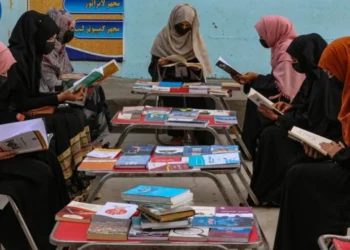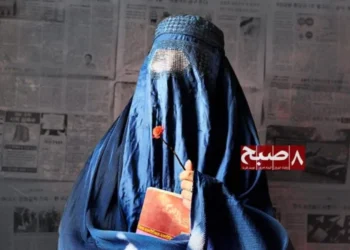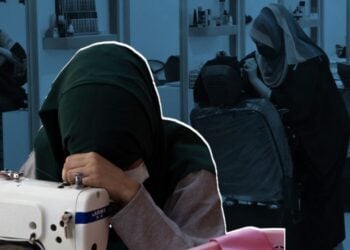

The struggle, efforts, and resistance of women under the most difficult circumstances have been among the most significant developments inside Afghanistan under Taliban rule. These efforts have kept Afghanistan in the world’s attention over the past five years and prevented the exclusion of half of society and violations of human rights from being forgotten. Women’s demands and their efforts to remain active and stand up under the most critical conditions have kept their names and voices alive, and some women continue to spare no effort in this cause. Despite restrictions and targeted actions by the Taliban, a number of women and girls continue their activities and seek to find light in the depths of darkness. Amina is one of these women. After the ban on education, she found different ways to continue learning and teaching. Today, she is a teacher and the head of an educational institution, carrying out this work despite numerous challenges and with hope.
Amina Amin was a journalism student at Kabul University who had worked tirelessly to gain admission to the faculty after traveling from Paktia province. She left one of Afghanistan’s underserved provinces in pursuit of an education, but her academic journey was cut short when the Taliban returned to power. Like the journeys of hundreds of female students, her pursuit of education was marked by many ups and downs. Under restrictions imposed on women’s education, she was expected to study only up to sixth grade. However, through determination, defiance, and perseverance, she managed to overcome these limitations, complete school, and travel hundreds of kilometers from her home province to Kabul to study journalism.
Amina describes the difficult journey that ultimately led to her success:
“I studied under circumstances where education for girls was not easy. Sometimes social restrictions and sometimes the attitudes of those around me made the path to education difficult. In my family, girls were also expected to study only up to sixth grade. Through a lot of struggle and hardship, I managed to complete school and enter university. I always tried to find a way to continue rather than give up, and I succeeded.”
She first fought for her right to education at home and later within a society that considered girls attending university inappropriate. Her tireless efforts eventually changed the attitudes of her family and relatives toward girls’ education. However, with the collapse of the republic and the return of the Taliban, years of struggle and effort came to a standstill, and her hopes were shattered.
“My success was not the result of one day or one decision. It was the result of years of effort, patience, and perseverance. I believed that difficult circumstances should not determine a person’s entire future. That is why, after graduating from school, I prepared for the university entrance exam. After taking the exam, I was admitted to Kabul University to study journalism in the communications department. This achievement was very important to me because it showed that my years of effort had not been in vain.”
Amina became a role model of determination and perseverance for other girls in her family and community, helping change attitudes toward girls’ education. After her, many girls in Paktia followed her path and continued their education. She recalls her early days at university:
“Going to university was one of the sweetest and most important moments of my life. I felt that I had taken a major step toward my dreams. To be admitted to university, I spent a lot of time studying. Despite the fatigue and difficulties, I tried to continue on my path.”
The Taliban’s takeover of Afghanistan and the prevailing anti-women environment brought Amina’s efforts to an end. As a student who had just begun moving toward success and personal growth, she was unable to complete her studies after universities were closed. She had hoped to study through a doctoral degree and eventually become a professor at Kabul University. However, her dream of teaching at the university became a major disappointment in her life.
She recalls the fall of the republic and the difficult days that followed:
“The takeover brought major changes to my life and the lives of many girls. The restrictions made me worried about continuing my education, working, and my future. One of the things that hurt me most was that I was in my final year of university and could not graduate. My biggest dream was to continue my studies through a master’s and doctoral degree and become a professor at Kabul University, but it did not happen. After that, I learned that a person must maintain hope even under the most difficult circumstances.”
After the takeover and the numerous restrictions imposed on women’s work, education, and freedom, Amina did not remain at home. Through determination and effort, she continued pursuing education. Over the past five years, she has studied German and also taught it to other girls. Alongside this, she has taught at private schools. After gaining experience, she now manages one of these private schools. This is a significant responsibility under the current circumstances and has made her one of the determined women challenging the Taliban’s strict restrictions.
She describes the challenges along this path:
“Within the existing circumstances, I tried to continue my educational activities. I used whatever means were available, including teaching, educational cooperation, and distance learning. My main goal was to continue education and help students so that I could contribute to a brighter future for the next generation. This path has been accompanied by many difficulties, and at times I have been emotionally and mentally exhausted. The support of my students and family helped me continue and not be afraid. Sometimes I feel extremely tired, but at the same time, I remind myself that my efforts can benefit the future of a generation. That is why I did not give up and continue.”
By taking on a management role at an educational institution and pursuing other activities, Amina has managed to overcome some of the restrictions and has strengthened her belief that effort, determination, and perseverance can produce results even under the most difficult circumstances. Despite the challenges, restrictions, family concerns, limited resources, and difficulties of managing an educational institution, she continues to challenge the prevailing conditions and the numerous restrictions imposed on women’s activities.