• 8AM.MEDIA
  • ویب‌سایت فارسی
  • پښتو ویب‌پاڼه
  • اۉزبېکچه ویب‌سایت
  • Podcast
Sunday, October 18, 2026
Hasht-e Subh
  • Home
  • News
    • Afghanistan News
    • World News
  • Opinion
    • Editorial
    • Analysis
  • Reports
    • Daily Reports
    • Investigative Reports
  • Society
    • The story of people
  • Women’s Word
  • Columns
    • Three Years After Afghanistan’s Fall: The Taliban’s Resurgence
    • Towards Equality
    • The Resurgence of the Taliban: Two Years Since Afghanistan’s Fall
    • Hebatullah Report Special Edition
    • Resistance for Education Special Edition
    • Special Column on Taliban’s Education Curriculum
    • Nawroz
  • Interviews
  • Contact Us
    • About Us
    • 8AM MEDIA Annual Awards
    • Submit an Article to Hasht-e-Subh
  • 8am.mediaBack
Subscribe
No Result
View All Result
  • Home
  • News
    • Afghanistan News
    • World News
  • Opinion
    • Editorial
    • Analysis
  • Reports
    • Daily Reports
    • Investigative Reports
  • Society
    • The story of people
  • Women’s Word
  • Columns
    • Three Years After Afghanistan’s Fall: The Taliban’s Resurgence
    • Towards Equality
    • The Resurgence of the Taliban: Two Years Since Afghanistan’s Fall
    • Hebatullah Report Special Edition
    • Resistance for Education Special Edition
    • Special Column on Taliban’s Education Curriculum
    • Nawroz
  • Interviews
  • Contact Us
    • About Us
    • 8AM MEDIA Annual Awards
    • Submit an Article to Hasht-e-Subh
  • 8am.mediaBack
No Result
View All Result
Hasht-e Subh
No Result
View All Result

Dialogue Phobia in Our Society

Nasrullah Nekfar Nasrullah Nekfar
8 May 2025 - Solar Hijri Date: 1404/02/18 [t_time:1746729538]
A panel of creatives discusses storytelling and innovation in film during a live session. (Photo Credit: AFP)

AFP

When the topic of dialogue arises, what often comes to mind are everyday conversations, media interviews, political meetings, and even social media exchanges. And yet, dialogue in its true sense goes far beyond these superficial forms. When we speak of authentic dialogue, we refer to its meaningful human dimension—its intrinsic value. True dialogue is distinct from argument, suppression, or the discrediting of others. It begins with a genuine exchange and is guided by reason and truth. As Hans-Georg Gadamer writes in Truth and Method, in a true dialogue, both parties open themselves to one another, sincerely regard the other’s words as valid, and place themselves in the other’s position. Now, ask yourself: have we ever conducted our dialogues in this spirit? Have we even been capable of doing so?

In his treatise On the Way to Language, Martin Heidegger considers “showing” to be an essential function of language, suggesting that we are, in essence, revealed through our words and speech. Our real selves are reflected in the actions and reactions we display, both online and offline. The everyday habits of TikTok and other virtual platforms expose a form of communication built on flawed and misplaced foundations. These are not dialogues but efforts to humiliate and isolate the other—conversations that reflect who we truly are, but lead nowhere meaningful or constructive. At first glance, this behavior may seem like an emotional outlet or a way to release frustration. Still, beneath the surface, the participants often secretly hope for a more positive and respectable outcome.

Ludwig Wittgenstein placed deep importance on understanding in dialogue. He believed that every domain has its own “language games” and specific vocabulary for making sense of the world. Therefore, when we seek to engage in dialogue with someone from another field or worldview, we must first learn the language game of that domain. The problem with our dialogues—from the mundane to the so-called high-level—is that we either lack understanding, the ability to make ourselves understood, or the honesty required for meaningful exchange. This is why, in our society, the door to genuine dialogue has long remained shut. And when the door to dialogue is closed, so too is the world—it remains unknown, inaccessible. But if we could engage in dialogue across various domains and perspectives, it would mean that many worlds could become available to us. As Gadamer suggests, it is through dialogue that we can inhabit a world at all.

Beyond this, the ruling political elite—or more aptly, the “political functionaries”—consistently obstruct the possibility of genuine, productive dialogue. They routinely shut down opportunities for open discourse with hollow platitudes: “We are one nation,” “We are all Muslims,” “We are brothers,” “We stood united against foreign invasions,” “The people do not quarrel; it is we who create problems,” or “We must not make statements that undermine national unity.” Such ceremonial, fact-void rhetoric is a smokescreen—a deliberate deflection. These evasions reveal a deep-seated fear: a fear of dialogue. In authentic dialogue, as Gadamer explains in Truth and Method, we are not in control of the process; rather, we are thrown into it, and it is the dialogue itself that guides us. This is precisely what frightens these political actors. Their fear stems from the lies of the past—lies they believe can sustain ethnic dominance, extend a presumed identity, or preserve their grip on current territorial arrangements. These irrational fears have robbed the people and the country of every opportunity. They understand, to some extent, that once genuine dialogue begins, they will no longer be in charge—the realities of the country will take the lead. And so, they have always found ways to prevent it from taking shape.

Another reason for their dishonesty in dialogue is their lack of freedom. The foundations of the country’s modern geography were laid by the British and the Russians, designed to serve specific imperial objectives—and to this day, there is no willingness to reconsider or reimagine those foundations. In short, what hinders dialogue is the absence of freedom, sincerity, and understanding.

This fear of dialogue is not limited to political functionaries. It is also widespread among academics, self-proclaimed intellectuals, and specialists in other fields. Even within these circles, avoidance and fear of meaningful dialogue are common.

A society that cannot engage in dialogue, or groups of people who are unable to speak with one another, has a bleak future. Everything in such societies remains unresolved. In contrast, communities and groups that succeed in dialogue at least identify shared ground and use it to free themselves from conflict and paralysis. Our fear of dialogue distances us from truly knowing one another, leaving us perpetually distrustful, alienated, and suspicious.

True dialogue, of course, demands patience and capacity. It requires goodwill, acceptance of others, reason, compassion, and above all, freedom. And yet, despite these demands, there is only one path forward: to commit to dialogue. A dialogue in which there are no taboos, no red lines for expressing ideas, and in which every issue is weighed and a final resolution is reached.


You can read the Persian version of this analysis here:
گفت‌وگوهراسی در جامعه ما

ShareTweetSendSendShare

Related Posts

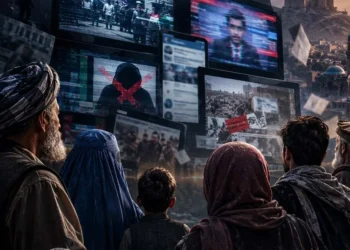
A crowd of men, women, and a child watch screens showing news broadcasts, social media feeds, and a crossed-out hooded figure amid concerns over fake news and media freedom. (Photo credit: AI)
Articles

A Society Without Media Is Left Defenseless Against Power and Fake News

1 October 2026 [t_time:1790858060]
The logo of the Afghanistan Media Support Organization, which has called for the release of detained AVA staff. (Photo credit: AJSO)
Afghanistan News

Afghanistan Media Support Organization Calls for Release of AVA Staff

30 September 2026 [t_time:1790768191]
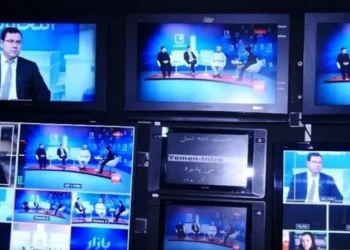
A television studio room where news and media programmes are produced and broadcast. (Photo credit: AFJC)
Afghanistan News

Afghanistan Journalists Center: Taliban Systematically Restrict Access to Information

28 September 2026 [t_time:1790615288]

Latest

Loading latest news...

Popular stories

  • An aerial view shows collapsed buildings and widespread damage following an earthquake in Panama (Photo: Reuters)

    More Than 200 Aftershocks Recorded in Panama Since Friday’s Earthquake

    Share
    Share Tweet
  • Trump Again Says War with Iran Will End “Very Soon”

    Share
    Share Tweet
  • Axios: Trump Expects Ukraine Not to Attack Russian Oil Refineries

    Share
    Share Tweet
  • UN Report Reveals Shifts in Family Attitudes and Rise in Domestic Violence in Afghanistan

    Share
    Share Tweet
  • US Defense Secretary Warns Iran of “Destruction”

    Share
    Share Tweet

Podcast

Insights
Insights

Join Lynne O’Donnell for 8AM’s podcast series, Insights.
Lynne talks with generals, diplomats, soldiers, journalists, politicians, activists, people who have front row seats for conflicts around the world, and citizens with a story to tell, happy or sad. For this first series, Afghanistan is the focus. Lynne and her guests talk about the collapse of the republic in August, 2021, and the impact since — for the people of Afghanistan, for the security of the region, for the safety of the world. It’s important, interesting and insightful.

Insights/22: Controlling the Narrative with Mina Sharif
byinsights8am

Controlling the Narrative

Lynne O’Donnell talks with Mina Sharif, author, activist, women’s rights campaigner, educator and mentor. They discuss who controls the narrative and who speaks for Afghanistan’s people when the Taliban appear to have seized control not only of the country but of the message, too.

Have a listen

Insights/22: Controlling the Narrative with Mina Sharif
Episode play icon
Insights/22: Controlling the Narrative with Mina Sharif
Episode Description
Episode play icon
Insights/21: Media Meltdown with Zahra Joya
Episode Description
Episode play icon
Insights/20: Terror Inc with Scott Richards
Episode Description
Episode play icon
Insights/19: Busting Stereotypes with Bushra Gohar
Episode Description
Episode play icon
Insights/18: Media Matters with Waliullah Rahmani
Episode Description
Episode play icon
Insights/17: What Goes Around Comes Around with Sima Samar
Episode Description
Search Results placeholder
Hasht-e Subh

8AM Media, also known as Hasht-e-Subh Daily, stands as Afghanistan's premier independent and non-profit newspaper, resonating as a beacon of journalistic integrity since its establishment in June 2007 by esteemed Afghan journalists and human rights advocates. With a steadfast commitment to citizen journalism and civic education, Hasht-e-Subh Daily has earned its place as the most esteemed publication in the nation.

Publisher: Sanjar Sohail
Email: [email protected]
Executive Director: Parwiz Kawa
Email: [email protected]

Read More

Abdul Ghani Baradar: UNAMA Should Not Focus Only on Negative Aspects Like the Opposition

Kandahar Residents Say Taliban Municipality Keeps Them in a Bureaucratic Maze Until They Pay Bribes

Sources: Taliban Fighter Killed in Clashes with Pakistani Forces

Sources: Young Man Stabbed to Death in Farah

Russia: Strait of Hormuz Crisis Could Drive Oil Prices Higher

Editor’s Choice

Every Saturday morning, 8AM MEDIA English Services Department will guide you through the week’s biggest stories from Afghanistan and the international community.

Subscribe

© 2026 - ©Hasht-e Subh Daily

No Result
View All Result
8am.Media
پښتو ویب‌پاڼه
ویب‌سایت فارسی
اۉزبېکچه ویب‌سایت
  • Home
  • News
    • Afghanistan News
    • World News
  • Opinion
    • Editorial
    • Analysis
  • Reports
    • Daily Reports
    • Investigative Reports
  • Society
    • The story of people
  • Women’s Word
  • Columns
    • Three Years After Afghanistan’s Fall: The Taliban’s Resurgence
    • Towards Equality
    • The Resurgence of the Taliban: Two Years Since Afghanistan’s Fall
    • Hebatullah Report Special Edition
    • Resistance for Education Special Edition
    • Special Column on Taliban’s Education Curriculum
    • Nawroz
  • Interviews
  • Contact Us
    • About Us
    • 8AM MEDIA Annual Awards
    • Submit an Article to Hasht-e-Subh
  • 8am.media

© 2026 - ©Hasht-e Subh Daily