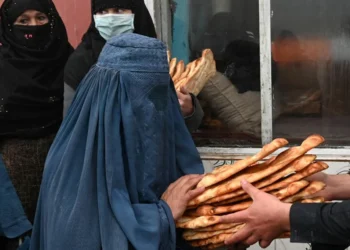
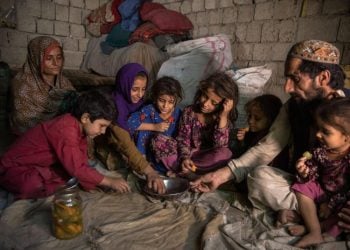
In the current circumstances in Afghanistan, where people are grappling with poverty, unemployment, and skyrocketing prices, preparing a dowry has become one of the greatest challenges for many families when it comes to marriage. This tradition, once described as a symbol of maternal affection and a girl’s readiness to begin married life, has now turned into a burdensome and controversial practice.
Several families state that due to economic hardships and financial constraints, they are unable to provide dowries for their daughters. They emphasize that in the past, this custom was carried out with simple and reasonable means, but it has now evolved into a competitive tradition that imposes immense economic pressure on families. These families claim that the absence of a dowry diminishes the bride’s status and respect in her married life.

Some of these families, in conversations with the Hasht-e Subh Daily, express hope that with greater societal awareness, this undesirable tradition will gradually fade, giving way to simpler ceremonies.
Shayista, who has been engaged to a relative for three years, has had her marriage delayed due to her father’s financial inability to provide a dowry. She says her father, a construction worker, struggles to cover the daily expenses of their seven-member family.
Working secretly in a tailoring shop, away from the eyes of her fiancé and his family, to save for her dowry, Shayista adds: “My father cannot afford to fully provide a dowry. Our entire life savings don’t even amount to 20,000 Afghanis. You can’t save more than that with a laborer’s income. I’m forced to work for myself and buy some of the items my father can’t afford, keeping them for my dowry. Among us, a girl with a dowry is valued more.”
This young woman urges families to eliminate customs that hinder young people’s marriages.

Zainab, a resident of Kabul’s 13th district, says her two daughters are engaged, but due to dire economic conditions, she cannot provide dowries for both. With her husband ill and herself earning a living by working in people’s homes, she complains about the heavy pressure of this custom.
Zainab believes this tradition was meaningful when families had better financial means, but in the current circumstances, such expectations only lead to embarrassment, debt, and psychological stress for families. She says: “For my first daughter, I prepared a dowry with all my heart—carpets, a refrigerator, a set of dishes, everything… But now that my other two daughters are also getting married, I really don’t know what to do. Nothing is cheap. My income barely covers our daily bread. My husband is ill, and I don’t know how long this custom must continue.”
The preparation of lavish dowries and the high costs of holding wedding ceremonies have become major obstacles, contributing to delays in young people’s marriages.
Rina, a recently engaged teenage girl, says that few people now start married life with simplicity and contentment, as many focus on extravagant dowries. She adds, “In the past, people kept things simple, but now everything has turned into a competition. Everyone wants their dowry to be better than others’, without considering their family’s economic situation.”
The preparation of lavish and costly dowries is a significant factor in reducing marriage rates, increasing the age of marriage, causing family disputes, and exerting severe financial pressure on families, young men, and women. This trend becomes even more concerning when such expenses are incurred without regard for families’ financial capacity.

Some families believe that to alleviate the financial and psychological pressures caused by costly marriage customs, widespread cultural awareness is essential. They stress that promoting simplicity and holding affordable wedding ceremonies can pave the way for young people to start married life more easily.
Ali, a 50-year-old man who recently witnessed his son’s marriage, considers dowries and bride prices to be undesirable and unnecessary traditions. Unlike many families, he had no expectations from the bride’s family and emphasized that a girl’s true value lies in her character, morals, and upbringing. He adds, “We didn’t ask for anything from the bride’s side. I even said we’d provide whatever was needed. A girl should come with dignity, not burdened by debt or shame.”
Khujasta, a resident of Kabul’s 5th district, has been offering custom-made and rental dowry services for engaged girls for several years. She says this tradition remains strong among families, even if they lack financial means. Khujasta adds: “Most of the orders I receive are for embroidered bedspreads, television covers, and other items. I weave a bedspread for 1,800 Afghanis, a set of six pillow covers for 1,500 Afghanis, and a television cover for 500 Afghanis.”
From Khujasta’s perspective, families, even in poor economic conditions, strive to provide dowries for their daughters. She says, “A dowry is given so that a girl can hold her head high among others and not be looked down upon. Without it, in the groom’s family—especially from the mother-in-law or sisters-in-law—there’s a lot of gossip. They say the girl knows nothing, hasn’t made anything, hasn’t brought anything; she’s just come to eat and wander.”
Khujasta emphasizes that the pressure of these traditional expectations has led many girls, even with their own earnings, to work toward preparing their dowries, just to avoid being undervalued at the start of married life.
The practice of demanding exorbitant bride prices and preparing dowries, longstanding customs in some provinces of Afghanistan, has often led to tensions and problems between couples. What stands out more these days is the excessive and irrational competition among families and young couples—a lopsided rivalry that imposes heavy costs on families without considering their economic conditions. This trend is not only concerning but also a significant factor in delaying marriages, particularly among low-income youth.
This comes as some young people have previously taken their own lives due to their inability to cover wedding expenses. Recently, two young individuals in Paktika province died by suicide due to financial inability to afford wedding costs.
According to sources, a young man named Allah Noor, faced with a bride price exceeding two million Afghanis set by the bride’s family, had gone to Samangan province to work and cover his wedding expenses. However, when the bride’s family refused his request to pay the amount in installments, the girl took her own life by consuming poison. A day after her death, Noor Allah took his own life during his fiancée’s funeral ceremony.
You can read the Persian version of this report here:
جهیزیه یا بار نابرابر؛ سنتی که ازدواج جوانان افغانستان را تحت فشار قرار میدهد