• 8AM.MEDIA
  • ویب‌سایت فارسی
  • پښتو ویب‌پاڼه
  • اۉزبېکچه ویب‌سایت
  • Podcast
Tuesday, November 10, 2026
Hasht-e Subh
  • Home
  • News
    • Afghanistan News
    • World News
  • Opinion
    • Editorial
    • Analysis
  • Reports
    • Daily Reports
    • Investigative Reports
  • Society
    • The story of people
  • Women’s Word
  • Columns
    • Three Years After Afghanistan’s Fall: The Taliban’s Resurgence
    • Towards Equality
    • The Resurgence of the Taliban: Two Years Since Afghanistan’s Fall
    • Hebatullah Report Special Edition
    • Resistance for Education Special Edition
    • Special Column on Taliban’s Education Curriculum
    • Nawroz
  • Interviews
  • Contact Us
    • About Us
    • 8AM MEDIA Annual Awards
    • Submit an Article to Hasht-e-Subh
  • 8am.mediaBack
Subscribe
No Result
View All Result
  • Home
  • News
    • Afghanistan News
    • World News
  • Opinion
    • Editorial
    • Analysis
  • Reports
    • Daily Reports
    • Investigative Reports
  • Society
    • The story of people
  • Women’s Word
  • Columns
    • Three Years After Afghanistan’s Fall: The Taliban’s Resurgence
    • Towards Equality
    • The Resurgence of the Taliban: Two Years Since Afghanistan’s Fall
    • Hebatullah Report Special Edition
    • Resistance for Education Special Edition
    • Special Column on Taliban’s Education Curriculum
    • Nawroz
  • Interviews
  • Contact Us
    • About Us
    • 8AM MEDIA Annual Awards
    • Submit an Article to Hasht-e-Subh
  • 8am.mediaBack
No Result
View All Result
Hasht-e Subh
No Result
View All Result

Drought and Wheat Yield Decline in Balkh Province: Hundreds of Families Forced to Migrate

Moqim mehran Moqim mehran
20 August 2023 - Solar Hijri Date: 1402/05/29 [t_time:1692539021]

Zabihullah Mujahid Twitter Page

Drought and a Drop in dryland wheat production have compelled hundreds of Families from diverse Balkh Province districts to abandon their residences. Deprived of food and livestock fodder, they now inhabit improvised tents on Mazar-e-Sharif city’s outskirts. Some farmers assert that recurring droughts have gravely affected them, prompting consideration of leaving their homes. Estimated data reveals an 80% dryland wheat cultivation decrease in Balkh due to drought and crop failure. In Balkh province, certain Taliban officials also admit these challenges, clarifying that despite cultivating 200,000 hectares of irrigated and dryland fields with wheat, it remains unsuitable for livestock due to the drought and insufficient rainfall. Previously, relief agencies cautioned about Afghanistan’s severe famine risk, imperiling millions of lives.

Balkh province, a prominent and populous region in northern Afghanistan, houses mainly agricultural and livestock-dependent communities. Its inhabitants, especially those reliant on cultivating wheat, face the impact of recurring droughts, particularly during the dryland crop season. The current drought, more severe than in previous years, has spurred migration from villages and districts to Mazar-e-Sharif city. The Directorate of Refugee and Repatriation officials, alongside local Taliban representatives in Balkh, affirm that the drought has led hundreds of families from districts like Kushanda, Alburz, and Zari to establish tent settlements in four camps around Mazar-e-Sharif City.

Esamatullah, residing in Pol-e Barq village of Sholgara district, is actively engaged in farming and dryland wheat cultivation. Speaking with Hasht-e Subh Daily, he highlights an 80% reduction in this year’s dryland wheat yield. Despite years of relying on farming to sustain his family, he underscores the insufficiency of this year’s dryland wheat harvest to meet farmers’ needs. He further elaborates, “The dryland wheat cultivation not only failed to yield results but also caused fodder scarcity, leaving our animals hungry. We confront a fodder crisis. A bundle of straw now costs 1400 to 1500 Afghanis, with prices rising weekly.”

Another farmer impacted by the drought is Mehrabuddin, originally from the Zari district in Balkh Province. The drought has compelled him to relocate to the center of the Sholgara district. Currently, he works as a laborer in the Sholgara Market, involved in transporting properties and goods for his fellow villagers to provide for his family. In an interview with Hasht-e Subh Daily, he shared, “Last winter, we planted our dryland crops, but the rain never came. The crops failed to thrive. The fields’ lack of rainfall resulted in scarce fodder. Even if they managed to turn green, they quickly withered. I used to have a few goats and two cows, but I had to sell them at a lower price and come to Sholgara. Right now, I’m living in an old shelter and earning 100 to 200 Afghanis a day.”

Successive droughts have disrupted the rural residents’ livelihoods and deepened their future concerns. Shir Mohammad, residing in the Kushanda district of Balkh province, remarks, “This district lacks irrigated land, and people’s sole reliance rests on dryland wheat cultivation. During years of favorable dryland wheat harvests, food is ample; yet, in years devoid of such harvests, hunger prevails. Presently, only 10% of the dryland wheat crop is yielding, and the fields lack fodder or vegetation for animals. People endure a deeply saddening state.”

According to a source from the Directorate of Agriculture in Balkh Province, dryland wheat cultivation has proved unproductive in districts including Zari, Kushanda, Alburz, Charkent, and portions of Chamtal and Sholgara. The inhabitants of these regions confront significant challenges. The source adds, “This year, around 200,000 hectares of irrigated and rain-fed land in Balkh province were dedicated to wheat cultivation. However, due to the drought’s impact and insufficient rainfall, approximately 50,000 hectares of cultivated dryland wheat are now unsuitable for livestock.”

Conversely, Abdul Wakil (pseudonym), a member of the Directorate of Agriculture in Balkh province, expresses his concern for the people’s predicament. He notes that this year, the grazing lands have dried up, causing significant anxiety among the population. Abdul Wakil asserts, “At present, livestock conditions are relatively stable, as dryland wheat cultivation hasn’t borne any yields, and people are using these lands to feed their animals. Their sheep have been moved to pastures, but within the next two months, upon the sheep’s return and the depletion of cultivated fields, people will encounter severe challenges.”

The severe drought is causing another detrimental effect – a decrease in livestock prices and even livestock deaths – which is impacting farmers and rural inhabitants. Sayed Ahmad, a resident of the Sholgara district involved in the local livestock trade, conveyed in an interview with the Hasht-e Subh Daily, “Livestock prices are diminishing by the day, and the market is witnessing a growing influx of livestock every week. People are unable to sustain their livestock anymore, leading them to sell out of concern for their animals’ survival.”

Notably, on one side, the cultivation of asafoetida in irrigated lands is substituting wheat, while on the other, consecutive droughts have resulted in an unparalleled decline in wheat production in Balkh province. Experts warn that without serious international efforts to curb poverty in Afghanistan, a grave situation of hunger and challenges looms for its people. Relief organizations had previously urged the provision of nearly two million tons of wheat to mitigate poverty in Afghanistan.
ShareTweetSendSendShare

Related Posts

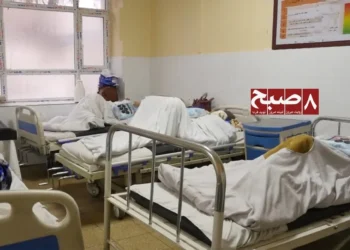
Patients lie on beds in a hospital ward as the closure of more than 700 health centers in Afghanistan raises concerns over access to medical care. (Photo credit: 8am.media)
Daily Reports

Closure of 700 Health Centers in Afghanistan Leaves People Stranded Between Illness and No Care

10 November 2026 [t_time:1794291529]
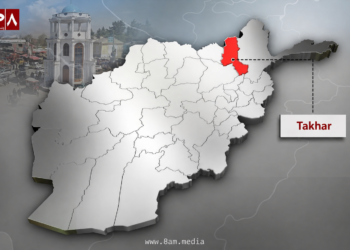
Takhar province highlighted red in Afghanistan map
Afghanistan News

Explosion of Unexploded Ordnance in Takhar Kills One and Injures Another

9 November 2026 [t_time:1794248248]
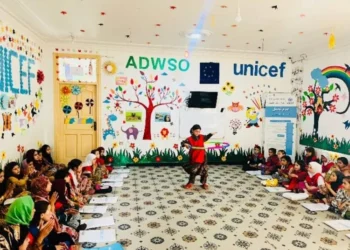
Children participate in an educational and recreational activity at a child-friendly learning center supported by UNICEF and ADWSO (Photo: UNICEF)
Afghanistan News

UNICEF: Child-Friendly Spaces Help Children Learn and Develop

9 November 2026 [t_time:1794241247]

Latest

Loading latest news...

Popular stories

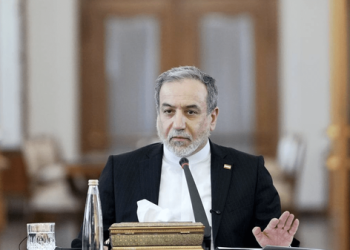
  • Iranian Foreign Minister Seyed Abbas Araghchi speaks during a public appearance (Photo: Farsnews)

    Araghchi Warns: US Must Choose Between Accepting Iran’s Proposal and Continuing the War

    Share
    Share Tweet
  • Obama After Democratic Gains: Americans Want an End to Division

    Share
    Share Tweet
  • Trump Says He Is Ready to Be “Mr. Veto” if Democrats Win Congress

    Share
    Share Tweet
  • UN Report Reveals Shifts in Family Attitudes and Rise in Domestic Violence in Afghanistan

    Share
    Share Tweet
  • UAE Official: Risk of War Between US and Iran Remains

    Share
    Share Tweet

Podcast

Insights
Insights

Join Lynne O’Donnell for 8AM’s podcast series, Insights.
Lynne talks with generals, diplomats, soldiers, journalists, politicians, activists, people who have front row seats for conflicts around the world, and citizens with a story to tell, happy or sad. For this first series, Afghanistan is the focus. Lynne and her guests talk about the collapse of the republic in August, 2021, and the impact since — for the people of Afghanistan, for the security of the region, for the safety of the world. It’s important, interesting and insightful.

Insights/22: Controlling the Narrative with Mina Sharif
byinsights8am

Controlling the Narrative

Lynne O’Donnell talks with Mina Sharif, author, activist, women’s rights campaigner, educator and mentor. They discuss who controls the narrative and who speaks for Afghanistan’s people when the Taliban appear to have seized control not only of the country but of the message, too.

Have a listen

Insights/22: Controlling the Narrative with Mina Sharif
Episode play icon
Insights/22: Controlling the Narrative with Mina Sharif
Episode Description
Episode play icon
Insights/21: Media Meltdown with Zahra Joya
Episode Description
Episode play icon
Insights/20: Terror Inc with Scott Richards
Episode Description
Episode play icon
Insights/19: Busting Stereotypes with Bushra Gohar
Episode Description
Episode play icon
Insights/18: Media Matters with Waliullah Rahmani
Episode Description
Episode play icon
Insights/17: What Goes Around Comes Around with Sima Samar
Episode Description
Search Results placeholder
Hasht-e Subh

8AM Media, also known as Hasht-e-Subh Daily, stands as Afghanistan's premier independent and non-profit newspaper, resonating as a beacon of journalistic integrity since its establishment in June 2007 by esteemed Afghan journalists and human rights advocates. With a steadfast commitment to citizen journalism and civic education, Hasht-e-Subh Daily has earned its place as the most esteemed publication in the nation.

Publisher: Sanjar Sohail
Email: [email protected]
Executive Director: Parwiz Kawa
Email: [email protected]

Read More

Iraq Closes One Border Crossing with Iran and Reopens Another

Middle East at a Crossroads: War or Negotiations?

Second Conference on the Situation of Women in Afghanistan to Be Held in France

University of Ottawa Meeting Criticises Declining Global Attention to Afghanistan’s Human Rights Crisis

Taliban Seize Office and Double Fees in Mounting Pressure on Omid-e Sabz Township Residents

Editor’s Choice

Every Saturday morning, 8AM MEDIA English Services Department will guide you through the week’s biggest stories from Afghanistan and the international community.

Subscribe

© 2026 - ©Hasht-e Subh Daily

No Result
View All Result
8am.Media
پښتو ویب‌پاڼه
ویب‌سایت فارسی
اۉزبېکچه ویب‌سایت
  • Home
  • News
    • Afghanistan News
    • World News
  • Opinion
    • Editorial
    • Analysis
  • Reports
    • Daily Reports
    • Investigative Reports
  • Society
    • The story of people
  • Women’s Word
  • Columns
    • Three Years After Afghanistan’s Fall: The Taliban’s Resurgence
    • Towards Equality
    • The Resurgence of the Taliban: Two Years Since Afghanistan’s Fall
    • Hebatullah Report Special Edition
    • Resistance for Education Special Edition
    • Special Column on Taliban’s Education Curriculum
    • Nawroz
  • Interviews
  • Contact Us
    • About Us
    • 8AM MEDIA Annual Awards
    • Submit an Article to Hasht-e-Subh
  • 8am.media

© 2026 - ©Hasht-e Subh Daily