• 8AM.MEDIA
  • ویب‌سایت فارسی
  • پښتو ویب‌پاڼه
  • اۉزبېکچه ویب‌سایت
  • Podcast
Tuesday, November 10, 2026
Hasht-e Subh
  • Home
  • News
    • Afghanistan News
    • World News
  • Opinion
    • Editorial
    • Analysis
  • Reports
    • Daily Reports
    • Investigative Reports
  • Society
    • The story of people
  • Women’s Word
  • Columns
    • Three Years After Afghanistan’s Fall: The Taliban’s Resurgence
    • Towards Equality
    • The Resurgence of the Taliban: Two Years Since Afghanistan’s Fall
    • Hebatullah Report Special Edition
    • Resistance for Education Special Edition
    • Special Column on Taliban’s Education Curriculum
    • Nawroz
  • Interviews
  • Contact Us
    • About Us
    • 8AM MEDIA Annual Awards
    • Submit an Article to Hasht-e-Subh
  • 8am.mediaBack
Subscribe
No Result
View All Result
  • Home
  • News
    • Afghanistan News
    • World News
  • Opinion
    • Editorial
    • Analysis
  • Reports
    • Daily Reports
    • Investigative Reports
  • Society
    • The story of people
  • Women’s Word
  • Columns
    • Three Years After Afghanistan’s Fall: The Taliban’s Resurgence
    • Towards Equality
    • The Resurgence of the Taliban: Two Years Since Afghanistan’s Fall
    • Hebatullah Report Special Edition
    • Resistance for Education Special Edition
    • Special Column on Taliban’s Education Curriculum
    • Nawroz
  • Interviews
  • Contact Us
    • About Us
    • 8AM MEDIA Annual Awards
    • Submit an Article to Hasht-e-Subh
  • 8am.mediaBack
No Result
View All Result
Hasht-e Subh
No Result
View All Result

Middle East at a Crossroads: War or Negotiations?

Translated by Farhad Farhaad | Originally written in Persian by Shujauddin Amini

Mohammad Farhaad Mohammad Farhaad
10 November 2026 - Solar Hijri Date: 1405/08/19 [t_time:1794300650]
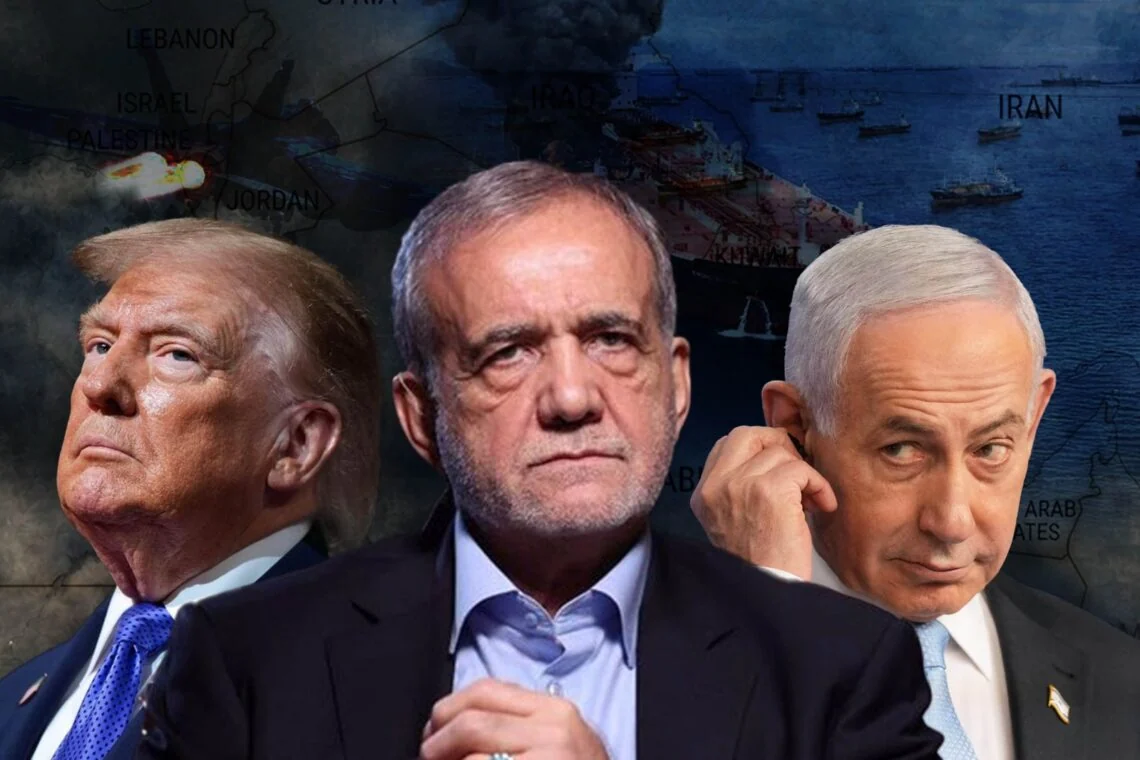
A composite image shows three men in front of a Middle East map with smoke and ships near Iran, amid fears of renewed war. (Photo Credit: Social Media)

Social Media

The attention of most countries is fixed on the possibility of a resumption of war or negotiations between the United States and the Islamic Republic of Iran. Now that the fate of the elections in the United States and Israel has become clear, the mix of fear and hope around the world, particularly among the people of the Middle East, has grown even greater. In recent weeks, global media outlets have been covering the major and minor developments related to the Iran-United States file moment by moment, at times highlighting the possibility of a renewed war and at other times the resumption of talks mediated by Qatar. However, over the past two days, information published in the media points to dialogue prevailing over war. Donald Trump’s tone toward Iran has also become considerably more conciliatory since the announcement of the midterm election results. It is still unclear whether this is a clear shift toward dialogue or groundwork for the next attack. Some non-Iranian media outlets, citing Ibrahim Kalin, head of Turkey’s National Intelligence Organization (MIT), have reported the possibility of a meeting next week in Doha, the capital of Qatar, between Mohsen Rezaei, Secretary of Iran’s Supreme National Security Council (SNSC), and JD Vance, Trump’s vice president, although Iranian media later cast doubt on the accuracy of this report. In addition, Trump and the Emir of Qatar have held a phone call about Iran, and Trump is also set to meet and hold talks with Qatar’s prime minister and foreign minister at the White House. Despite all these relatively clear signs in favor of negotiations, Turkish President Recep Tayyip Erdogan recently spoke of a “negative turn” in the course of developments, a sign confirming that the possibility of war resuming is strong and that efforts to restart dialogue have failed.

The question now being raised is this: will there be war or dialogue?

The reality is that despite the many signs in favor of negotiations, the possibility of war still appears stronger, for two reasons:

1- Supporters of war in the United States and Israel have lost the elections, and they have lost them to those who do not strongly support the war in its current form and nature, even if they do not oppose it outright. Israeli Prime Minister Benjamin Netanyahu, who spends his days and nights dreaming of the collapse of the Islamic Republic, is still in power, but after the formation of the new government, if he is not removed from the scene entirely, he will no longer hold monopoly power. It is a spectacular moment for the Islamic Republic. Likewise, the Republicans, especially Trump himself and his entourage, lost the midterm elections, an event that has sweetened Tehran’s mouth.

By this reckoning, Trump and Netanyahu perceive that the Islamic Republic is now drowning in joy, to the point that it presents itself as the “winner” and its rivals as the “losers.” This matter becomes more serious when the defeat of the far right in Israel and of the Republicans in the United States is assessed as a result of the attack on Iran. Now that the scope of Trump’s and Netanyahu’s “freedom of action” has been somewhat limited, it is obvious to both that the Islamic Republic will not back down, and it may well become more demanding of concessions compared to the period before the elections. When both think this way, the war option can prevail over the negotiation option, so that Tehran abandons its stubbornness and rids itself of the desire to extract concessions.

More importantly, Trump and Netanyahu feel defeated. They also feel humiliated and ignored by others. Therefore, if only to satisfy this feeling, they try to put the Islamic Republic in a new bind with a fresh military attack. This possibility is strengthened further when we consider that Trump and Netanyahu no longer have anything to lose. Netanyahu’s only chance is to be absorbed into a coalition government. Even if that happens, he will not have a free hand and will be bound by constraints. By contrast, Trump no longer faces a critical juncture that would force him to be accommodating toward Iran. The 2028 US election is a critical juncture, but for Trump it does not matter whether a Democrat or a Republican wins.

2- Once again, Israel’s role is not only important but decisive. The ruling faction in Israel sees Trump as a savior. In its view, Trump has toiled more than anyone for Israel’s survival. Yes, it is true that had Trump not been in office, the United States would have avoided entering a war against Iran. It is clear that Trump’s risk-taking was also due to the insistence of Netanyahu and the Israeli lobbies. Therefore, in the view of the far right in Israel, the end of Trump’s tenure will mean the end of serious American support for Israel. Hence, they try to go after Iran with America’s club for as long as Trump is in the White House.

On the other hand, the result of the US election has made Israelis deeply anxious. Their level of concern rises further when they consider Vance’s remarks about the discontent of part of American society over the way the war with Iran began and over Washington’s unconditional support for Tel Aviv. Yes, the outcome of the US election showed that Israel has lost a certain degree of its popularity in Western public opinion. If in the past unconditional support for Israel was a factor in winning American elections, it has now become a factor in failure. This is certainly a source of concern not only for Netanyahu but also for Eisenkot and others.

The far right in Israel has noticed the shift in Western public opinion to Israel’s detriment. In this faction’s view, if anyone other than Trump comes to power, Israel will be exposed to even greater disfavor. When the head of power in the United States, along with the country’s public opinion, is not inclined toward unquestioning support for Israel, whoever rules in Tel Aviv will undoubtedly become deeply worried. By this reckoning, Netanyahu’s effort is focused on making maximum use of the current minimal capacity, namely Trump’s remaining two years in the White House. Even if Netanyahu leaves the scene, his successor will attach importance to this aspiration, and his focus will likewise be on persuading Trump to attack the Islamic Republic, with the aim of overthrow or maximum weakening.


You can read the Persian version of this analysis here:

خاورمیانه در بزنگاه؛ جنگ یا مذاکره؟

ShareTweetSendSendShare

Related Posts

An open padlock against a digital background symbolises cybersecurity threats and cyberattacks attributed to Iran in France. (Photo credit: AFP)
World News

Germany Condemns Cyberattacks Attributed to Iran in France

10 November 2026 [t_time:1794292255]
US President Donald Trump speaks during a public appearance amid renewed warnings of a possible military attack on Iran. (Photo credit: AP Photo)
World News

Trump Says Any Renewed Attack on Iran Would Be “Five Times Bigger”

10 November 2026 [t_time:1794291297]
The Iranian flag flies against the sky amid tensions between Iran and the United States over Tehran’s demands in ongoing negotiations. (Photo credit: Mehrnews)
World News

Iranian Official Calls on US to Surrender to Tehran’s Demands

10 November 2026 [t_time:1794289940]

Latest

Loading latest news...

Popular stories

  • Iranian Foreign Minister Seyed Abbas Araghchi speaks during a public appearance (Photo: Farsnews)

    Araghchi Warns: US Must Choose Between Accepting Iran’s Proposal and Continuing the War

    Share
    Share Tweet
  • Obama After Democratic Gains: Americans Want an End to Division

    Share
    Share Tweet
  • Trump Says He Is Ready to Be “Mr. Veto” if Democrats Win Congress

    Share
    Share Tweet
  • UN Report Reveals Shifts in Family Attitudes and Rise in Domestic Violence in Afghanistan

    Share
    Share Tweet
  • UAE Official: Risk of War Between US and Iran Remains

    Share
    Share Tweet

Podcast

Insights
Insights

Join Lynne O’Donnell for 8AM’s podcast series, Insights.
Lynne talks with generals, diplomats, soldiers, journalists, politicians, activists, people who have front row seats for conflicts around the world, and citizens with a story to tell, happy or sad. For this first series, Afghanistan is the focus. Lynne and her guests talk about the collapse of the republic in August, 2021, and the impact since — for the people of Afghanistan, for the security of the region, for the safety of the world. It’s important, interesting and insightful.

Insights/22: Controlling the Narrative with Mina Sharif
byinsights8am

Controlling the Narrative

Lynne O’Donnell talks with Mina Sharif, author, activist, women’s rights campaigner, educator and mentor. They discuss who controls the narrative and who speaks for Afghanistan’s people when the Taliban appear to have seized control not only of the country but of the message, too.

Have a listen

Insights/22: Controlling the Narrative with Mina Sharif
Episode play icon
Insights/22: Controlling the Narrative with Mina Sharif
Episode Description
Episode play icon
Insights/21: Media Meltdown with Zahra Joya
Episode Description
Episode play icon
Insights/20: Terror Inc with Scott Richards
Episode Description
Episode play icon
Insights/19: Busting Stereotypes with Bushra Gohar
Episode Description
Episode play icon
Insights/18: Media Matters with Waliullah Rahmani
Episode Description
Episode play icon
Insights/17: What Goes Around Comes Around with Sima Samar
Episode Description
Search Results placeholder
Hasht-e Subh

8AM Media, also known as Hasht-e-Subh Daily, stands as Afghanistan's premier independent and non-profit newspaper, resonating as a beacon of journalistic integrity since its establishment in June 2007 by esteemed Afghan journalists and human rights advocates. With a steadfast commitment to citizen journalism and civic education, Hasht-e-Subh Daily has earned its place as the most esteemed publication in the nation.

Publisher: Sanjar Sohail
Email: [email protected]
Executive Director: Parwiz Kawa
Email: [email protected]

Read More

Middle East at a Crossroads: War or Negotiations?

Second Conference on the Situation of Women in Afghanistan to Be Held in France

University of Ottawa Meeting Criticises Declining Global Attention to Afghanistan’s Human Rights Crisis

Taliban Seize Office and Double Fees in Mounting Pressure on Omid-e Sabz Township Residents

No Towers, Weak Internet: Badakhshan’s Border Residents Deprived of Basic Communication

Editor’s Choice

Every Saturday morning, 8AM MEDIA English Services Department will guide you through the week’s biggest stories from Afghanistan and the international community.

Subscribe

© 2026 - ©Hasht-e Subh Daily

No Result
View All Result
8am.Media
پښتو ویب‌پاڼه
ویب‌سایت فارسی
اۉزبېکچه ویب‌سایت
  • Home
  • News
    • Afghanistan News
    • World News
  • Opinion
    • Editorial
    • Analysis
  • Reports
    • Daily Reports
    • Investigative Reports
  • Society
    • The story of people
  • Women’s Word
  • Columns
    • Three Years After Afghanistan’s Fall: The Taliban’s Resurgence
    • Towards Equality
    • The Resurgence of the Taliban: Two Years Since Afghanistan’s Fall
    • Hebatullah Report Special Edition
    • Resistance for Education Special Edition
    • Special Column on Taliban’s Education Curriculum
    • Nawroz
  • Interviews
  • Contact Us
    • About Us
    • 8AM MEDIA Annual Awards
    • Submit an Article to Hasht-e-Subh
  • 8am.media

© 2026 - ©Hasht-e Subh Daily