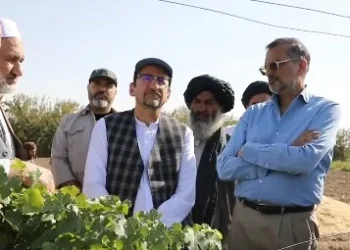
Following the recent military clashes between the Taliban and Pakistan, many fruit and vegetable traders in Afghanistan say they have suffered losses amounting to millions of Afghanis. According to them, all of Afghanistan’s export routes to South Asia are currently closed. These traders add that the ports of Chabahar and Bandar Abbas in Iran are also facing serious challenges due to new U.S. sanctions, leaving air transport as the only remaining option for exports. However, they note that air corridors are not profitable due to high costs and declining demand, and have instead caused even greater financial losses for traders. The traders call on the Pakistani government to separate trade from politics and not allow the economies of both countries to fall victim to political agendas in which traders have no role.
They emphasize that over the past four years, repeated border closures have bankrupted many traders, leaving them unable to build standard cold storage facilities inside the country. Therefore, they urge Afghan traders living abroad to invest in the construction of cold storage facilities and packaging centers to support the preservation and proper export of agricultural products.
Gholam Yahya Meshkwani, a trader, says that due to the closure of border crossings, exporters of fruits and vegetables have incurred heavy financial losses. He explains that most of his trade was conducted via Pakistan to India, but now even the Wagah border crossing is closed. According to him, the new sanctions on Iran have also disrupted Afghan traders’ use of the Chabahar and Bandar Abbas ports. Meshkwani stresses that air transport is currently the only available export route, but this option has become unfeasible due to high costs and reduced customer demand.
He adds, “The Torkham crossing has been closed to Afghanistan’s exports to India for nearly six months, resulting in a 60 to 70 percent decline in the country’s exports.”
Kohdamani, an exporter of fresh fruits and vegetables, says that due to the Torkham closure, he was forced to return trucks loaded with tomatoes to Jalalabad and sell them along the roadsides at very low prices to prevent spoilage. He explains, “Our truck of tomatoes was held up for two days; we had to take it back to Nangarhar Province. Traders across the board suffered losses.” According to him, over 200 trucks carrying tomatoes, onions, grapes, and apples remain stuck at Torkham, and all traders have faced serious financial damage.
He adds, “Over the past four years, problems with Pakistan have caused significant losses to traders. Politics must be kept separate from trade, and traders should be allowed to conduct business. Afghan traders importing bananas from Pakistan have repeatedly seen their trucks stopped, their goods spoiled, and no one willing to buy them.”
Kohdamani says that at the beginning of the fresh fruit and vegetable export season, the halt of cargo trucks at the Torkham crossing caused substantial financial damage to traders. He adds that after widespread complaints, Pakistan reopened the Kharlachi and Ghulam Khan crossings for its own benefit, mainly to continue importing up to 200 truckloads of coal daily from Afghanistan, but later closed all crossings again following renewed tensions, inflicting even greater losses on Afghan traders.
The fruit exporter stresses that this year, repeated border closures have caused severe financial hardship, leaving most traders in debt. He says no authority has taken responsibility for the situation, and that there are still no standard cold storage facilities available. He adds that over the past four years, many traders have gone bankrupt and can no longer afford to build even a 200-ton cold storage unit.
The trader points out that fruit and vegetable traders of Afghanistan have become skilled professionals familiar with packaging and export marketing principles, but have suffered massive losses due to political rivalries. He emphasizes that alternative routes for exports are also not viable; routes through Uzbekistan and northern borders are effectively closed to Afghan traders because of unfair competition and political challenges. He calls on Afghan traders abroad to invest in building cold storage and packaging facilities to help reduce these problems and make Afghanistan’s exports more stable and professional.
Kohdamani says, “Investment in cold storage and packaging (sorting) would yield very good returns. If facilities such as proper transportation, refrigerated trucks, standard packaging centers, and storage warehouses are developed, suitable employment opportunities will be created for farmers, potentially generating more than 2,000 jobs.”
Omid Haidari, another trader, says he imports bananas, potatoes, and vegetables, including chili peppers, lemons, and okra, from Pakistan. He notes that a large portion of raw materials for Afghan factories is also imported from Pakistan, and that the route closures have harmed both Afghan and Pakistani traders.
He stresses that most of Afghanistan’s transit trade occurs via Pakistan, but in addition to the closed crossings, Pakistan’s highways have also been blocked for the past two days due to widespread protests in that country. He says he has only been able to sell part of his goods in Peshawar, while his trucks remain stranded in Pakistan.
Haji Yamin, a fruit and vegetable trader, says, “We had two truckloads of grapes worth about 2.8 to 3 million Afghanis, but they are stuck. Around 250 to 300 trailer trucks carrying fruits and vegetables have been turned back. The fruit and vegetable export sector is facing major challenges, and prices in the market have sharply fallen. For instance, one seer (7 kilograms) of grapes that previously sold for 300 Afghanis now sells for only 150 Afghanis.” He emphasizes, “Politics must be separated from trade. Every year, as the fruit and vegetable season begins, the routes are closed, and our traders face severe losses. These problems should be resolved through dialogue and negotiation, not by closing trade routes.”
Khalid Rahmani, spokesperson for the Dry Fruit Exporters Union in Kabul, says that despite the halt in exports to Pakistan, exports of dried fruits continue via air corridors. He confirms that the closure of the Torkham border has caused financial losses.
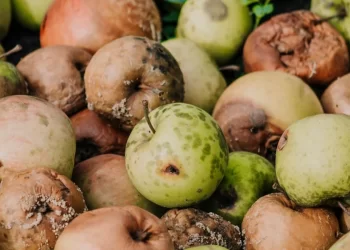
Rahmani adds that due to the lack of cold storage facilities, fresh fruits remain in orchards and spoil. He stresses that it is now apple season, and the only nearby and convenient route for selling fruit has been lost. This situation has dealt a heavy blow to farmers and traders, who are now struggling with significant difficulties.
These concerns about the halt in exports to Pakistan come as Pakistan’s The Nation newspaper earlier reported that transit trade between Afghanistan and Pakistan fell sharply by more than USD 1.489 billion, a 66 percent decline, from July 2024 to February 2025. According to the report, this drop resulted primarily from Pakistan’s anti-smuggling measures and import restrictions. The volume of transit trade decreased from USD 2.24 billion last year to USD 754 million this year.
You can read the Persian version of this report here:
توقف صادرات در بنبست سیاست؛ بازرگانان: تمام راهها بهروی ما بسته است